Polynucleotides vs Exosomes, it's a question more and more people are asking as they look for gentle yet effective ways to renew their skin.
If you've noticed tired-looking skin, uneven texture, or lingering acne scars that just won't fade, you're not alone. These concerns are common, and the truth is, your skin sometimes needs more than just creams and serums to bounce back.
Both polynucleotides and Exosome therapy are next-generation skin boosters that help your skin heal itself from within.
Polynucleotide treatment uses purified fragments of salmon DNA to repair and strengthen your skin barrier, while Exosomes work like tiny messengers that boost collagen, hydration, and cell renewal.
Together, they're redefining what non-surgical rejuvenation looks like; natural, subtle, and deeply restorative.
In this guide, you'll discover how these treatments work, which is better for your skin goals, and how combining them with microneedling can deliver even smoother, more radiant results.
Before choosing between the two, it helps to understand what makes each treatment unique.
So, which one is right for you?
Both treatments are backed by advanced regenerative science, but they work in very different ways beneath the skin.
If you're curious about what your skin truly needs, consider booking a personalised consultation with Dr Rakib Uddin at Aesthetic Doctors Australia to find out exactly where to start.
What Are Exosomes and Polynucleotides and How Do They Work to Rejuvenate Your Skin?
Few treatments in skin regeneration have sparked as much excitement as Exosomes and polynucleotides.
These next-generation skin regeneration treatments represent a leap forward from traditional skincare and injectables; offering results that look more natural, feel more authentic, and actually support the skin's own repair instead of just masking the surface.
What are Exosomes?

While this might sound like another complex scientific term, Exosomes are simply tiny messengers naturally released by your skin cells.
Think of them as "text messages" your cells send to communicate and coordinate healing. Each Exosome is packed with growth factors, peptides, and proteins that tell your skin to repair damage, boost collagen, and restore balance.
Before Exosome therapy, most skin treatments relied on PRP(platelet-rich plasma) or serums that offered mild rejuvenation but limited regenerative power.
PRP, though effective for some, could be inconsistent depending on your blood quality.
Exosomes, on the other hand, deliver a concentrated, cell-free solution that works consistently and deeply, making skin renewal faster and more predictable.
What are polynucleotides?
Polynucleotide treatment, often called the PN or PDRN skin booster, was developed to address the limitations of traditional fillers and collagen-stimulating injections.
While fillers add volume, they don't necessarily heal or strengthen the skin.
Polynucleotides change that: purified salmon DNA fragments have been found to repair microdamage, stimulate collagen, and restore elasticity at a cellular level.
Before its introduction, most people relied on hyaluronic acid-based boosters that hydrated the skin but offered only temporary results.
Polynucleotides took things a step further: not just hydrating, but actively supporting repair from within, improving the skin's long-term texture and resilience.
In simple terms;
Exosomes work at the cellular level, enhancing communication and renewal, while polynucleotides strengthen the deeper structure of the skin.
Together, they create a smoother, firmer, healthier-looking complexion.
[Read: Pre-Treatment Tips: How to Prepare Your Skin Before Polynucleotides]
Exosomes vs Polynucleotides: What's the Difference and Which One Is Better for You?
The choice between Exosomes and polynucleotides can feel overwhelming. Both treatments promise smoother, firmer, and more radiant skin, but they work differently beneath the surface.
Understanding these differences helps you make a confident, informed decision that aligns with your skin goals.
Here's a simple breakdown to help you compare them side by side:
| Factor | Exosomes | Polynucleotides |
|---|
| Main ingredient | Growth factors, peptides and cell-derived messengers | Purified polynucleotide (PDRN) fragments |
| How it works | Signals skin cells to regenerate and supports collagen production | Repairs damaged cells and strengthens the skin barrier |
| Best for | Acne scars, dullness, pigmentation and uneven tone | Ageing skin, fine lines, enlarged pores and loss of firmness |
| Visible results | Glow and smoother texture within 2 to 4 weeks | Firmer, plumper skin over 3 to 4 sessions |
| Downtime | Minimal, usually 0 to 2 days | Mild redness or swelling for 2 to 3 days |
| How long results last | 6 to 12 months, depending on your skin | 6 to 9 months, building with a course |
| Commonly paired with | Microneedling, laser or PRP | Skin boosters or LED therapy |
Both treatments are regenerative, but they target different layers of the skin.
Exosomes focus on restoring the skin's vitality and luminosity, while polynucleotides work deeper to rebuild and repair the foundation of your skin.
Clinical research shows that polynucleotide treatment improves skin elasticity and thickness by activating fibroblasts and stimulating collagen production.
One study reported a 32% boost in elasticity and an 18% increase in dermal thickness within months of treatment.
Similarly, exosome-based therapies have demonstrated strong regenerative effects, enhancing fibroblast activity and collagen synthesis through pathways like Wnt/β-catenin, leading to smoother texture, firmer skin, and long-lasting radiance.
Together, these advanced treatments represent the next generation of skin regeneration in Melbourne, offering natural, progressive, and science-backed results.
So, Are Exosomes Better Than Polynucleotides?
It depends on your skin. If you want brighter, glass-like skin, Exosomes are the natural pick. If you want deeper structural repair, polynucleotides may be the better fit.
For many, the strongest results come from a personalised combination planned by Dr Rakib at Aesthetic Doctors Australia.
Can Exosomes or Polynucleotides Be Combined with Microneedling? What Experts Say
Yes, and it's one of the most effective ways to accelerate skin renewal and collagen production.
When microneedling creates micro-channels in the skin, it allows Exosomes or polynucleotides to penetrate deeper, delivering regenerative molecules exactly where your skin needs them most.
● Microneedling + Exosomes
This combination enhances cell communication and boosts collagen synthesis, helping fade acne scars, improve texture, and restore radiance faster. Many patients notice visible smoothness and glow within two weeks.
● Microneedling + Polynucleotides
Suited to mature or damaged skin, this pairing strengthens the skin barrier and improves elasticity, offering gradual yet long-lasting rejuvenation.
Both treatments are safe with minimal discomfort and downtime, usually presenting only mild redness for a day or two.
Experts recommend gentle hydration, sunscreen, and avoiding active ingredients post-treatment to support healing.
So, which is better, microneedling or Exosomes?
In reality, they work best together, each amplifying the other, leaving your skin firmer, smoother, and naturally radiant.
What to Expect During and After Treatment

Your exosome or polynucleotide treatment usually begins with a personalised consultation to understand your skin concerns and goals.
The process is calm and structured, starting with a gentle cleanse, followed by microneedling or precise injections, depending on your treatment plan.
The session ends with a soothing mask to calm and hydrate the skin, leaving you refreshed and glowing.
Downtime and Comfort
Most clients experience minimal rednessor swelling that fades within 1 to 3 days.
Polynucleotide downtime is slightly longer than exosome therapy, but both are well-tolerated with little to no discomfort.
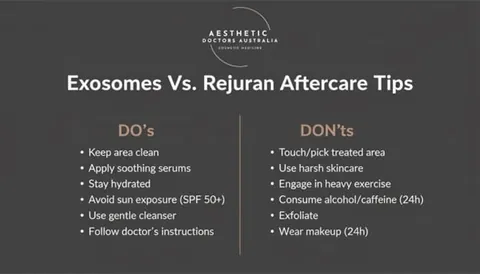
Aftercare Tips:
- Avoid harsh products: Skip vitamin C serums, exfoliants, or retinoids for 3 to 5 days.
- Sun protection: Always apply sunscreen to support skin recovery.
- Gentle cleansing: You can wash your face after 24 hours using mild, fragrance-free products.
Results develop gradually, with exosome treatments lasting up to 12 months and polynucleotides maintaining results for about 6 to 9 months.
Both are well-tolerated, clinically studied skin booster treatments.
How to Choose the Right Skin Booster for Your Skin Type and Concerns
Choosing between Exosomes and polynucleotides starts with understanding your skin's needs and how it naturally heals. Both treatments rejuvenate the skin in different ways, but each brings something special to the table.
Here's a simple guide to help you decide:
Exosomes help renew damaged skin cells, boost collagen, and gently fade stubborn marks, making them well suited to post-acne repair.
Polynucleotides deeply restore and strengthen thinning skin, improving elasticity, smoothness, and radiance over time.
- Uneven tone or dull texture
A combination of both can restore glow from within while refining texture on the surface.
Both treatments are suitable for sensitive, oily, mature, and dry skin, offering visible results with little to no irritation. Still, the right choice depends on your skin and your goals.
A professional consultation with Dr Rakib helps tailor the right plan for you, so your skin looks refreshed and healthy.
FAQs About Exosome and Polynucleotide Treatments
- Are exosomes better than polynucleotides for acne scars?
Exosomes work beautifully for acne scars by boosting collagen and skin repair, while polynucleotides support deeper regeneration. Many patients combine both for faster, smoother results.
- How many sessions of Exosome treatment do I need for results?
Most people notice visible improvement after 2 to 3 sessions, spaced a few weeks apart.
- Can you combine exosomes with PRP or vitamin C?
Yes, but always under expert guidance to avoid overstimulation.
- What not to mix with exosome treatments?
Avoid harsh exfoliants, acids, or active ingredients like retinol for a few days.
- Can exosomes change your DNA?
No, this is a common myth. Exosomes work on a cellular level to encourage healing, not alter your genetic makeup.
- Are polynucleotides better than PRP or wrinkle relaxers for ageing skin?
Polynucleotides focus on long-term skin health and texture, while wrinkle relaxers target muscle movement. They serve different purposes and can even complement each other.
- Do exosomes refresh the way skin looks?
Yes, they promote collagen renewal and improve tone, giving the skin a naturally refreshed glow.
- Are these treatments safe for sensitive skin?
Absolutely. Both are gentle, biocompatible, and suitable for even delicate skin types.
- Can I use niacinamide or retinol after exosome treatment?
Wait at least 5 days before reintroducing active ingredients to let your skin recover fully.
If you're weighing up Exosome and polynucleotide skin booster treatments in Melbourne, a consultation is the practical first step toward radiant, healthy-looking skin.
Book your skin consultation with Dr Rakib Uddin and find out which approach fits your skin.