Aesthetic Doctors Australia

Menu

Where would you like to begin?

Body skin assessment in Kew, Melbourne

Body skin laxity & loose skin, explained.

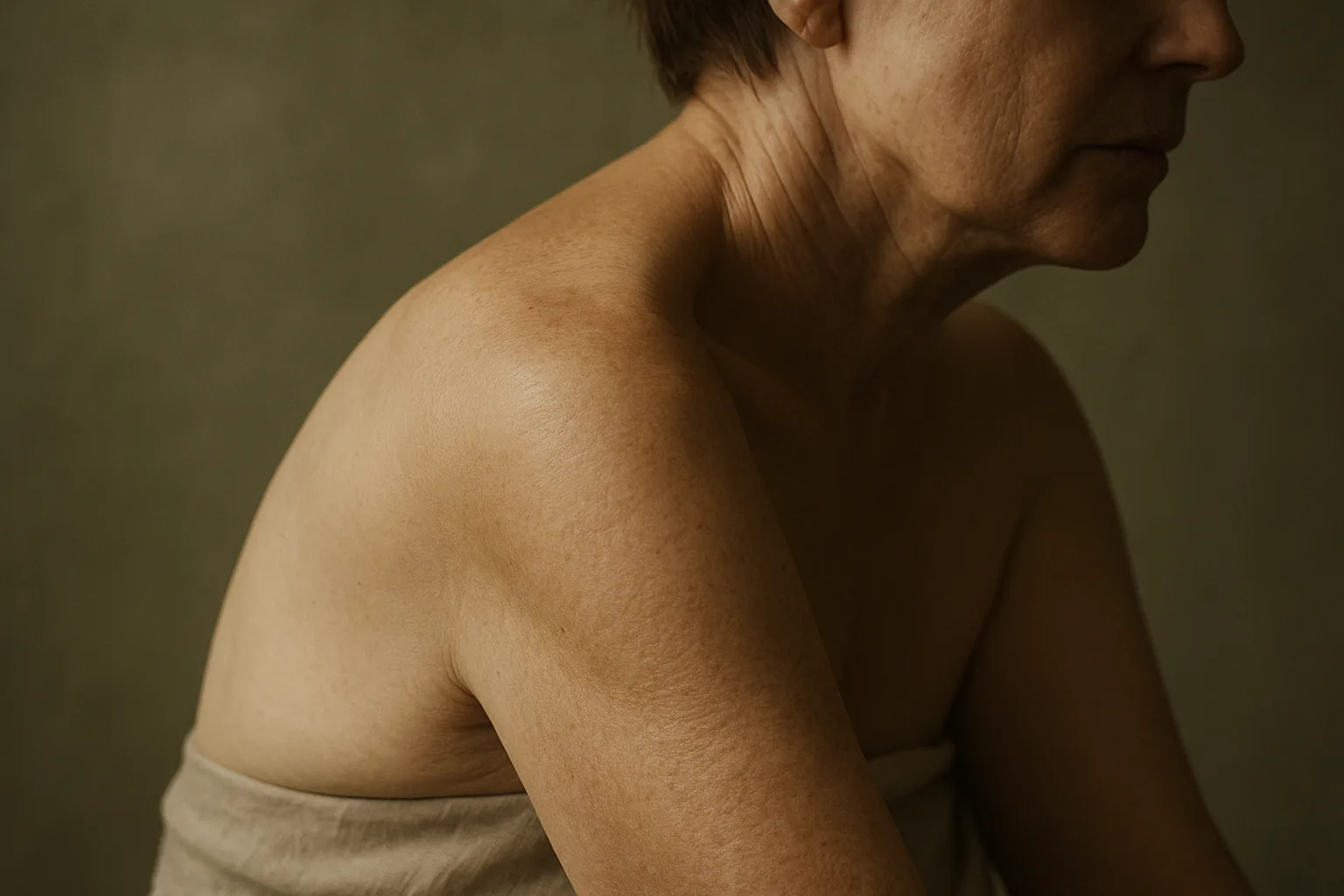
Loose skin on the arms, abdomen, thighs and above the knees follows weight change, pregnancy and ordinary collagen decline. Dr Rakib pairs two tools for it: radiofrequency tightening for the skin itself and hyperdilute biostimulator for the support beneath, with a straight answer about where surgery is the better option.

Reviewed by Dr Rakib Uddin AHPRA MED0001936872

  • The cause identified before any treatment
  • Assessed by Dr Rakib and his team
  • Alternatives explained, including not treating
  • A clear pathway to the right option
Commissioned editorial study for this concern
Assessment with Dr Rakib

What's happening

Body skin laxity & loose skin: what is actually happening?

Body skin laxity is skin that has lost its snap: it gathers at the upper arms, folds softly at the abdomen, ripples on the thighs or pools just above the knees. The elastic recoil that once pulled skin flat over any movement has declined, through age, sun, genetics, and above all through stretch: pregnancy and significant weight change both ask the skin to expand, and its ability to contract back is finite.

The line that matters in this area is between laxity and excess. Lax skin, loosened but still substantially attached and springy, responds to treatments that contract and rebuild it. Excess skin, the fold a hand can gather after major weight loss, is beyond any energy device or injectable, and pretending otherwise wastes money and goodwill. The assessment here is largely about which side of that line each area sits on.

  • Arms, abdomen, thighs, knees

    4 zones

    The zones body tightening work is planned around here.

  • Skin and support

    Two layers

    Laxity involves the surface and the structure beneath it.

  • Mild to moderate

    Scope stated

    Non-surgical tools refine; skin excess is surgical territory.

The causes

Why does it happen?

Most cases come down to weight loss, pregnancy, age-related collagen and elastin decline, sun exposure, genetics, rapid growth or change stretching the skin's elastic limit. More than one is usually contributing at once, which is why the cause gets named before any treatment is suggested.

  1. Weight change

    Skin stretched by weight gain does not fully re-contract after loss, particularly rapid or repeated loss. The larger and faster the change, the more the recoil falls short.

  2. Pregnancy

    The abdomen expands past the skin's elastic limit in most pregnancies. How completely it recovers is mostly genetic, and multiple pregnancies compound the ask.

  3. Collagen and elastin decline

    The same ageing chemistry as the face, spread across larger areas: from the mid-twenties production falls behind loss, and recoil goes with it.

  4. Sun exposure

    Forearms, arms and décolletage collect decades of incidental Australian sun. Photoageing degrades elastin, and elastin is precisely what laxity is the loss of.

  5. Genetics

    Skin thickness, elastin quality and how well skin recovers from stretch are strongly inherited. Two people with identical histories can end up with very different arms.

The types

What are the different types?

There are 4 patterns worth telling apart, and the right plan depends on which one is yours.

  1. Post-weight-loss laxity

    Loosening across several zones after significant weight change; the most common presentation.

    XERF skin tightening
  2. Post-pregnancy abdomen

    Soft, crinkled abdominal skin after pregnancy, with structure otherwise intact.

    XERF skin tightening
  3. Age-related thinning

    Gradual loosening with crepey texture, arms and thighs first, without a weight story.

    Collagen biostimulator
  4. True skin excess

    Gatherable folds of redundant skin; outside non-surgical scope.

    Discuss referral

Which one is yours

Which one are you seeing?

Match what you notice in the mirror to a likely cause and the pathway worth discussing. It is a starting point, not a diagnosis: the assessment confirms it.

  1. If you notice

    “My upper arms have loosened and I keep them covered”

    Possible cause

    Laxity from age, sun or weight change

    Pathway

    Tightening programme, with support work where skin has also thinned

    XERF skin tightening
  2. If you notice

    “My stomach skin has stayed soft and crinkled since pregnancy”

    Possible cause

    Post-pregnancy laxity

    Pathway

    Radiofrequency tightening across the abdomen, staged over a programme

    XERF skin tightening
  3. If you notice

    “The skin above my knees and on my thighs has started to gather”

    Possible cause

    Age-related elastin decline

    Pathway

    Biostimulator support with tightening, matched to skin thickness

    Collagen biostimulator
  4. If you notice

    “I can gather a full fold of loose skin in my hand”

    Possible cause

    True excess after major weight loss

    Pathway

    A straightforward conversation about surgical options

    Discuss referral

What treats it

Which treatment actually addresses it?

The one that matches your cause. Each pathway below pairs a driver with the plan Dr Rakib Uddin would discuss for it: same concern, different cause, different treatment.

  1. When the skin layer itself has loosened

    XERF's body zones cover exactly these areas: abdomen, arms and knees. Radiofrequency contracts skin immediately and recruits collagen over 3–6 months, across programmes of typically 3–6 sessions per area.

  2. When the skin has thinned as well as loosened

    Hyperdilute biostimulator spread across a zone thickens and supports the dermis as collagen rebuilds over 8–12 weeks; pairing it with tightening treats both layers of the problem, which is why the two are planned together.

  3. When laxity sits alongside contour concerns

    Loose skin, dimpling and contour depressions often share a postcode. Mapping them together means one coherent plan for the area instead of three overlapping treatments booked separately.

  4. When the finding is excess, not laxity

    A gatherable fold of redundant skin needs excision, not energy. Saying so at assessment, and referring well, is the correct treatment here, and it is the one this clinic will give rather than selling sessions that cannot succeed.

Where to go next

The treatment guides worth reading.

Each guide explains how the treatment works, who it suits, recovery and cost. The right one for your case is confirmed at assessment, not assumed online.

Prevention

What slows it down?

The habits below protect the result of any treatment, and slow the concern when it is still early. None of them replace assessment; all of them help.

  • Lose weight at a humane pace

    Gradual loss gives skin its best chance to contract along the way. Where rapid loss is medically right, plan for the skin conversation afterwards rather than being ambushed by it.

  • Sunscreen past the face

    Arms and décolletage age on sun exposure more than time. Daily SPF on exposed body skin protects the elastin that laxity spends.

  • Strength training under the skin

    Muscle gives loosened skin a firmer surface to drape over. Arms and thighs in particular read visibly tighter over trained muscle, no skin change required.

  • Protein and the basics

    Collagen is built from what you eat. Adequate protein, sleep and not smoking are unglamorous, and they are the foundation every treatment here builds on.

Common beliefs

What do people get wrong about it?

The beliefs patients most often arrive with, next to what is actually true.

  • Commonly believed

    “Firming creams tighten loose skin”

    In practice

    No cream reaches the dermal structure laxity lives in. Topicals hydrate the surface, which can look temporarily smoother; contraction and collagen rebuilding need energy-based or injectable treatment.

  • Commonly believed

    “Exercise alone will tighten the skin back”

    In practice

    Exercise builds the muscle beneath, which genuinely improves how the area looks, but it does not shorten skin. Stretched skin recovers by its own elasticity or not at all; past that, treatment or surgery are the levers.

  • Commonly believed

    “Non-surgical machines can replace an arm lift or tummy tuck”

    In practice

    They cannot, and the distinction is measurable: laxity responds to tightening, excess needs excision. We treat one and refer the other, and the assessment tells you which you have before any money changes hands.

In consultation

Tighten what still has spring in it; be straight about what no longer does.

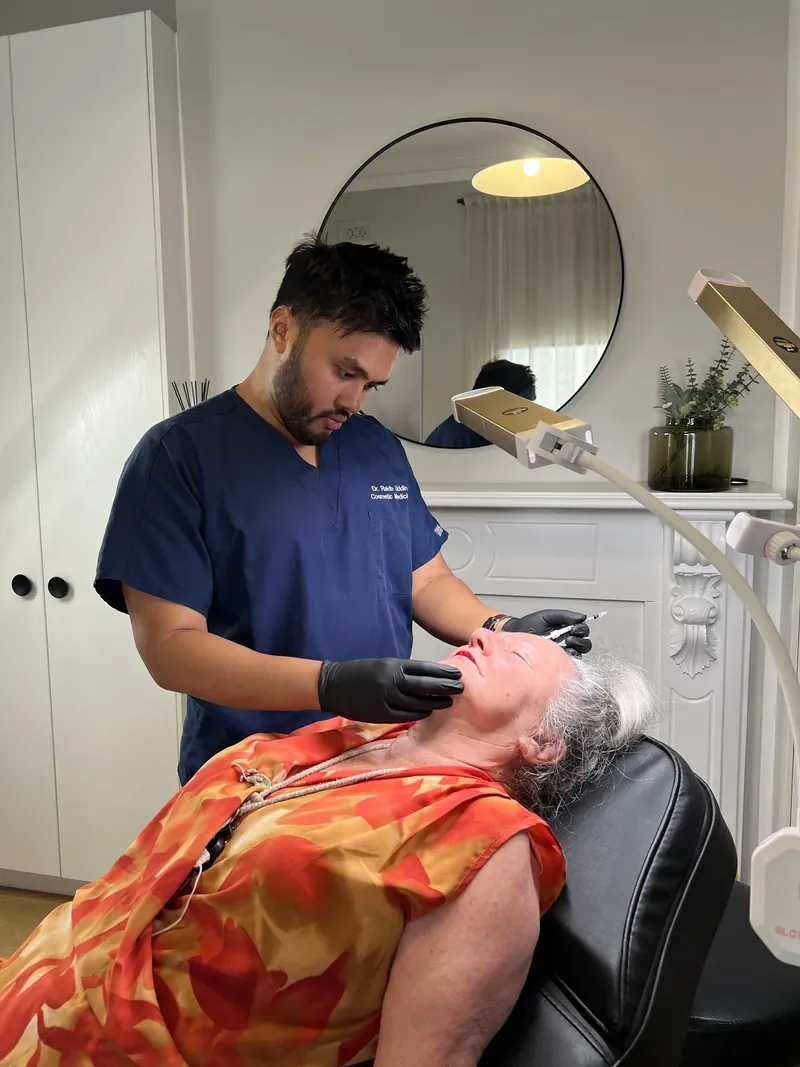
Cause before treatment: how Dr Rakib Uddin approaches body skin laxity & loose skin.

Dr Rakib Uddin, cosmetic doctor and founder of Aesthetic Doctors Australia

Your doctor

Dr Rakib Uddin

Cosmetic Doctor & Founder

  • MBBS (Qld)
  • BMedSci (Hons)
  • Dip. Surgical Anatomy
  • Fellow ACCSM

AHPRA MED0001936872

Every consultation for body skin laxity & loose skin is performed by Dr Rakib and his team: never delegated to a non-medical injector.

Dr Rakib Uddin is a Melbourne-based cosmetic doctor with formal surgical-anatomy training and over a decade in medicine. He performs every consultation, treatment and review at Aesthetic Doctors Australia personally, and trains other doctors in advanced injectable technique at Derma Medical Academy.

“If a treatment isn't right for you, I'll tell you. Every plan is built around your anatomy, not a template, and the goal is always a refreshed version of you, not a new face.”
  • Listen to your concern in full
  • Comprehensive medical and aesthetic assessment
  • Step-by-step treatment plan: single session or staged
  • Full discussion of risks, limitations and alternatives
  • Decline to treat when a procedure would do more harm than good
About the practice

Expert questions

The questions worth asking about body skin laxity & loose skin.

The questions that come up in the room, answered the way Dr Rakib answers them.

How much tightening can I realistically expect?

Meaningful but moderate: XERF produces visible contraction that builds over 3–6 months, and results are strongest on mild to moderate laxity with decent skin quality. It refines; it does not redraw. Where your skin sits on that spectrum is exactly what the assessment establishes, with photographs.

Which areas can be treated?

The arms, abdomen, thighs and the area above the knees, matching XERF's body zones here. Each area is its own programme of typically 3–6 sessions, about 30–60 minutes per session, with no significant downtime beyond a few hours of redness.

What does the hyperdilute biostimulator add?

Thickness and support. Diluted and spread across a zone, the biostimulator prompts collagen through the dermis over 8–12 weeks, so thin, crepey skin gains substance rather than just contraction. On thinned skin the combination outperforms either tool alone, which is why Dr Rakib pairs them.

I have lost over 30 kilograms. Is this for me?

Congratulations, and possibly not, at least not everywhere. Major weight loss usually leaves some areas with true excess that only surgery addresses, and others with laxity that tightening genuinely helps. The assessment maps each zone, treats what is treatable and refers what is not.

How long do results last?

Collagen built by treatment ages at the normal rate, so results hold in the order of 12–18 months before maintenance sessions are worth discussing, sun protection and stable weight extending that. Nothing here is permanent, and anyone telling you otherwise is describing a different universe.

Consultation first

Understand the cause. Then choose the pathway.

A consultation with Dr Rakib Uddin works out what's driving body skin laxity & loose skin in your case, then matches the right treatment, an alternative, or no treatment at all.

1167 Burke Road, Kew VIC 3101

Important treatment information

All information on this page is general in nature and is not a substitute for a medical consultation. Any before-and-after images shown are for illustrative purposes only and do not guarantee individual outcomes. Treatments performed by Dr Rakib Uddin (AHPRA MED0001936872) vary based on each patient's unique anatomy, medical history and needs. All cosmetic injectable treatments carry risks; a consultation is required prior to any treatment to assess suitability, discuss risks and alternatives, and establish realistic expectations.

Consultation Body skin laxity & loose skin
Book