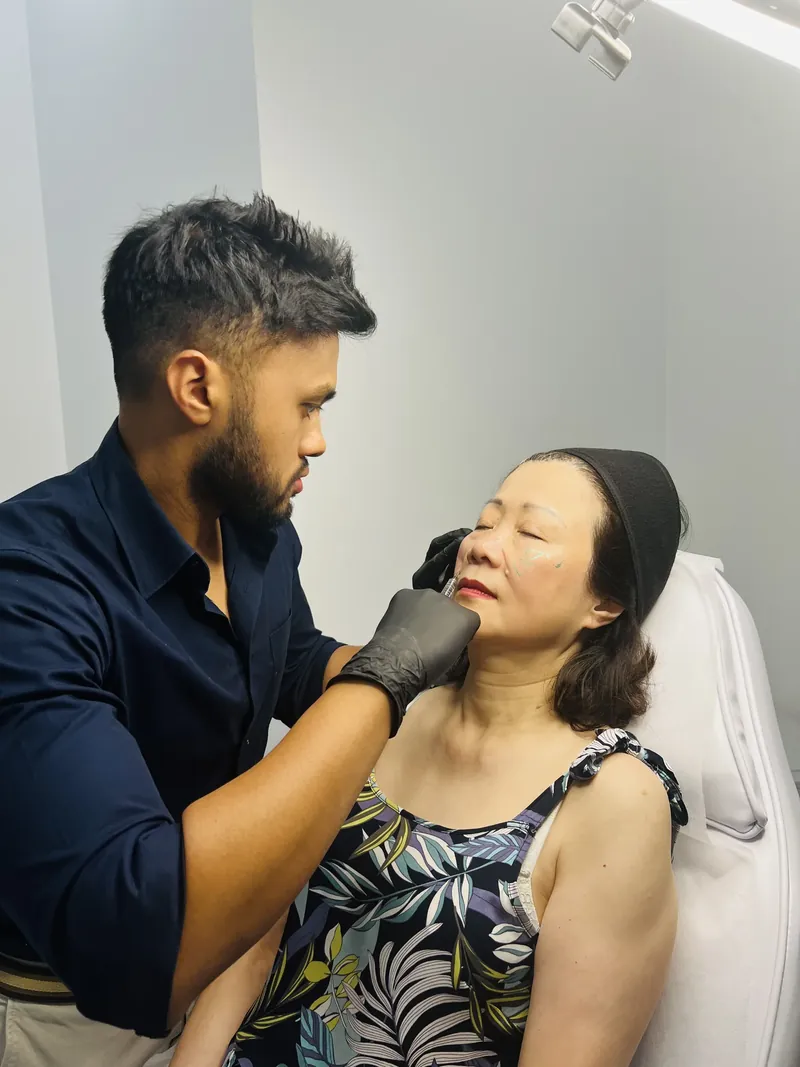
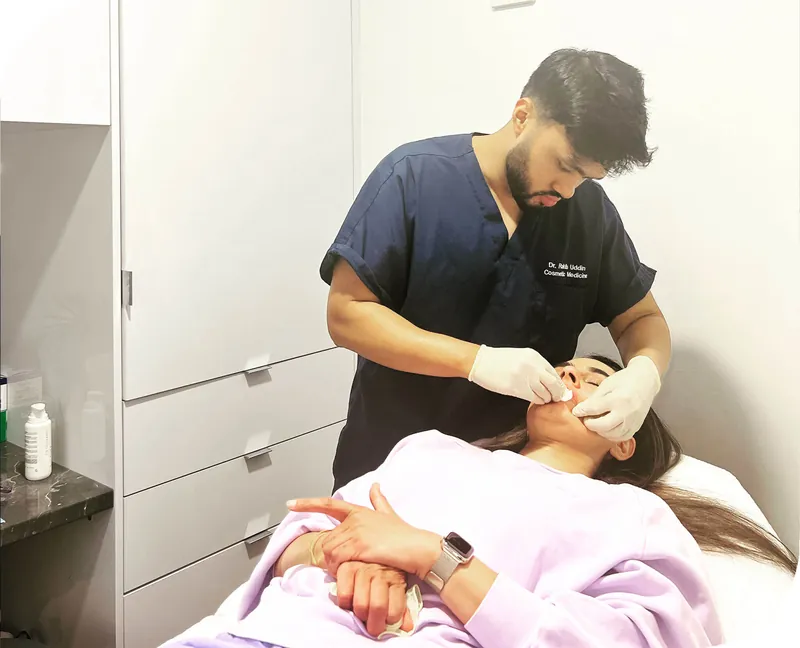
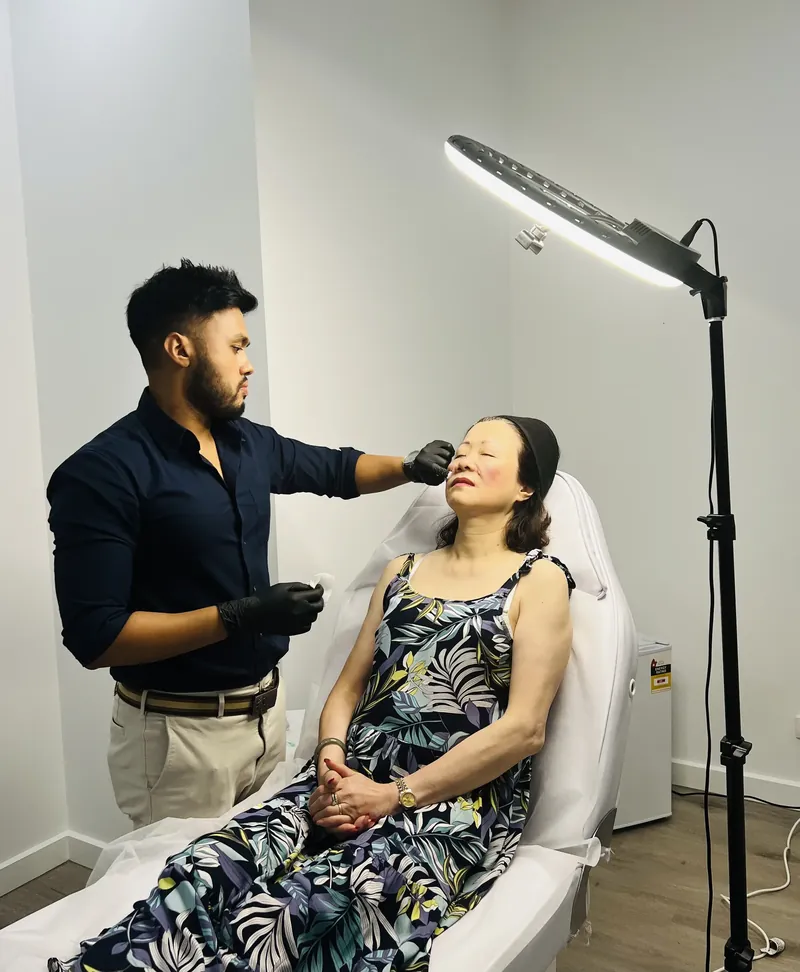
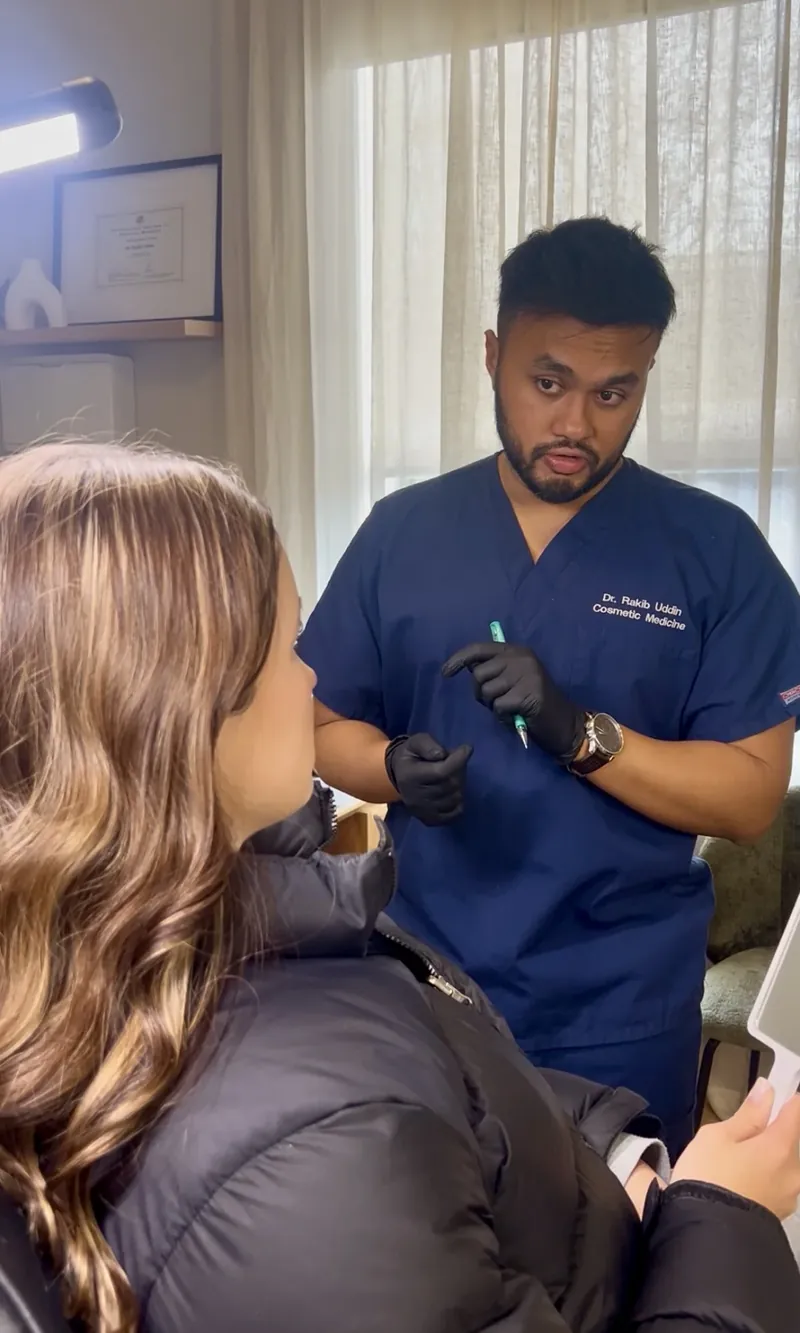
Under-eye rejuvenation is a category, not a single treatment. The right approach depends entirely on what's actually causing the tired appearance: structural volume loss, thin or crepey skin, fat herniation (puffiness), or pigmentation. Most patients have more than one factor.
Done well, it's the most rewarding aesthetic treatment because it changes how rested you look in every photograph. Done badly, a 'tear trough filler' added to skin that's actually too thin or to a face that's actually puffy, it can make the area look worse. Assessment is the treatment.
Hollow, skin, puff
3 causes
Three different underlying causes: the assessment is the treatment.
Rarely one tool
Multi-modal
Filler, skin booster, wrinkle relaxer and lifestyle are all on the table.
Doctor-only
High-risk zone
Vascular anatomy here demands medical training, not technician treatment.
What it treats
What does under-eye rejuvenation treat?
Under-eye rejuvenation is most often planned for tear-trough hollows, dark circles, crepey under-eye skin, puffiness. The treatment only makes sense when it matches the cause of your concern; here is where it fits.
Three independent drivers: a true bony or fat-pad hollow casting shadow, translucent skin showing the orbicularis muscle's blue tinge, or melanin pigmentation. Each looks similar in the mirror, each needs a different treatment.
Treatment role
Distinguish the cause first. Hollows respond to filler; skin transparency responds to skin boosters; pigmentation responds to topical and skin treatments.
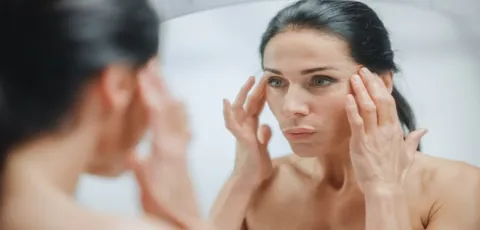
Under-eye skin is the face's thinnest and ages first. Sun exposure, dehydration and collagen loss show here years before they show elsewhere.
Treatment role
Polynucleotides and bioremodelling thicken and remodel the periorbital skin: filler in this scenario would make crepiness more visible, not less.
Results
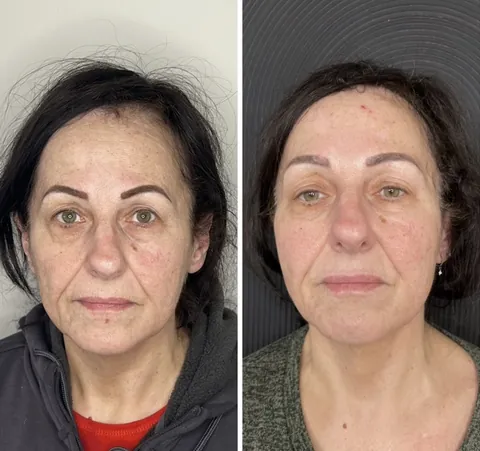
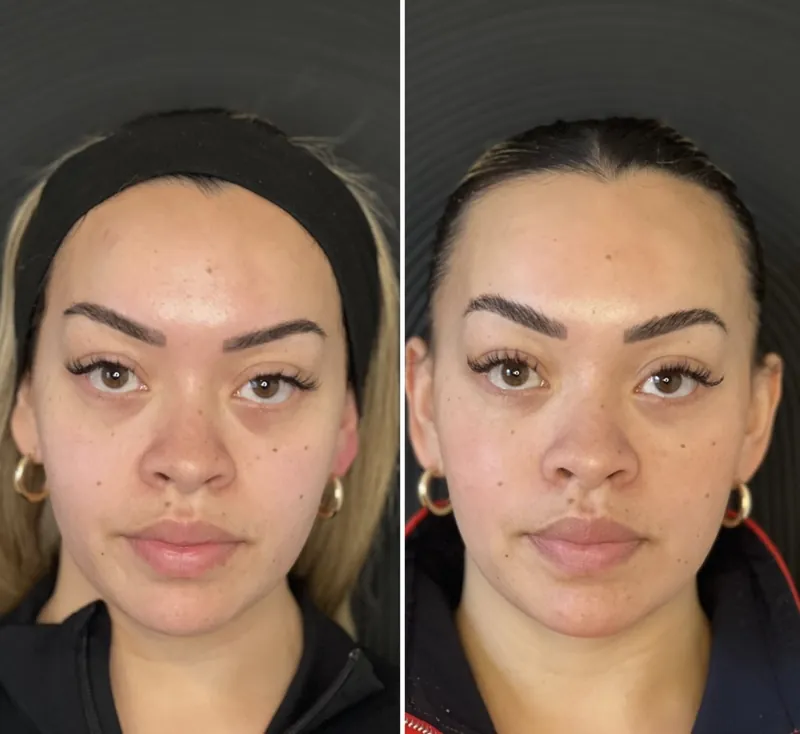
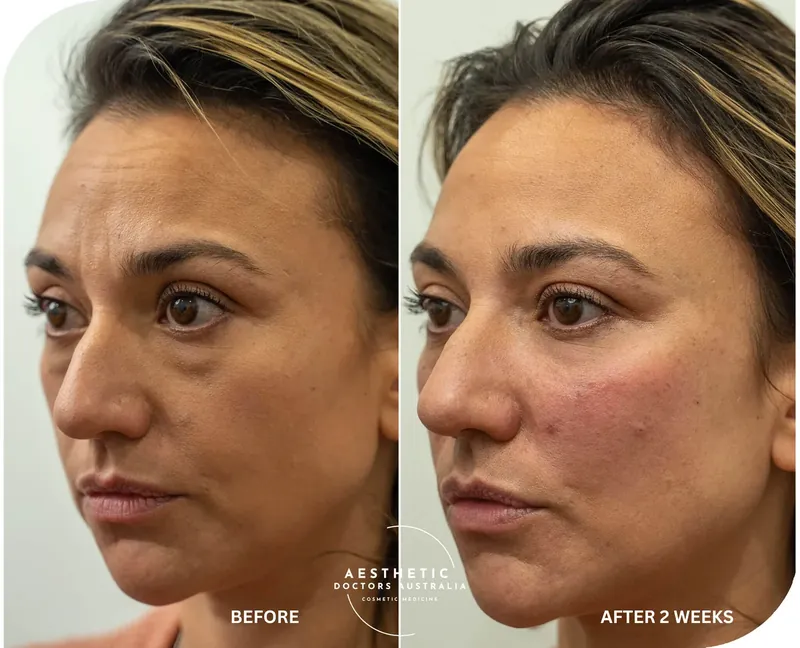
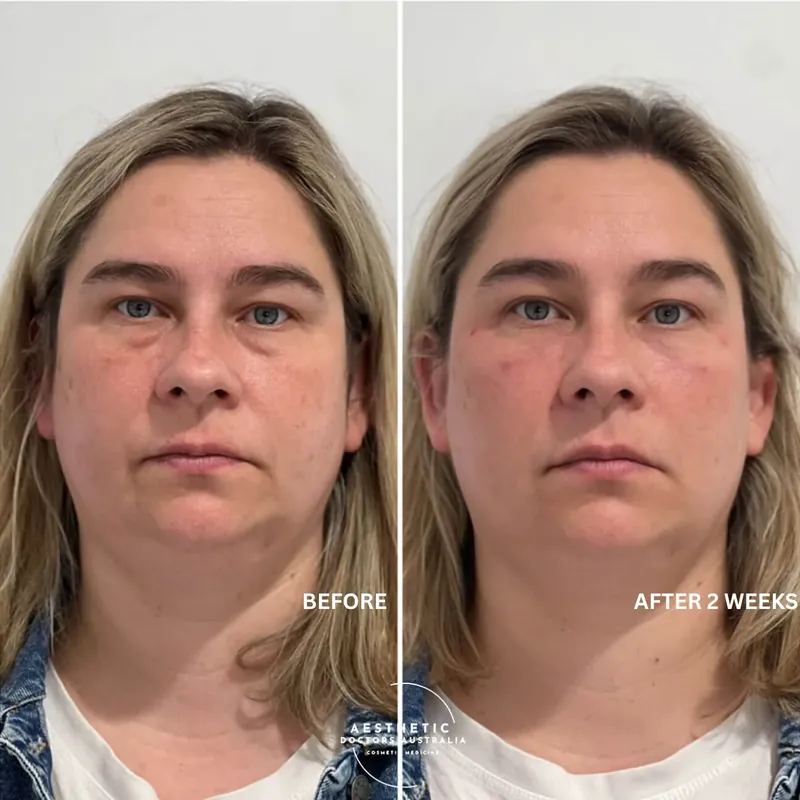
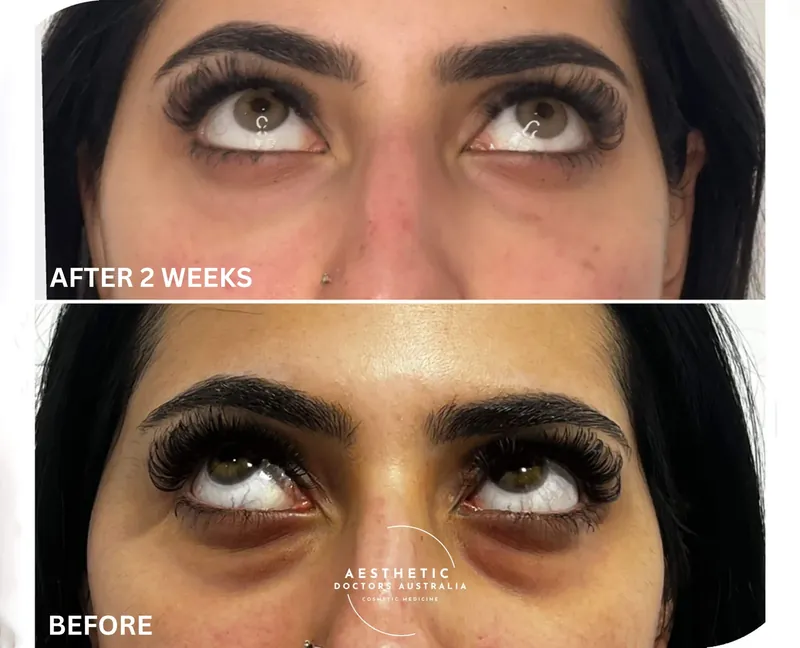
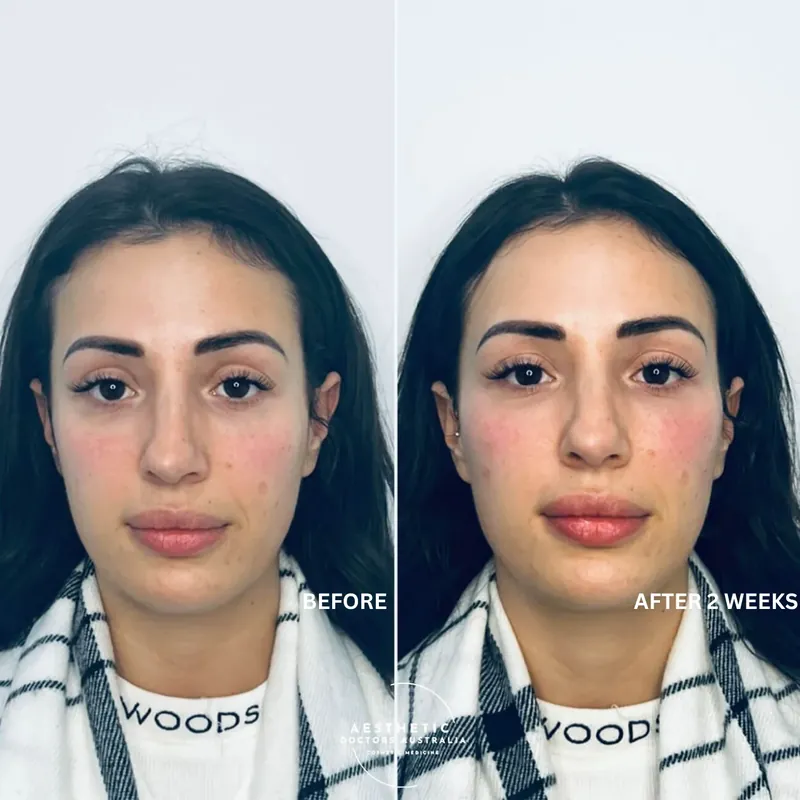
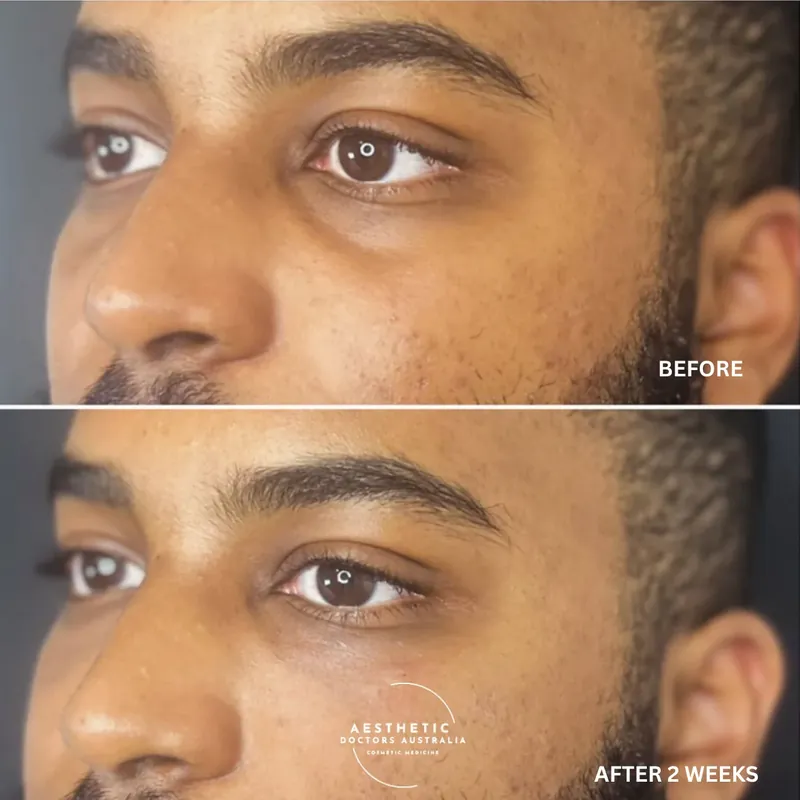
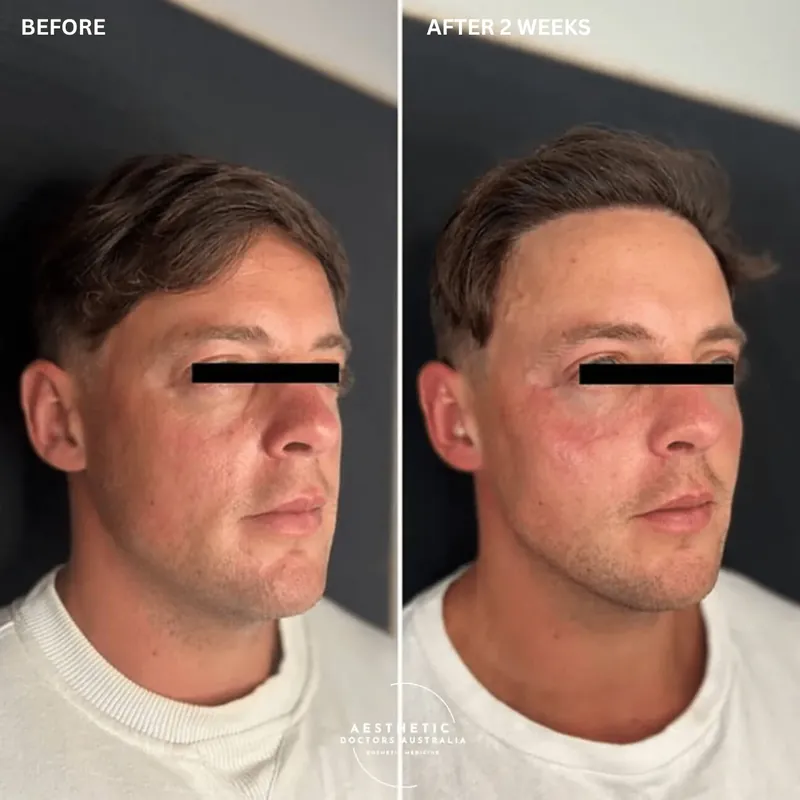
Under-eye rejuvenation: results from the clinic.
Each case is a single composite photographed at the practice: the concern that brought the patient in, the treatment performed, and the point at which the result was reviewed. Outcomes vary from person to person. This is clinical context, not a promise.
This result is specific to this patient and will not necessarily reflect another person's outcome.
Hollowing under the eyes running into a flattened cheek
Cheek and under-eye rejuvenation
This result is specific to this patient and will not necessarily reflect another person's outcome.
Shadowing and hollowing beneath the eyes
Under-eye rejuvenation
This result is specific to this patient and will not necessarily reflect another person's outcome.
Hollowing under the eyes casting a tired shadow
Cheek and under-eye rejuvenation
This result is specific to this patient and will not necessarily reflect another person's outcome.
Puffiness and shadowing beneath the eyes
Cheek and under-eye rejuvenation
This result is specific to this patient and will not necessarily reflect another person's outcome.
Dark circles with volume loss under the eyes
Under-eye rejuvenation
This result is specific to this patient and will not necessarily reflect another person's outcome.
Tear-trough shadowing beneath both eyes
Under-eye rejuvenation
This result is specific to this patient and will not necessarily reflect another person's outcome.
Under-eye hollowing viewed on upward gaze
Under-eye rejuvenation
This result is specific to this patient and will not necessarily reflect another person's outcome.
Under-eye and cheek volume loss
Cheek rejuvenation
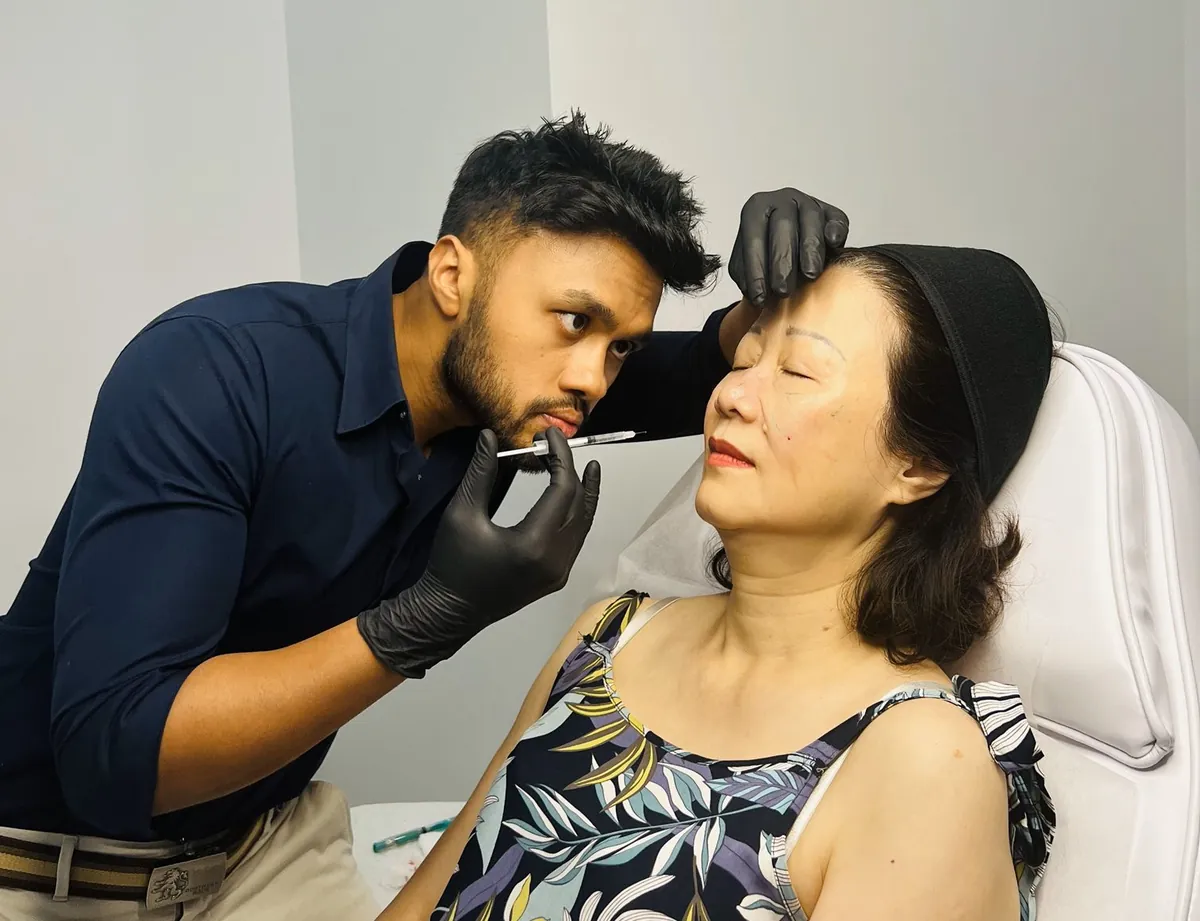
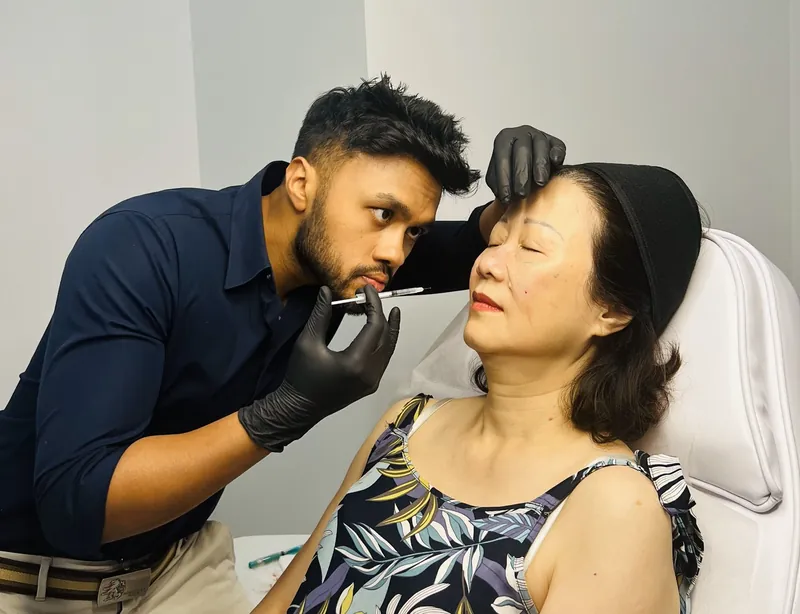
Images are real patients treated by Dr Rakib Uddin and are used with consent. Individual outcomes vary depending on anatomy, medical history, technique and aftercare; results shown are not a guarantee of yours.
From the clinic
Under-eye rejuvenation, in practice.
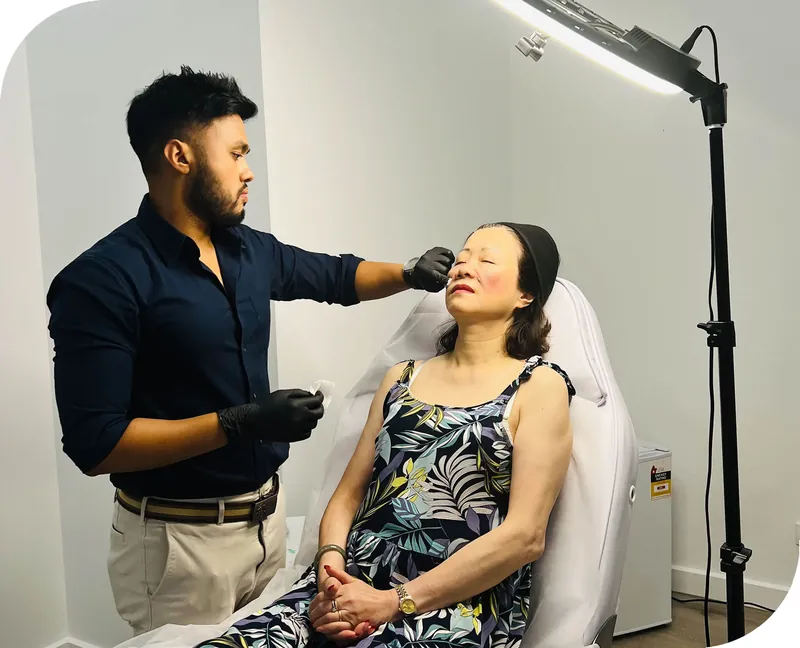
Selected imagery from the clinic: the same material discussed at consultation.
2 images · tap to enlarge
Imagery reflects work performed at the clinic. Individual results vary: outcomes depend on anatomy, the agreed plan and aftercare. Shown for education, not as a guarantee of result.
How it works
How does under-eye rejuvenation work?
Step 01
01 / 04
Why one zone, three problems
The periorbital area is a complex of bone, fat compartments, muscle, ligament and very thin skin, and they age at different rates and in different directions. The shadow you see can come from any one (or several). Asking 'what treatment is best for under-eyes?' assumes the cause is known. It isn't, until we look.
02 / 04
When filler is the answer
Filler works when there is a genuine structural hollow, typically a tear-trough depression where the orbital ligament tethers the skin to the bone. Carefully placed deep filler restores the missing volume and removes the shadow. Skin must be thick enough to mask the product; if it isn't, filler shows.
Step 03
03 / 04
When skin work is the answer
When the issue is skin transparency or crepiness, polynucleotides (polynucleotides) or bioremodelling are the correct tools. They thicken the skin and reduce translucency. Filler would worsen both. The patient who walks in 'wanting tear-trough filler' frequently needs this instead.
04 / 04
When the answer is to refer or wait
Significant fat herniation, lower-lid laxity, or severe festoons are surgical territory. Careful assessment includes the option of not treating and seeing an oculoplastic surgeon. Pushing injectables on a surgical problem creates a worse problem.
Whether it suits you
Is under-eye rejuvenation right for you?
The two lists below are where that answer starts; it is confirmed in person, never assumed. Balanced information protects you.
May be suitable for
✓ True tear-trough hollows in patients with adequate skin thickness
✓ Crepey thin under-eye skin (skin booster route)
✓ Patients wanting genuine clinical assessment of which approach fits
✓ Combination plans where two issues coexist
May not be suitable for
✕ Significant lower-lid bags or skin laxity: surgical referral
No effective treatment is risk-free, and no treatment does everything. Knowing both sides is part of informed consent.
Possible side effects
Swelling and bruising: most common, short-lived
Temporary lumps or asymmetry, correctable at review
Tyndall effect (blue tinge from superficial filler): avoidable with correct technique
Rarely, vascular events affecting vision: the highest-stakes injectable region anatomically
Limitations to understand
Cannot remove genuine fat-pad bags or skin laxity: that's surgery
Skin too thin? Filler isn't appropriate; skin work first
Pigmentation can require topical or laser treatment in parallel
Single-visit thinking doesn't suit this zone; staged plans win
The alternatives
Under-eye rejuvenation compared with the alternatives
Tear-trough filler vs polynucleotides for under-eyes
Tear-trough filler
Treats genuine structural hollow
Result immediate
Skin must be thick enough
Polynucleotide under-eye treatment
Thickens thin transparent skin
Treats crepiness and 'blue tinge'
Programme of 3 sessions
Which oneIf your darkness disappears when you gently push the cheek up, it's structural: filler. If it remains and the skin looks crepey or translucent, it's skin: Polynucleotides. Many patients need both, in sequence.
Filler vs surgery for under-eyes
Non-surgical (filler / skin)
Targets hollows and skin quality
No downtime to speak of
Reversible
Surgical (lower blepharoplasty)
Removes excess skin and fat bags
Permanent structural change
Surgical recovery
Which oneGenuine bags and severe laxity belong with an oculoplastic surgeon. We refer when that's the right recommendation: treating surgical issues with filler tends to highlight them.
What it costs
What does under-eye rejuvenation cost?
You receive an itemised written quote at consultation, before committing to anything. The consultation is $75 for 45 minutes with Dr Rakib Uddin, redeemed against your treatment if you go ahead.
Under-eye work is quoted at consultation after the assessment: the plan often involves more than one modality.
03 Whether a skin booster programme runs alongside
04 Maintenance plan
You commit to nothing in advance: the $75 consultation fee comes off your treatment if you go ahead, and the quote is written before anything is booked. If the recommendation is not to treat, that advice is the whole appointment.
Afterpay and Zip are available for treatment fees at the clinic, subject to each provider's own approval and terms.
Your doctor
Dr Rakib Uddin
Cosmetic Doctor & Founder
MBBS (Qld)
BMedSci (Hons)
Dip. Surgical Anatomy
Fellow ACCSM
AHPRA MED0001936872
Whatever is recommended at your consultation is planned by Dr Rakib and performed by him or a clinician on his team: never by a non-medical injector.
Dr Rakib Uddin is a Melbourne-based cosmetic doctor with formal surgical-anatomy training and over a decade in medicine. He leads every consultation, treatment and review at Aesthetic Doctors Australia, working with a clinical team he has trained and trusts, and trains other doctors in advanced injectable technique at Derma Medical Academy.
“If a treatment isn't right for you, I'll tell you. Every plan is built around your anatomy, not a template, and the goal is always a refreshed version of you, not a new face.”
✓Listen to your concern in full
✓Comprehensive medical and aesthetic assessment
✓Step-by-step treatment plan: single session or staged
✓Full discussion of risks, limitations and alternatives
✓Decline to treat when a procedure would do more harm than good
The questions worth asking about under-eye rejuvenation.
The questions that come up in the room, answered the way Dr Rakib answers them.
Why won't you just give me tear-trough filler?+
Because tear-trough filler is one of the most misused treatments in aesthetics. Done on the right anatomy it's transformative; done on thin skin or in puffy faces it makes the under-eye worse. The five-minute assessment that tells us which type you are is the entire reason this works.
Will the filler look obvious?+
Not if you have adequate skin thickness and the placement is deep against bone. The tell-tale signs of bad under-eye filler (blue Tyndall tinge, lumpy ridge, festoon-like swelling) come from superficial placement or treating skin that's too thin for filler. We assess for these before we offer it.
How long does under-eye filler actually last?+
Realistically: longer than most other filler areas because the under-eye moves less. Many patients get 18 months to two years from a careful treatment. Repeat treatments tend to need less volume.
What about the skin booster programme: does it really help darkness?+
Yes, when the darkness is caused by skin transparency rather than a hollow. Thickening the skin reduces how much of the underlying muscle's blueness shows through. Side-light assessment at consultation predicts this.
How risky is the under-eye area really?+
It is the highest-risk injectable region for vision-affecting vascular events. The risk is very low with careful technique, anatomical knowledge and immediate access to dissolving agent, and it is real. Don't have under-eye filler from a non-medical practitioner.
Why combination treatments rather than one?+
Because the under-eye usually has more than one cause. Filling a hollow without addressing thin skin gives a hollow-corrected-but-still-tired-looking eye. Doing both, in the right order, is what produces the rested look patients are actually after.
All information on this page is general in nature and is not a substitute for a medical consultation.
Any before-and-after images shown are for illustrative purposes only and do not guarantee individual
outcomes. Treatments performed by Dr Rakib Uddin (AHPRA MED0001936872) vary based on each
patient's unique anatomy, medical history and needs. All cosmetic injectable treatments carry risks;
a consultation is required prior to any treatment to assess suitability, discuss risks and
alternatives, and establish realistic expectations.