Aesthetic Doctors Australia

Menu

Where would you like to begin?

Nasolabial fold and smile line assessment in Kew, Melbourne

Nasolabial folds & smile lines, explained.

The nasolabial fold is normal anatomy: everyone has one, at every age. What changes is its depth, and the change usually starts above it, in the cheek. Treating the fold itself is often the last step, not the first.

Reviewed by Dr Rakib Uddin AHPRA MED0001936872

  • The cause identified before any treatment
  • Assessed by Dr Rakib and his team
  • Alternatives explained, including not treating
  • A clear pathway to the right option
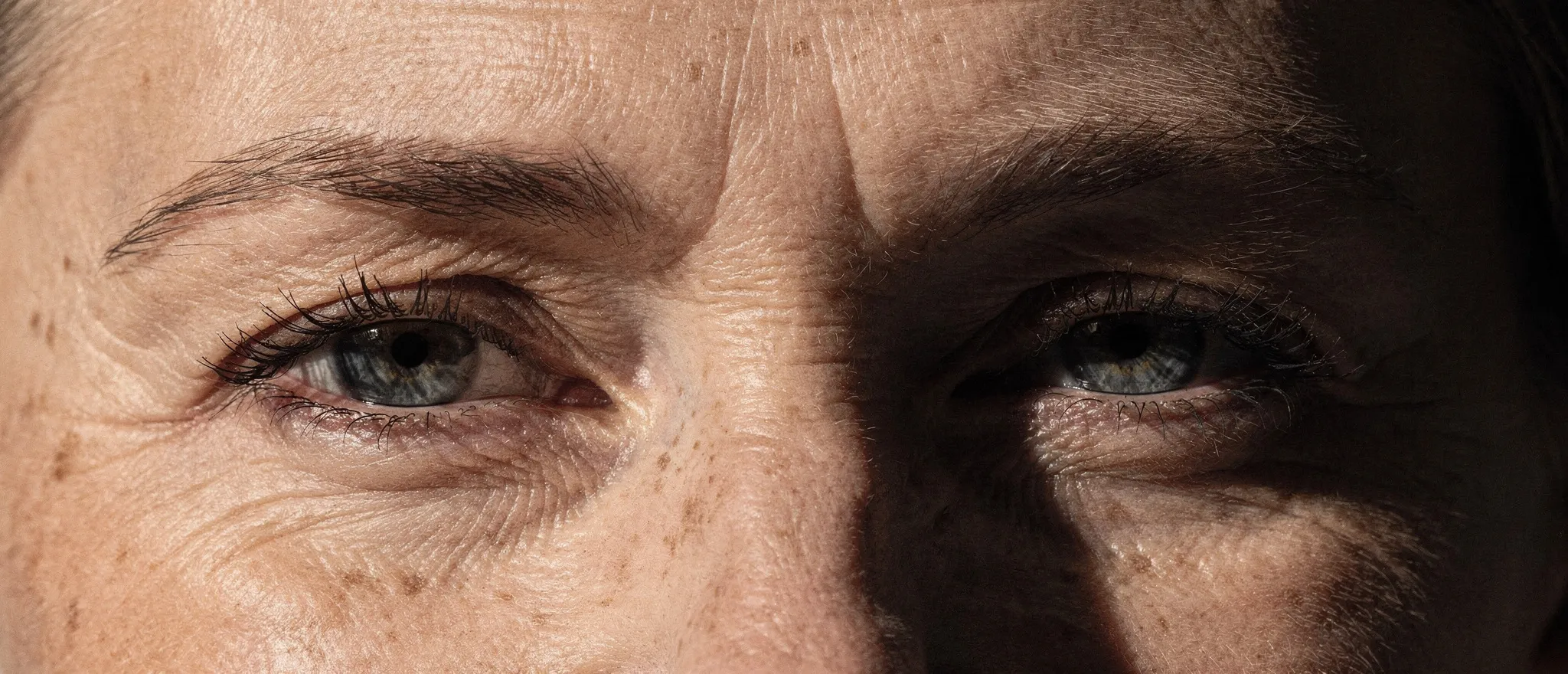
Commissioned editorial study for this concern
Assessment with Dr Rakib

What's happening

Nasolabial folds & smile lines: what is actually happening?

The nasolabial fold is the crease running from the side of the nose to the corner of the mouth. It is a fixed anatomical boundary, present in children and visible whenever anyone smiles. The concern patients bring is not the fold itself but its deepening: the cheek above it loses volume and descends, and the soft tissue folds over that fixed line like fabric over a ledge.

That mechanism is why the treatment plan often does not start at the fold. Restoring support in the cheek, tightening the skin envelope or lifting descended tissue frequently softens the crease more naturally than filling it directly, and direct filler in the fold is reserved for what remains once the cause has been addressed.

  • Not a flaw

    Normal anatomy

    The fold exists in every face; depth is what changes.

  • Where depth comes from

    From above

    Cheek volume and descent deepen the fold from upstairs.

  • Tighten, lift, support

    Stepped plan

    Direct filler is considered last, where still required.

The causes

Why does it happen?

Most cases come down to mid-face volume loss, descent of the cheek fat pads over a fixed fold, skin laxity, sun damage, the fold's own ligament anatomy. More than one is usually contributing at once, which is why the cause gets named before any treatment is suggested.

  1. Mid-face volume loss

    The deep cheek fat compartments deflate with age. The overlying tissue loses its support, slides toward the fixed fold and deepens it from above.

  2. Tissue descent

    Facial ligaments loosen over time and the cheek soft tissue moves downward. The fold is where that descending tissue meets an anchored crease, so it bunches there.

  3. Skin laxity

    Collagen and elastin decline let the skin drape more loosely. A crease that once appeared only with a smile starts to sit there at rest.

  4. Sun damage

    Photoageing accelerates every part of the process: it thins skin, weakens its recoil and etches expression creases in earlier than they would otherwise appear.

  5. Anatomy you were born with

    Fold depth varies naturally between faces. Fuller cheeks, stronger smiles and some skeletal shapes produce a more defined fold from a young age, with no ageing involved.

The types

What are the different types?

There are 4 patterns worth telling apart, and the right plan depends on which one is yours.

  1. Laxity-led deepening

    Skin quality has changed; the fold shadows more because the envelope is looser.

    XERF skin tightening
  2. Descent-led deepening

    Cheek tissue has moved downward over the fold; pushing it gently upward softens the crease.

    Thread lift
  3. Deflation-led deepening

    The mid-face has lost structural volume and the fold has lost its support from above.

    Collagen biostimulator
  4. Residual fold after support

    A crease that persists once the cheek is addressed, considered for direct softening.

    Volume enhancement

Which one is yours

Which one are you seeing?

Match what you notice in the mirror to a likely cause and the pathway worth discussing. It is a starting point, not a diagnosis: the assessment confirms it.

  1. If you notice

    “The fold looks deeper but my whole cheek also looks flatter than it used to”

    Possible cause

    Deflation-led: mid-face volume loss

    Pathway

    Rebuild cheek support first; the fold usually softens with it

    Collagen biostimulator
  2. If you notice

    “When I lift my cheek gently with a finger, the fold almost disappears”

    Possible cause

    Descent-led: tissue sitting over the fold

    Pathway

    Lifting treatment to reposition the cheek

    Thread lift
  3. If you notice

    “My skin generally feels looser; the fold is one of several new creases”

    Possible cause

    Laxity-led: skin quality change

    Pathway

    Skin tightening across the area rather than work on one line

    XERF skin tightening
  4. If you notice

    “The crease has been deep since my twenties and my cheeks are full”

    Possible cause

    Natural anatomy rather than ageing

    Pathway

    Conservative direct softening, discussed carefully, or no treatment

    Discuss at consultation

What treats it

Which treatment actually addresses it?

The one that matches your cause. Each pathway below pairs a driver with the plan Dr Rakib Uddin would discuss for it: same concern, different cause, different treatment.

  1. When skin laxity is the main driver

    Radiofrequency tightening improves the skin envelope itself: contraction is immediate and collagen remodelling builds over 3–6 months. Dr Rakib's sequence for this concern starts here, before anything is injected.

  2. When the cheek has descended over the fold

    Threads reposition descended tissue upward and off the fold. Filler cannot lift; using volume to chase descent is how faces end up heavy.

  3. When mid-face structure has deflated

    Restoring the cheek's structural support takes the load off the fold from above. Biostimulation builds gradually over 8–12 weeks, which suits a change nobody should be able to point at.

  4. When a residual crease remains after the cause is treated

    Careful, conservative softening of the fold itself is the final step where one is still wanted: small volumes, placed to soften rather than erase, because a completely flat nasolabial area looks wrong on a moving face.

Prevention

What slows it down?

The habits below protect the result of any treatment, and slow the concern when it is still early. None of them replace assessment; all of them help.

  • Daily sun protection

    UV exposure drives the skin-quality half of fold deepening. Broad-spectrum SPF 50+ every day is the single most useful habit for this area.

  • Sleep position awareness

    Side sleepers often show a deeper fold on the pillow side. It will not undo anatomy, but pressure night after night contributes to asymmetry.

  • Look after the cheek, not the crease

    Skin quality treatments and early structural maintenance in the mid-face slow the deepening pattern more effectively than anything applied to the line itself.

  • Be cautious with repeated direct filling

    Fold after fold of product placed straight into the crease over years adds weight exactly where the face is already folding. Restraint protects the result.

Common beliefs

What do people get wrong about it?

The beliefs patients most often arrive with, next to what is actually true.

  • Commonly believed

    “The fold should be filled until it disappears”

    In practice

    A completely erased nasolabial fold reads as unnatural the moment you smile, because the fold is part of normal expression. The realistic goal is a softer crease at rest, not a flat one.

  • Commonly believed

    “Smile lines mean you have smiled too much”

    In practice

    Expression contributes far less than volume loss, descent and skin change. Nobody should smile less; the fold deepens for structural reasons, not because of a habit worth changing.

  • Commonly believed

    “One syringe in the crease fixes it”

    In practice

    When deepening comes from the cheek above, product in the crease treats the symptom and adds weight where tissue is already folding. Softer, longer-lasting results usually come from treating the support first.

In consultation

Support the cheek and the fold softens: chase the crease and the face grows heavy.

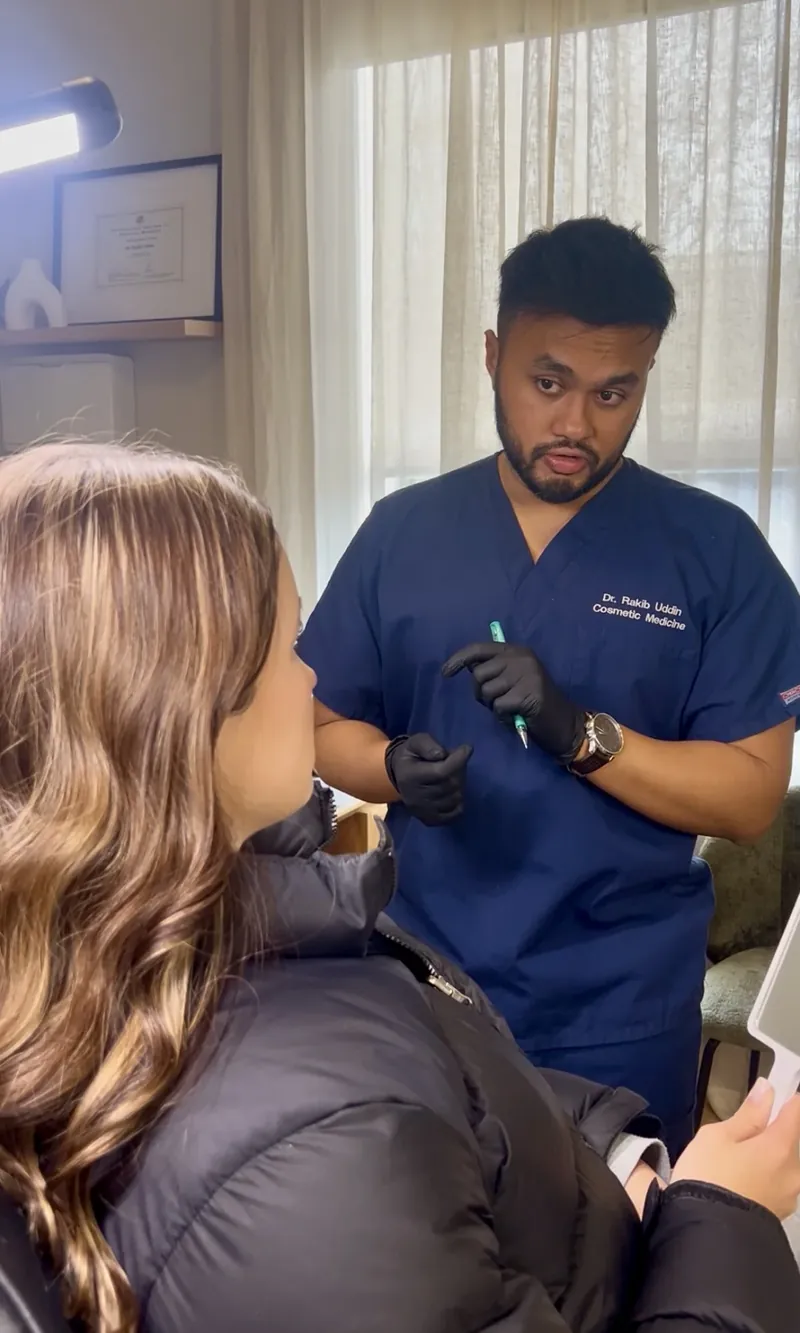
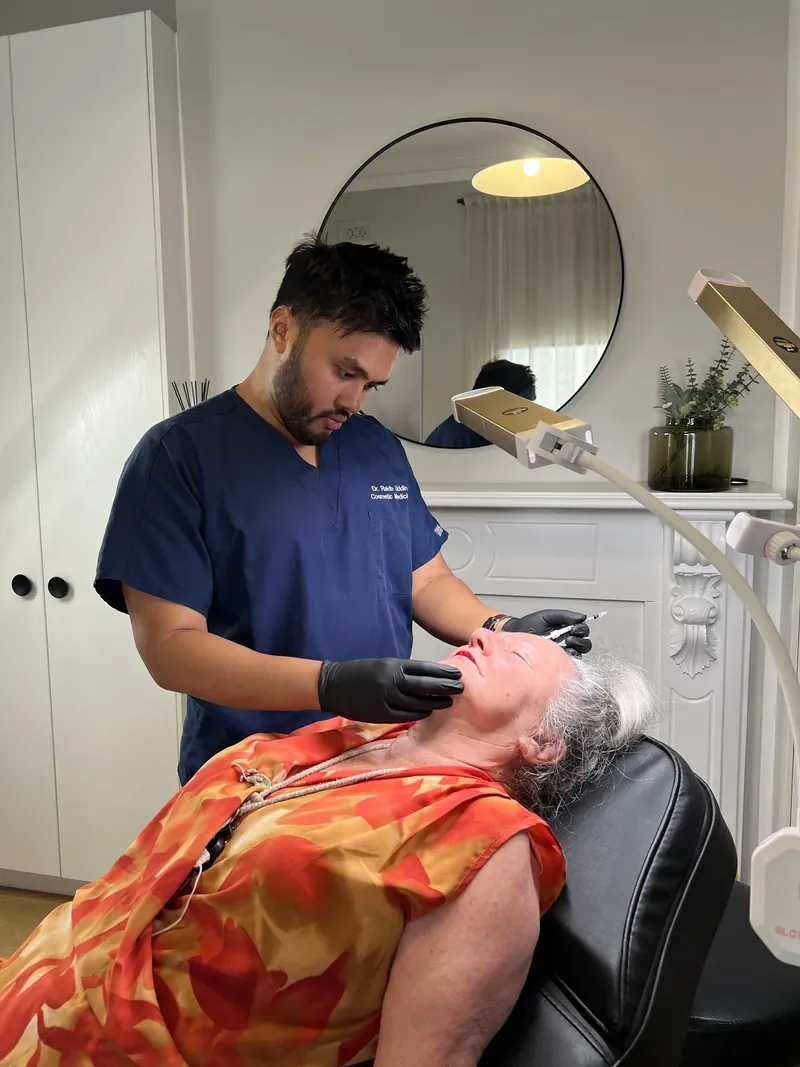
Cause before treatment: how Dr Rakib Uddin approaches nasolabial folds & smile lines.

Dr Rakib Uddin, cosmetic doctor and founder of Aesthetic Doctors Australia

Your doctor

Dr Rakib Uddin

Cosmetic Doctor & Founder

  • MBBS (Qld)
  • BMedSci (Hons)
  • Dip. Surgical Anatomy
  • Fellow ACCSM

AHPRA MED0001936872

Every consultation for nasolabial folds & smile lines is performed by Dr Rakib and his team: never delegated to a non-medical injector.

Dr Rakib Uddin is a Melbourne-based cosmetic doctor with formal surgical-anatomy training and over a decade in medicine. He performs every consultation, treatment and review at Aesthetic Doctors Australia personally, and trains other doctors in advanced injectable technique at Derma Medical Academy.

“If a treatment isn't right for you, I'll tell you. Every plan is built around your anatomy, not a template, and the goal is always a refreshed version of you, not a new face.”
  • Listen to your concern in full
  • Comprehensive medical and aesthetic assessment
  • Step-by-step treatment plan: single session or staged
  • Full discussion of risks, limitations and alternatives
  • Decline to treat when a procedure would do more harm than good
About the practice

Expert questions

The questions worth asking about nasolabial folds & smile lines.

The questions that come up in the room, answered the way Dr Rakib answers them.

Why would you treat my cheek when my concern is the fold?

Because in most faces the fold deepens from above: the cheek deflates or descends and the soft tissue bunches over a fixed crease. Restore that support and the fold softens as a consequence. Assessment works out how much of your fold is cheek-driven and how much belongs to the fold itself.

In what order would treatments happen?

The usual sequence for this concern is skin tightening first where laxity contributes, lifting where tissue has descended, structural support where the mid-face has deflated, and direct softening of the crease last, only where still required. Many patients never need the last step.

How long do results last?

XERF programmes are typically reviewed as collagen remodelling matures over 3–6 months. Threads typically hold 12–18 months. Biostimulator support builds over 8–12 weeks and lasts 12–18+ months. A residual-fold softening is reviewed at two weeks like any volume work.

Can the fold be treated if I have had filler there before?

Yes, but the existing product is assessed first, with ultrasound where useful. Previous filler sitting in or above the fold sometimes needs dissolving before a better-placed plan is built, and it is worth knowing that before anything new is injected.

What happens if I do nothing?

Nothing dangerous. The fold is normal anatomy, and deepening is a gradual structural change rather than a medical problem. Some patients choose skin-quality maintenance only, and that is a reasonable plan we will say so about.

Consultation first

Understand the cause. Then choose the pathway.

A consultation with Dr Rakib Uddin works out what's driving nasolabial folds & smile lines in your case, then matches the right treatment, an alternative, or no treatment at all.

1167 Burke Road, Kew VIC 3101

Important treatment information

All information on this page is general in nature and is not a substitute for a medical consultation. Any before-and-after images shown are for illustrative purposes only and do not guarantee individual outcomes. Treatments performed by Dr Rakib Uddin (AHPRA MED0001936872) vary based on each patient's unique anatomy, medical history and needs. All cosmetic injectable treatments carry risks; a consultation is required prior to any treatment to assess suitability, discuss risks and alternatives, and establish realistic expectations.

Consultation Nasolabial folds & smile lines
Book