Aesthetic Doctors Australia

Menu

Where would you like to begin?

Under-eye assessment in Kew, Melbourne

Under-eye darkness, hollows & bags, explained.

Under-eye darkness has at least three different anatomical causes: a hollow casting shadow, transparent skin showing underlying muscle blue, or pigmentation. Each cause needs a different treatment. The under-eye is the most-misdiagnosed area in aesthetics.

Reviewed by Dr Rakib Uddin AHPRA MED0001936872

  • The cause identified before any treatment
  • Assessed by Dr Rakib and his team
  • Alternatives explained, including not treating
  • A clear pathway to the right option
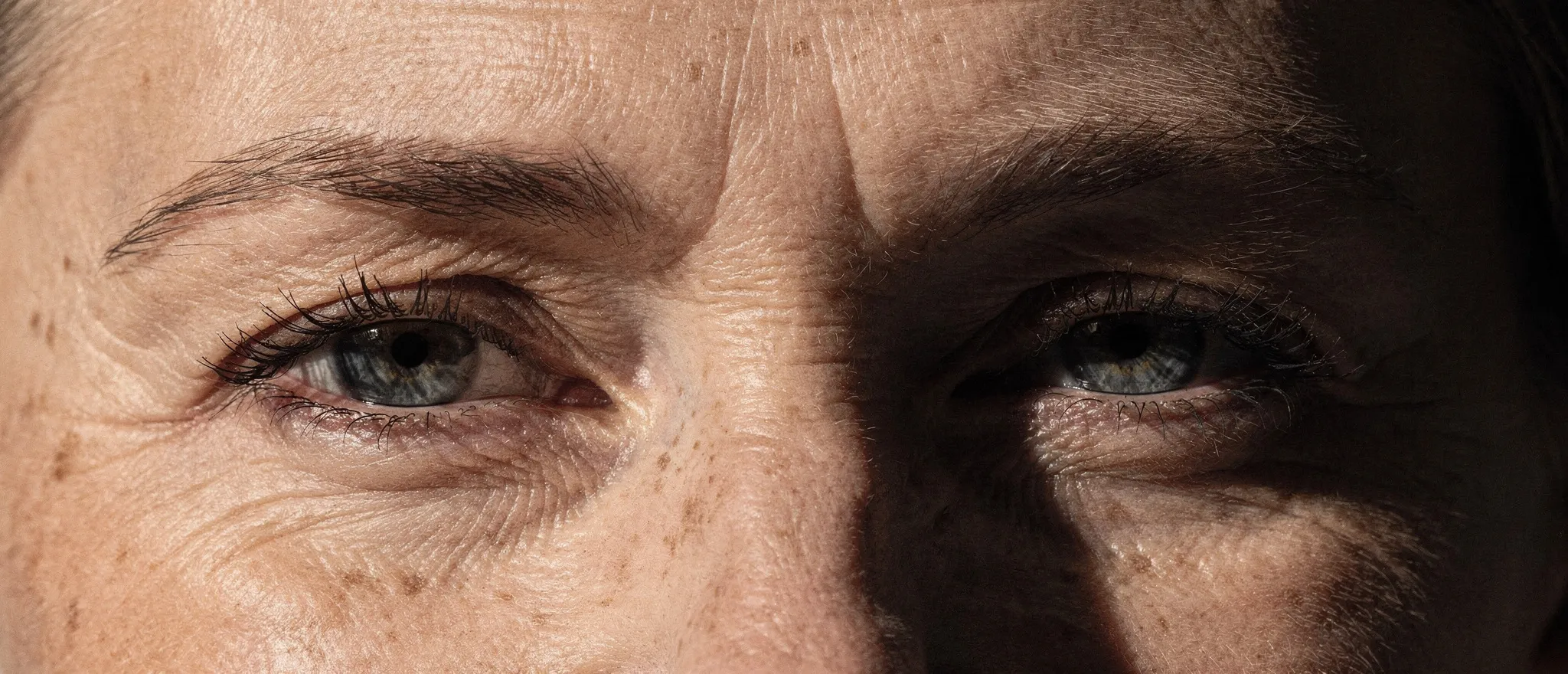
Commissioned editorial study for this concern
Assessment with Dr Rakib

What's happening

Under-eye darkness, hollows & bags: what is actually happening?

Under-eye darkness is a category, not one problem. Three different mechanisms produce similar-looking shadows: structural depression in the tear trough casting an actual shadow; very thin transparent skin showing the underlying orbicularis muscle's blue tinge; or pigmentation (melanin) in the skin itself.

Most patients have more than one. Treating the wrong cause is the most common error in aesthetic medicine: filling thin skin or under-eye pigmentation produces ridges, blue Tyndall tinge, and a result worse than the starting point. Assessment is the treatment.

  • Frequently overlap

    3 causes

    Hollow, transparent skin, pigmentation: most patients have two.

  • Diagnostic

    Side-light test

    A simple lighting test distinguishes the main cause.

  • Doctor-only

    High-stakes zone

    Vascular anatomy demands medical training, not technician treatment.

The causes

Why does it happen?

Most cases come down to true bony or fat-pad hollow, thin transparent skin showing muscle blue, post-inflammatory or hereditary pigmentation, puffiness from fat herniation. More than one is usually contributing at once, which is why the cause gets named before any treatment is suggested.

  1. Tear-trough hollow (structural)

    A genuine depression where the orbital ligament tethers the skin to the bone. Light casts a real shadow. Skin pinch test shows adequate thickness.

  2. Thin transparent skin

    Periorbital skin is the face's thinnest. When it's particularly translucent, the orbicularis muscle's blue colour shows through as darkness, even without a hollow.

  3. Hereditary or inflammatory pigmentation

    Melanin in the skin itself, often from genetics, sun exposure, or post-inflammatory change. Looks like darkness but is in the skin layer, not the shadows.

  4. Fat herniation (puffiness)

    Genuine bags from fat-pad protrusion. Skin treatment and filler can worsen these; usually surgical.

The types

What are the different types?

There are 4 patterns worth telling apart, and the right plan depends on which one is yours.

  1. Shadow-from-hollow

    Visible depression catches light differently. Skin still thick enough for filler.

    Tear-trough volume enhancement (in suitable patients)
  2. Thin-skin transparency

    Skin shows the underlying muscle's blue colour. Filler would make this worse.

    Polynucleotides for skin thickening
  3. Pigmentation-dominant

    Genuine melanin in the skin itself.

    Skin assessment and topical management
  4. Fat-bag-dominant

    Genuine fat herniation creating bags above any darkness.

    Surgical referral

Which one is yours

Which one are you seeing?

Match what you notice in the mirror to a likely cause and the pathway worth discussing. It is a starting point, not a diagnosis: the assessment confirms it.

  1. If you notice

    “When I push my cheek up, the darkness disappears”

    Possible cause

    Shadow-from-hollow (structural)

    Pathway

    Tear-trough volume enhancement if skin is thick enough

    Under-eye treatment
  2. If you notice

    “The skin under my eyes looks crepey and almost see-through”

    Possible cause

    Thin-skin transparency

    Pathway

    Skin-thickening programme (polynucleotides or bioremodelling)

    Polynucleotides
  3. If you notice

    “I have brown pigmentation rather than blue shadow”

    Possible cause

    Pigmentation-dominant

    Pathway

    Topical and skin treatments; not volume enhancement

    Discuss skin options
  4. If you notice

    “I have visible bags above the darkness, not just shadow”

    Possible cause

    Fat-bag-dominant

    Pathway

    Surgical assessment

    Surgical referral discussion

What treats it

Which treatment actually addresses it?

The one that matches your cause. Each pathway below pairs a driver with the plan Dr Rakib Uddin would discuss for it: same concern, different cause, different treatment.

  1. When genuine structural hollow with adequate skin thickness

    Deep filler against bone restores the lost volume and removes the shadow.

  2. When thin transparent skin with darkness

    Skin thickening reduces translucency. Filler would make this worse.

  3. When pigmentation in the skin

    Topical and skin-quality treatments address pigmentation. Filler in pigmented under-eyes doesn't address the cause.

  4. When fat-pad herniation

    Surgical lower-eyelid surgery is the appropriate treatment. Injectable plans don't address this.

Prevention

What slows it down?

The habits below protect the result of any treatment, and slow the concern when it is still early. None of them replace assessment; all of them help.

  • Sleep and hydration

    Lifestyle factors produce variable temporary under-eye change. Consistent sleep and hydration reduce the day-to-day fluctuation.

  • Sun protection

    Periorbital skin damages early. Daily SPF and sunglasses protect the existing skin and any treatment result.

  • Skincare with evidence

    Vitamin C, retinoids and well-formulated eye products help skin quality long-term. Trends with no evidence base don't.

  • Don't over-treat

    Repeated under-eye filler over years is the leading cause of festoon-like swelling and chronic puffiness. Less is more.

Common beliefs

What do people get wrong about it?

The beliefs patients most often arrive with, next to what is actually true.

  • Commonly believed

    “Tear-trough filler fixes under-eye darkness”

    In practice

    Only when the darkness is caused by a genuine hollow casting a shadow, and only when skin thickness is adequate. In other patients, filler makes the under-eye worse, and one of the most common aesthetic regrets.

  • Commonly believed

    “Caffeine eye creams reduce shadows”

    In practice

    Topical caffeine produces temporary minor effect on puffiness. It doesn't address structural shadow, skin transparency or pigmentation: the actual causes of darkness.

  • Commonly believed

    “Allergies cause permanent under-eye darkness”

    In practice

    Allergic shiners produce transient darkness; chronic under-eye darkness is usually structural or skin-quality based. Treat the underlying anatomy, not just the allergies.

In consultation

The under-eye is rarely one problem: that's why one-tool clinics get it wrong.

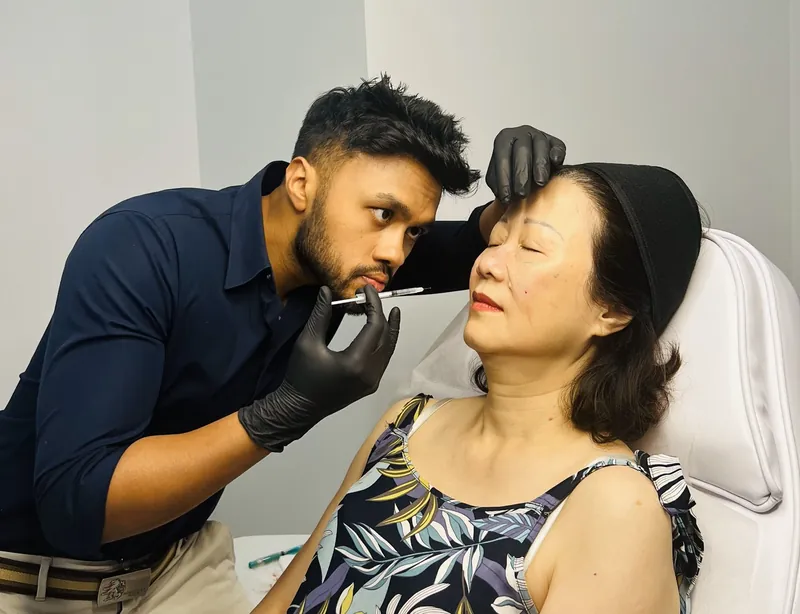
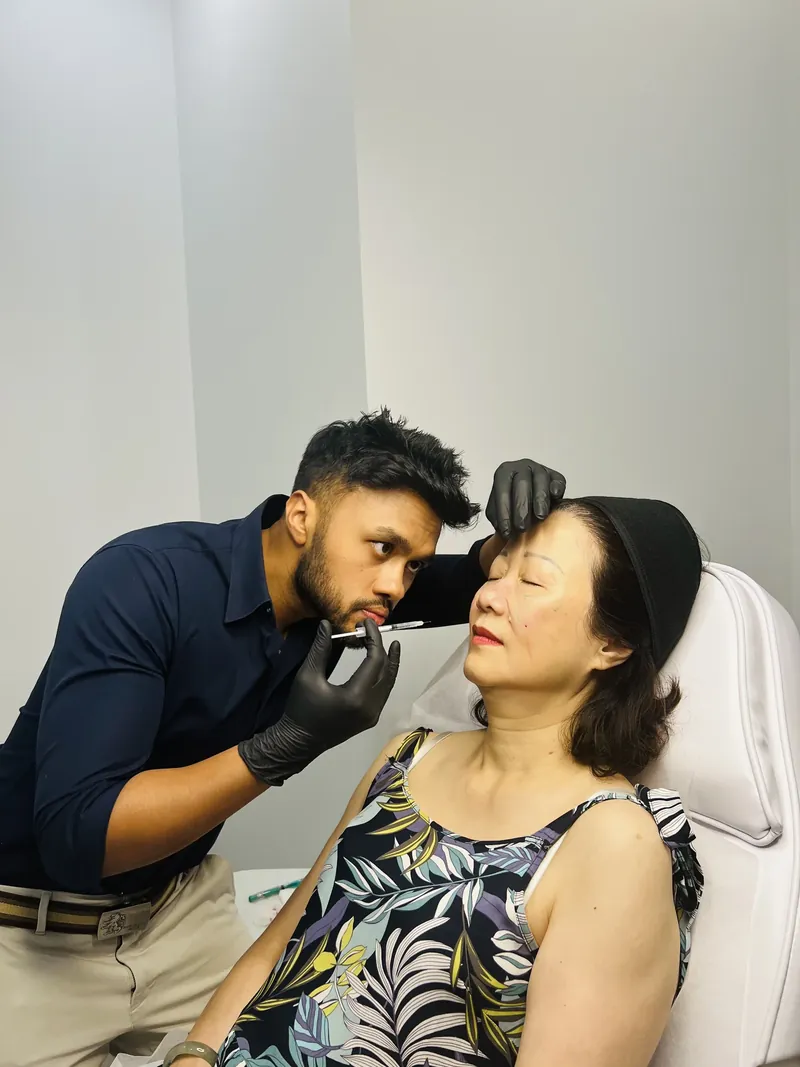
Cause before treatment: how Dr Rakib Uddin approaches under-eye darkness, hollows & puffiness.

Dr Rakib Uddin, cosmetic doctor and founder of Aesthetic Doctors Australia

Your doctor

Dr Rakib Uddin

Cosmetic Doctor & Founder

  • MBBS (Qld)
  • BMedSci (Hons)
  • Dip. Surgical Anatomy
  • Fellow ACCSM

AHPRA MED0001936872

Every consultation for under-eye darkness, hollows & puffiness is performed by Dr Rakib and his team: never delegated to a non-medical injector.

Dr Rakib Uddin is a Melbourne-based cosmetic doctor with formal surgical-anatomy training and over a decade in medicine. He performs every consultation, treatment and review at Aesthetic Doctors Australia personally, and trains other doctors in advanced injectable technique at Derma Medical Academy.

“If a treatment isn't right for you, I'll tell you. Every plan is built around your anatomy, not a template, and the goal is always a refreshed version of you, not a new face.”
  • Listen to your concern in full
  • Comprehensive medical and aesthetic assessment
  • Step-by-step treatment plan: single session or staged
  • Full discussion of risks, limitations and alternatives
  • Decline to treat when a procedure would do more harm than good
About the practice

Expert questions

The questions worth asking about under-eye darkness, hollows & puffiness.

The questions that come up in the room, answered the way Dr Rakib answers them.

Why is the under-eye 'high risk'?

It's the most vascular-risk-prone injectable region: vascular events here can affect vision. Anatomical training, careful technique, and immediate access to dissolving agent are all essential. This is not a region for non-medical practitioners or rushed appointments.

Why don't I just have tear-trough filler?

Because most patients walking in 'wanting tear-trough filler' have under-eye darkness that isn't caused by a hollow. Filling thin-skinned or pigmented under-eyes produces ridges, blue Tyndall tinge and visible filler. The realistic plan often involves skin treatment instead.

Will my filler last forever?

Under-eye filler frequently lasts longer than other facial areas, because the area moves less. Many patients hold result for 18–24 months. This durability is a double-edged sword if the filler turns out to be wrong; we plan conservatively.

What about under-eye creams?

Topicals work on the surface. They can help with skin quality, hydration and pigmentation modestly. They don't address structural shadows or significant skin transparency. Those need professional treatment.

When should I just leave it alone?

When your skin is too thin for filler, the darkness is mostly pigmentation, you have early fat-bag formation, or you're under 30 and the darkness is mild. Sometimes the right plan is good skincare and watchful waiting.

Consultation first

Understand the cause. Then choose the pathway.

A consultation with Dr Rakib Uddin works out what's driving under-eye darkness, hollows & puffiness in your case, then matches the right treatment, an alternative, or no treatment at all.

1167 Burke Road, Kew VIC 3101

Important treatment information

All information on this page is general in nature and is not a substitute for a medical consultation. Any before-and-after images shown are for illustrative purposes only and do not guarantee individual outcomes. Treatments performed by Dr Rakib Uddin (AHPRA MED0001936872) vary based on each patient's unique anatomy, medical history and needs. All cosmetic injectable treatments carry risks; a consultation is required prior to any treatment to assess suitability, discuss risks and alternatives, and establish realistic expectations.

Consultation Under-eye darkness, hollows & puffiness
Book