Aesthetic Doctors Australia

Menu

Where would you like to begin?

Bruxism, TMJ tension and masseter assessment in Kew, Melbourne

Teeth grinding & jaw tension, explained.

Teeth grinding (bruxism) and jaw tension produce real medical symptoms (pain, headaches, tooth wear) and gradually widen the lower face. Masseter treatment addresses both at once: relief for symptoms, slimming for shape.

Reviewed by Dr Rakib Uddin AHPRA MED0001936872

  • The cause identified before any treatment
  • Assessed by Dr Rakib and his team
  • Alternatives explained, including not treating
  • A clear pathway to the right option
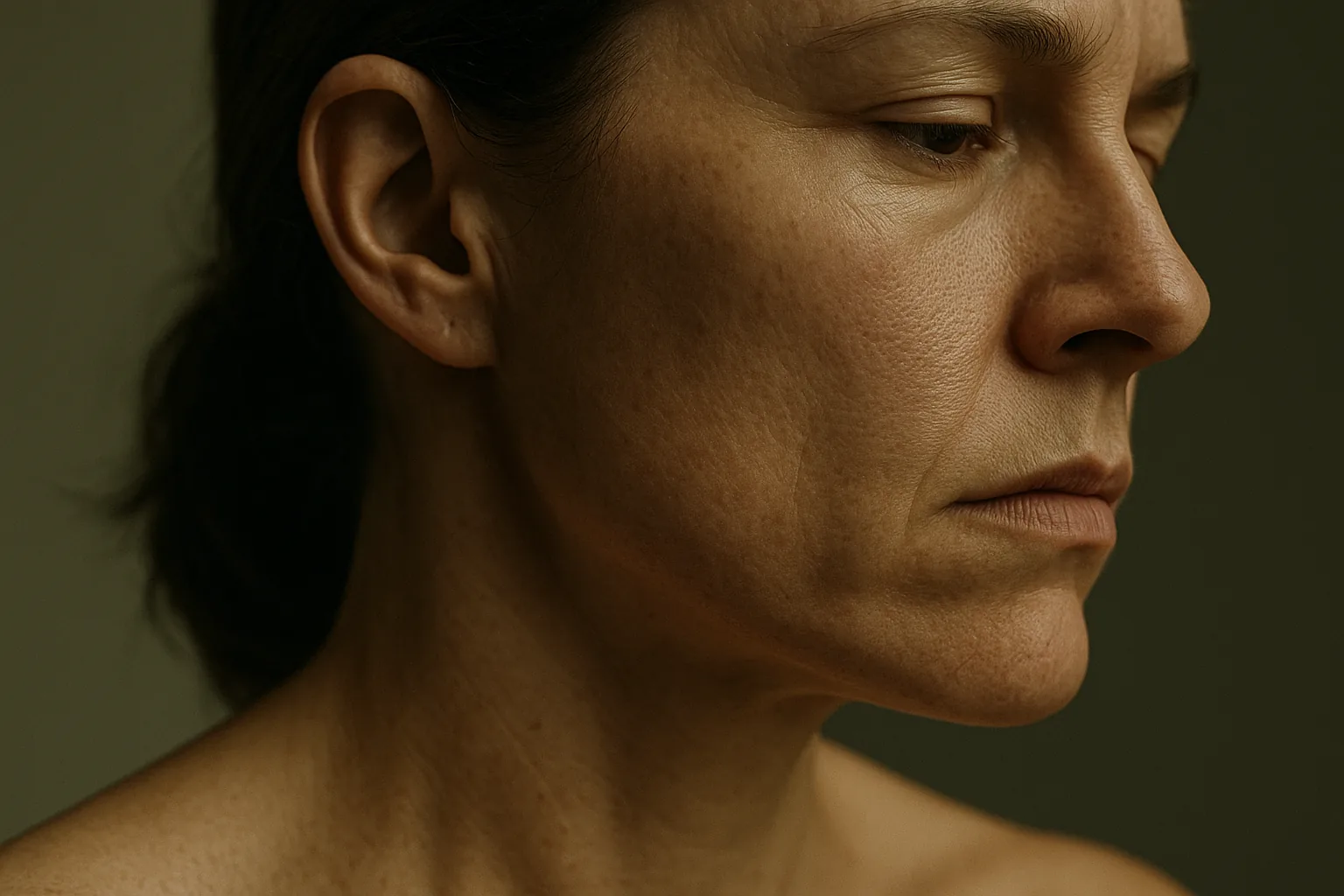
Commissioned editorial study for this concern
Assessment with Dr Rakib

What's happening

Teeth grinding & jaw tension: what is actually happening?

Bruxism (teeth grinding) and chronic jaw clenching produce a constellation of symptoms (morning jaw soreness, tension headaches, tooth wear, masseter prominence) that gradually worsen without intervention. The masseter muscle responds to chronic use by enlarging, widening the lower face over years.

Masseter injection with neuromodulator reduces the muscle's contraction strength, easing symptoms within weeks and producing visible slimming over months. It's often combined with a dental mouth guard and stress management for the best outcomes.

  • Symptom relief

    4–6 weeks

    Bruxism and tension ease before any visible muscle change.

  • Visible slimming

    3–6 months

    Cosmetic effect builds gradually.

  • Not standalone

    Adjunctive

    Often combined with mouth-guard or physio for best result.

The causes

Why does it happen?

Most cases come down to stress, sleep bruxism, TMJ dysfunction, occlusion-related grinding, anxiety patterns. More than one is usually contributing at once, which is why the cause gets named before any treatment is suggested.

  1. Stress-driven clenching

    Anxiety and chronic stress drive sustained masseter activation, often unconsciously during the day or while sleeping.

  2. Sleep bruxism

    Nighttime grinding driven by sleep architecture and stress. Often unrecognised until tooth wear or jaw pain prompts investigation.

  3. Occlusion / dental issues

    Bite misalignment can drive abnormal jaw movement. Dental assessment important for some patients.

  4. TMJ joint pathology

    Actual joint problems (disc displacement, arthritis) produce similar symptoms but need specialist care.

The types

What are the different types?

There are 4 patterns worth telling apart, and the right plan depends on which one is yours.

  1. Symptom-dominant

    Pain, headaches, tooth wear as the main concern.

    Masseter treatment
  2. Slimming-dominant

    Wide lower face from masseter bulk as the main concern.

    Masseter treatment
  3. Combined goals

    Both symptom relief and cosmetic slimming wanted.

    Masseter treatment
  4. Joint-driven

    TMJ pathology rather than primary bruxism.

    TMJ specialist referral

Which one is yours

Which one are you seeing?

Match what you notice in the mirror to a likely cause and the pathway worth discussing. It is a starting point, not a diagnosis: the assessment confirms it.

  1. If you notice

    “I wake up with sore jaw and tension headaches most mornings”

    Possible cause

    Sleep bruxism

    Pathway

    Masseter + mouth guard + stress management

    Masseter treatment
  2. If you notice

    “My jaw has gradually become wider over years”

    Possible cause

    Slimming-dominant

    Pathway

    Repeated masseter treatment over 6–12 months

    Masseter treatment
  3. If you notice

    “I have actual joint clicking or locking”

    Possible cause

    TMJ pathology

    Pathway

    Specialist (TMJ-focused dentist or maxillofacial)

    Discuss specialist referral
  4. If you notice

    “My teeth are wearing flat”

    Possible cause

    Bruxism

    Pathway

    Masseter + dental mouth guard urgently

    Combined treatment plan

What treats it

Which treatment actually addresses it?

The one that matches your cause. Each pathway below pairs a driver with the plan Dr Rakib Uddin would discuss for it: same concern, different cause, different treatment.

  1. When primary bruxism with symptoms

    Reduces muscle activity. Combined with mouth guard for sleep protection.

  2. When cosmetic wide jaw

    Repeated treatment slims the muscle over months.

  3. When tmj joint pathology

    Joint problems need specialist care. Masseter treatment may help symptoms adjunctively but isn't primary.

Where to go next

The treatment guides worth reading.

Each guide explains how the treatment works, who it suits, recovery and cost. The right one for your case is confirmed at assessment, not assumed online.

Prevention

What slows it down?

The habits below protect the result of any treatment, and slow the concern when it is still early. None of them replace assessment; all of them help.

  • Mouth guard for sleep bruxism

    Dental-fitted mouth guard protects teeth from grinding damage. Should be in place before significant wear develops.

  • Stress management

    Chronic stress drives chronic clenching. Identifying and addressing stress patterns has meaningful long-term effect on the underlying behaviour.

  • Postural awareness

    Forward head posture and screen use exaggerate the muscle pattern. Postural correction helps.

  • Treat early before tooth damage

    Tooth wear is irreversible. Early intervention preserves your dentition.

Common beliefs

What do people get wrong about it?

The beliefs patients most often arrive with, next to what is actually true.

  • Commonly believed

    “Bruxism is just a dental problem”

    In practice

    It's a behavioural pattern with medical (jaw, headache, tooth) and cosmetic (jaw widening) consequences. Treating it as one or the other misses half the picture.

  • Commonly believed

    “Masseter treatment is just for vanity”

    In practice

    It's evidence-based for bruxism symptom relief. Many patients seek it for medical reasons and discover the cosmetic benefit secondarily.

  • Commonly believed

    “It will affect my chewing”

    In practice

    Doses are calibrated to reduce strength, not eliminate it. Most patients chew normally within days. Hard foods may feel slightly different for the first session.

In consultation

Symptoms first, shape follows.

Cause before treatment: how Dr Rakib Uddin approaches teeth grinding & jaw tension.

Dr Rakib Uddin, cosmetic doctor and founder of Aesthetic Doctors Australia

Your doctor

Dr Rakib Uddin

Cosmetic Doctor & Founder

  • MBBS (Qld)
  • BMedSci (Hons)
  • Dip. Surgical Anatomy
  • Fellow ACCSM

AHPRA MED0001936872

Every consultation for teeth grinding & jaw tension is performed by Dr Rakib and his team: never delegated to a non-medical injector.

Dr Rakib Uddin is a Melbourne-based cosmetic doctor with formal surgical-anatomy training and over a decade in medicine. He performs every consultation, treatment and review at Aesthetic Doctors Australia personally, and trains other doctors in advanced injectable technique at Derma Medical Academy.

“If a treatment isn't right for you, I'll tell you. Every plan is built around your anatomy, not a template, and the goal is always a refreshed version of you, not a new face.”
  • Listen to your concern in full
  • Comprehensive medical and aesthetic assessment
  • Step-by-step treatment plan: single session or staged
  • Full discussion of risks, limitations and alternatives
  • Decline to treat when a procedure would do more harm than good
About the practice

Expert questions

The questions worth asking about teeth grinding & jaw tension.

The questions that come up in the room, answered the way Dr Rakib answers them.

Will I still need a mouth guard?

For sleep bruxism, usually yes, at least initially. Mouth guard protects teeth from any residual grinding. Some patients reduce guard dependence over time as the muscle pattern improves.

How quickly will my headaches improve?

Often within 4–6 weeks, sometimes earlier. The reduction is usually substantial rather than complete; some residual tension may need additional management.

Will my face become hollow if I shrink the muscle?

Not at the doses we use. Conservative dosing reduces muscle proportionately. Patients with naturally lean faces are assessed carefully to ensure the slimming is appropriate to their face.

How long does it last?

6–9 months typically: longer than facial wrinkle relaxer treatments. Repeat treatment maintains both symptom relief and slimming.

Can dental work fix this?

Sometimes: mouth guards, occlusion correction and dental assessment all have a role. Often most effective combined with masseter treatment rather than as alternatives.

Consultation first

Understand the cause. Then choose the pathway.

A consultation with Dr Rakib Uddin works out what's driving teeth grinding & jaw tension in your case, then matches the right treatment, an alternative, or no treatment at all.

1167 Burke Road, Kew VIC 3101

Important treatment information

All information on this page is general in nature and is not a substitute for a medical consultation. Any before-and-after images shown are for illustrative purposes only and do not guarantee individual outcomes. Treatments performed by Dr Rakib Uddin (AHPRA MED0001936872) vary based on each patient's unique anatomy, medical history and needs. All cosmetic injectable treatments carry risks; a consultation is required prior to any treatment to assess suitability, discuss risks and alternatives, and establish realistic expectations.

Consultation Teeth grinding & jaw tension
Book