Aesthetic Doctors Australia

Menu

Where would you like to begin?

Submental fullness assessment in Kew, Melbourne

A double chin & under-chin fullness, explained.

Submental fullness, what most patients call a 'double chin', has at least four different causes. Treating the wrong cause can make the area look worse. The assessment is what changes outcomes.

Reviewed by Dr Rakib Uddin AHPRA MED0001936872

  • The cause identified before any treatment
  • Assessed by Dr Rakib and his team
  • Alternatives explained, including not treating
  • A clear pathway to the right option
Commissioned editorial study for this concern
Assessment with Dr Rakib

What's happening

A double chin & under-chin fullness: what is actually happening?

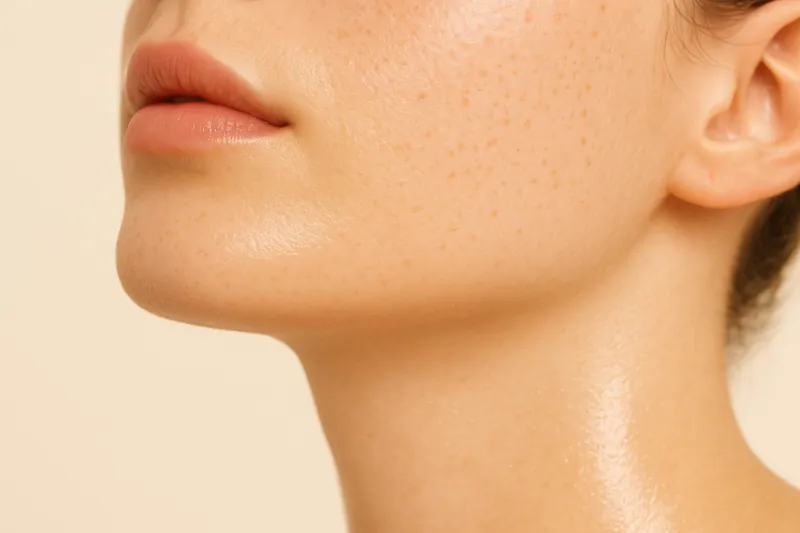
Submental fullness is the visible heaviness under the chin that many patients describe as a 'double chin'. The frustration with the term is that the same appearance can come from very different underlying anatomies: fat, weak chin support, skin laxity, posture, or a combination.

Assuming it's fat, and treating it as fat, is the most common mistake. A consultation that identifies which factor dominates your anatomy is the difference between a refined result and a wasted treatment.

  • Multiple causes

    Not always fat

    Fat, skin, structure or posture, sometimes all four.

  • Before treatment

    Assessment first

    Wrong-tool treatment can worsen the area.

  • Referred

    Surgery when appropriate

    Significant skin excess belongs with a surgeon.

The causes

Why does it happen?

Most cases come down to submental fat, weak chin projection, skin laxity, posture/swallow pattern, undefined jawline angle. More than one is usually contributing at once, which is why the cause gets named before any treatment is suggested.

  1. Submental fat

    A discrete pocket of fat below the platysma muscle, between the chin and the front of the neck. Genetic; not always related to body weight.

  2. Weak chin projection

    A recessed or under-projected chin makes the lower face appear fuller, even without excess fat. The visual fix is chin projection: not 'fat reduction'.

  3. Skin laxity

    Loose submental skin from age or weight changes drapes downward, creating heaviness without significant fat content underneath.

  4. Undefined jaw-to-neck angle

    A sharp 105–115° angle between jaw and neck is what reads as 'defined'. Without it, even normal anatomy can look 'doubled'.

  5. Posture and swallow pattern

    Forward head posture and certain habitual swallow patterns visually emphasise the submental area. Postural correction sometimes meaningful.

The types

What are the different types?

There are 4 patterns worth telling apart, and the right plan depends on which one is yours.

  1. Fat-dominant

    Discrete fatty pocket visible, often pinch-able, present at normal weight.

    Fat dissolving injections
  2. Chin-projection-dominant

    Weak chin and recessed lower jaw make the lower face look fuller.

    Chin enhancement
  3. Laxity-dominant

    Loose skin drapes; the area pinches loose, not fat.

    XERF skin tightening
  4. Jawline-angle-dominant

    Bony jawline and chin are fine; the angle to the neck is undefined.

    Jawline contour

Which one is yours

Which one are you seeing?

Match what you notice in the mirror to a likely cause and the pathway worth discussing. It is a starting point, not a diagnosis: the assessment confirms it.

  1. If you notice

    “I can pinch a discrete pad of fat below my chin”

    Possible cause

    Fat-dominant

    Pathway

    Fat dissolving injections planned as a course, or surgical referral when the pad is large

    Fat dissolving injections
  2. If you notice

    “My chin looks weak in profile photos”

    Possible cause

    Chin-projection-dominant

    Pathway

    Chin projection to bring the lower face forward and balance the jawline

    Chin and jawline contour
  3. If you notice

    “The area feels loose and saggy, not solid”

    Possible cause

    Laxity-dominant

    Pathway

    Skin tightening before considering structural work

    XERF skin tightening
  4. If you notice

    “My side profile shows no clear jawline-to-neck angle”

    Possible cause

    Jawline-angle-dominant

    Pathway

    Jawline contour to define the angle

    Jawline contour

What treats it

Which treatment actually addresses it?

The one that matches your cause. Each pathway below pairs a driver with the plan Dr Rakib Uddin would discuss for it: same concern, different cause, different treatment.

  1. When a discrete fat pad under the chin

    Fat dissolving injections can reduce a discrete submental pad, planned as a course, commonly around four sessions, with gradual change between them. Chin or jawline contouring is sometimes combined so the profile balances, and a large pad is referred for surgical reduction instead.

  2. When weak chin projection

    Projecting the chin restores proportion and visually slims the submental area without touching it.

  3. When skin laxity dominant

    Tighten or reposition the skin envelope first; structural work may follow.

  4. When undefined jaw angle

    Defining the angle between jaw and neck redirects the eye and softens the area.

Prevention

What slows it down?

The habits below protect the result of any treatment, and slow the concern when it is still early. None of them replace assessment; all of them help.

  • Postural awareness

    Forward head posture exaggerates submental fullness visually. Postural correction can meaningfully improve appearance.

  • Address grinding and clenching early

    Chronic masseter activity can widen the lower face. Treating early prevents progressive widening.

  • Maintain skin quality

    Skin quality on the neck and lower face (sun protection, hydration, occasional bioremodelling) slows the laxity component.

  • Keep weight steady where you can

    Repeated weight swings stretch submental skin and shift fat volume, which worsens both the laxity and the fat components of the area over time.

Common beliefs

What do people get wrong about it?

The beliefs patients most often arrive with, next to what is actually true.

  • Commonly believed

    “Fat-dissolving injections fix every double chin”

    In practice

    They can reduce a discrete fat pad when fat is genuinely the cause, planned as a course rather than a single visit. They do not tighten loose skin or correct chin projection, which are just as often the real driver: the assessment names the cause first.

  • Commonly believed

    “Losing weight will fix it”

    In practice

    If the cause is anatomical (chin projection, jawline angle, skin laxity), weight loss often makes it look worse: loose skin replaces fat.

  • Commonly believed

    “Only surgery can help”

    In practice

    When the cause is chin projection or jawline definition, non-surgical filler often produces excellent results. Surgery is for significant fat or skin excess.

In consultation

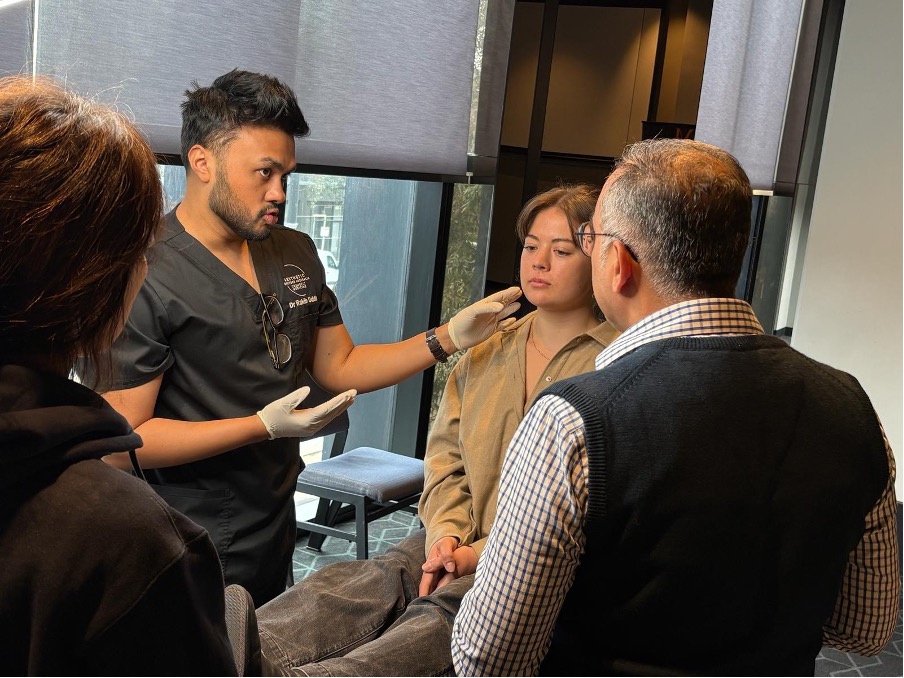
What looks like 'fat' is often missing structure underneath: diagnose first, treat second.

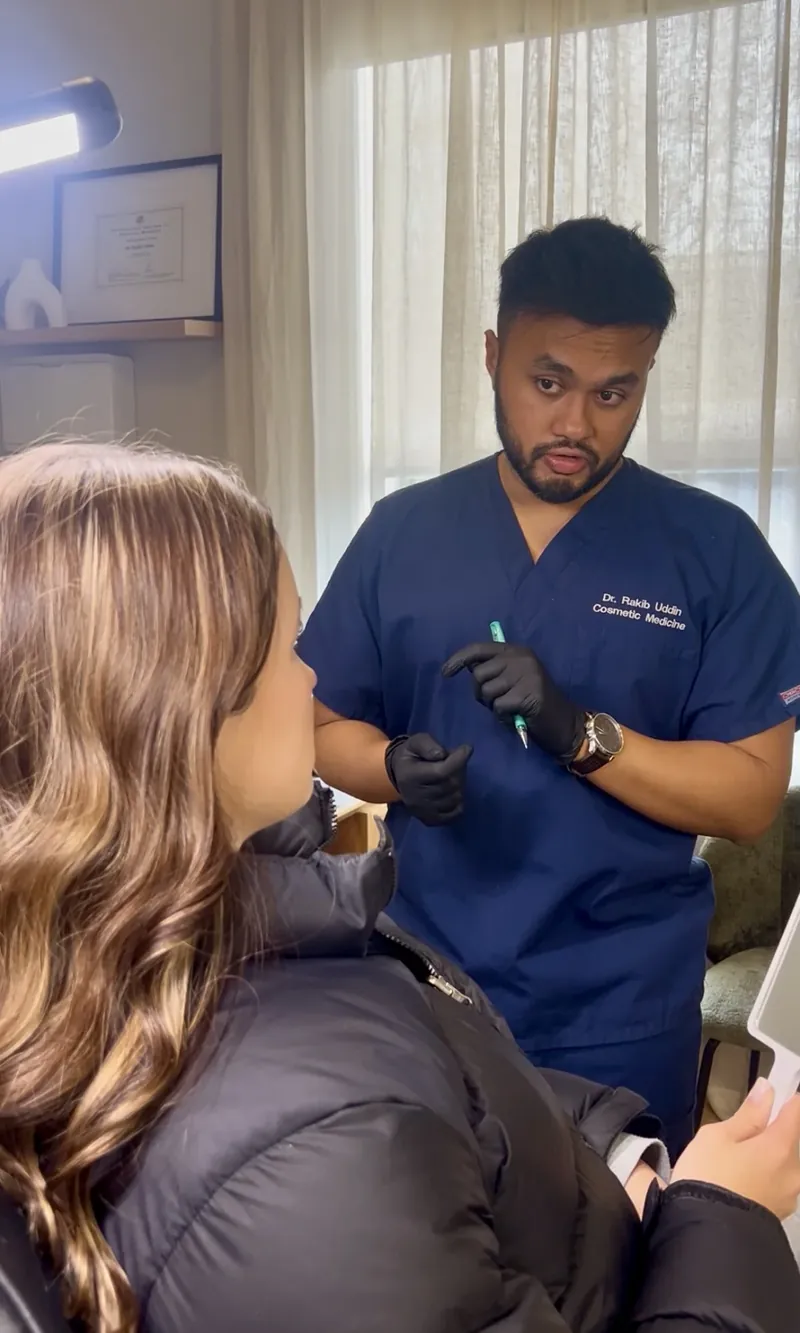
Cause before treatment: how Dr Rakib Uddin approaches double chin & lower face fullness.

Dr Rakib Uddin, cosmetic doctor and founder of Aesthetic Doctors Australia

Your doctor

Dr Rakib Uddin

Cosmetic Doctor & Founder

  • MBBS (Qld)
  • BMedSci (Hons)
  • Dip. Surgical Anatomy
  • Fellow ACCSM

AHPRA MED0001936872

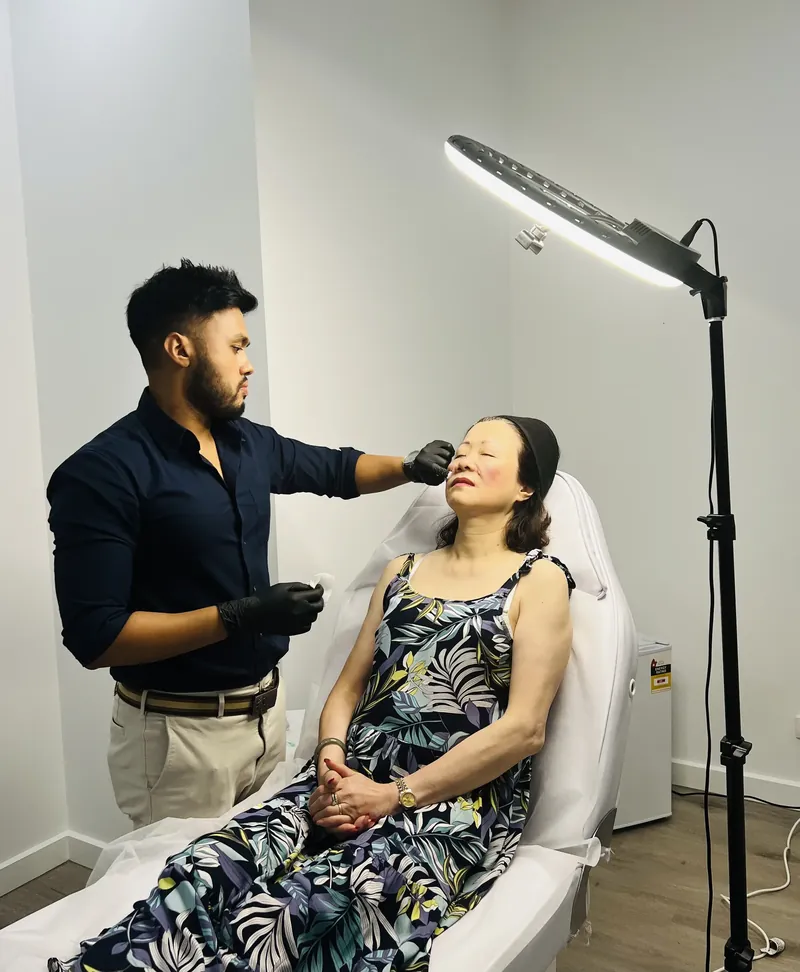
Every consultation for double chin & lower face fullness is performed by Dr Rakib and his team: never delegated to a non-medical injector.

Dr Rakib Uddin is a Melbourne-based cosmetic doctor with formal surgical-anatomy training and over a decade in medicine. He performs every consultation, treatment and review at Aesthetic Doctors Australia personally, and trains other doctors in advanced injectable technique at Derma Medical Academy.

“If a treatment isn't right for you, I'll tell you. Every plan is built around your anatomy, not a template, and the goal is always a refreshed version of you, not a new face.”
  • Listen to your concern in full
  • Comprehensive medical and aesthetic assessment
  • Step-by-step treatment plan: single session or staged
  • Full discussion of risks, limitations and alternatives
  • Decline to treat when a procedure would do more harm than good
About the practice

Expert questions

The questions worth asking about double chin & lower face fullness.

The questions that come up in the room, answered the way Dr Rakib answers them.

Do fat dissolving injections work for a double chin?

They can, when a discrete submental fat pad is the cause. Treatment is planned as a course, commonly around four sessions, with gradual reduction between them. They do not tighten loose skin or correct a recessed chin, and a large pad may be better served by surgical reduction: the assessment sorts this out before anything is booked.

Will jawline filler make my submental area look smaller?

Often yes, by defining the jawline-to-neck angle and projecting the chin, the visual emphasis moves away from the submental area. Many patients are surprised by how much less 'doubled' the area looks after pure structural work above it.

How do I know if I need surgery?

Significant skin excess, large fatty pads, and severe laxity past a certain point all suggest surgical assessment. A consultation distinguishes; a referral happens when appropriate.

Is the area too sensitive to treat with injectables?

It can be. We avoid the platysma's deep area and work where anatomy is favourable. Some patients are better served by surgical or skin-tightening approaches than by injectable filler.

How long do non-surgical results last?

Chin and jawline filler: 12–18 months. Skin tightening programmes: 6–12 months for the gain, with annual maintenance. Surgical results are more durable.

Consultation first

Understand the cause. Then choose the pathway.

A consultation with Dr Rakib Uddin works out what's driving double chin & lower face fullness in your case, then matches the right treatment, an alternative, or no treatment at all.

1167 Burke Road, Kew VIC 3101

Important treatment information

All information on this page is general in nature and is not a substitute for a medical consultation. Any before-and-after images shown are for illustrative purposes only and do not guarantee individual outcomes. Treatments performed by Dr Rakib Uddin (AHPRA MED0001936872) vary based on each patient's unique anatomy, medical history and needs. All cosmetic injectable treatments carry risks; a consultation is required prior to any treatment to assess suitability, discuss risks and alternatives, and establish realistic expectations.

Consultation Double chin & lower face fullness
Book