Aesthetic Doctors Australia

Menu

Where would you like to begin?

Neck assessment in Kew, Melbourne

Neck lines, crepey skin & neck laxity, explained.

The neck ages on its own schedule: its skin is thinner than the face's, carries fewer oil glands, and is usually the last place sunscreen reaches. Crepey texture, horizontal lines and laxity each have a different mechanism, and Dr Rakib treats the neck with its own toolkit rather than leftover face treatments.

Reviewed by Dr Rakib Uddin AHPRA MED0001936872

  • The cause identified before any treatment
  • Assessed by Dr Rakib and his team
  • Alternatives explained, including not treating
  • A clear pathway to the right option
Commissioned editorial study for this concern
Assessment with Dr Rakib

What's happening

Neck lines, crepey skin & neck laxity: what is actually happening?

Neck concerns arrive in three patterns that patients usually describe at once: horizontal lines ringing the neck, crepey fine-textured skin that creases like paper, and laxity, the loosening that blurs the line between jaw and neck. They look related in the mirror, but they have different mechanisms: the lines are creases worn into thin skin, crepiness is collagen and elastin failing at the surface, and laxity involves the deeper support layer including the platysma muscle.

The neck's skin is measurably thinner than facial skin, with fewer oil glands and less structural reserve, on a part of the body sun reaches all year and skincare rarely does. That is why it often looks older than the face above it, and why treating it takes a layered plan: something for the skin itself, and something for the support beneath, chosen to match which pattern leads in your neck.

  • Fewer oil glands

    Thinner skin

    The neck's skin is structurally weaker than the face's.

  • Lines, crepe, laxity

    3 patterns

    Horizontal lines, texture and looseness age separately.

  • Skin plus structure

    Layered plans

    Most necks need a skin treatment and a support treatment.

The causes

Why does it happen?

Most cases come down to thin skin with sparse oil glands, cumulative sun exposure, platysma muscle activity, collagen decline, screen posture, genetics. More than one is usually contributing at once, which is why the cause gets named before any treatment is suggested.

  1. Structurally thin skin

    The neck's dermis is thinner than the face's, with sparse oil glands and slower repair. The same years of movement and sun produce earlier visible change here.

  2. Cumulative sun exposure

    The neck and décolletage catch sun year-round and are the most commonly missed zone in sunscreen routines. Photoageing is the biggest single driver of crepey neck texture.

  3. Platysma activity

    The thin sheet of muscle wrapping the front of the neck creases the skin with every expression and swallow, and its edges can show as vertical bands over time.

  4. Collagen and elastin decline

    The same ageing change as the face, on a canvas with less reserve. Recoil goes first, then the skin begins to gather and drape at rest.

  5. Posture and repetition

    Hours of looking down at screens folds the neck along the same lines every day. Horizontal neck lines are increasingly common in patients in their twenties and thirties for exactly this reason.

The types

What are the different types?

There are 4 patterns worth telling apart, and the right plan depends on which one is yours.

  1. Line-led

    Defined horizontal lines ring the neck; the skin between them still feels firm.

    Neck rejuvenation
  2. Crepe-led

    Fine, papery texture across the neck's surface; creases everywhere and nowhere in particular.

    Polynucleotides
  3. Laxity-led

    The jaw-to-neck angle has softened and skin sits looser than its texture suggests.

    XERF skin tightening
  4. Band-led

    Vertical cords show at the front of the neck, especially in expression or exertion.

    Neck rejuvenation

Which one is yours

Which one are you seeing?

Match what you notice in the mirror to a likely cause and the pathway worth discussing. It is a starting point, not a diagnosis: the assessment confirms it.

  1. If you notice

    “Horizontal lines ring my neck like necklaces, even though my skin feels firm”

    Possible cause

    Line-led change, often posture-accelerated

    Pathway

    A neck programme targeting the lines and the skin quality around them

    Neck rejuvenation
  2. If you notice

    “The skin on my neck looks finely crinkled, like crepe paper”

    Possible cause

    Crepe-led: surface collagen and elastin decline

    Pathway

    Regenerative skin treatment across the neck rather than work on single lines

    Polynucleotides
  3. If you notice

    “My jawline blurs into my neck and the skin under my jaw feels loose”

    Possible cause

    Laxity-led change in the support layer

    Pathway

    Tightening the neck's structural layer, then reassessing the surface

    XERF skin tightening
  4. If you notice

    “Vertical cords stand out at the front of my neck”

    Possible cause

    Band-led: platysma edges showing with age

    Pathway

    Muscle-targeted treatment within a neck programme

    Neck rejuvenation

What treats it

Which treatment actually addresses it?

The one that matches your cause. Each pathway below pairs a driver with the plan Dr Rakib Uddin would discuss for it: same concern, different cause, different treatment.

  1. When crepey texture leads

    Regenerative skin boosters rebuild quality in thin neck skin across a programme of sessions, and medical microneedling recruits collagen where texture has failed. Dr Rakib uses both on the neck; they treat the surface the lines are written on.

  2. When laxity leads

    Radiofrequency tightening contracts and remodels the neck's support layer, with change building over 3–6 months. The neck is one of XERF's primary zones here, often ahead of any injectable work.

  3. When structure has thinned under the skin

    Dilute biostimulator treatment rebuilds dermal support across the neck as your own collagen responds over 8–12 weeks: structural help for skin that has thinned, without adding visible volume.

  4. When lines and bands lead

    The neck rejuvenation programme combines the right tools for this pattern, muscle-targeted treatment for bands, skin work for lines, with conservative volume enhancement where a line has etched deeply enough to need direct support.

Prevention

What slows it down?

The habits below protect the result of any treatment, and slow the concern when it is still early. None of them replace assessment; all of them help.

  • Sunscreen to the collarbone

    The habit that changes necks most is finishing the sunscreen job: face, neck, décolletage, every day. The neck's photoageing is largely preventable and barely reversible.

  • Raise the screen

    Bringing screens toward eye level reduces the thousands of daily folds that press horizontal lines in. Posture will not erase lines, but it stops compounding them.

  • Extend skincare past the jaw

    Whatever evidence-based skincare the face gets, retinoids and moisturiser included, the neck should get too, introduced gently because the skin is thinner and reacts faster.

  • Start maintenance early

    Because the neck has less structural reserve, early light-touch treatment holds the line far better than late correction. It is the area where waiting costs most.

Common beliefs

What do people get wrong about it?

The beliefs patients most often arrive with, next to what is actually true.

  • Commonly believed

    “Neck creams firm a loose neck”

    In practice

    Topicals can improve surface hydration and modestly support texture, but laxity lives in layers no cream reaches. A firmer neck needs the support layer treated, not just the surface moisturised.

  • Commonly believed

    “The neck ages because the face was treated”

    In practice

    The neck ages faster than the face with or without treatment; it only becomes obvious when the face improves and the contrast widens. The answer is including the neck in planning from the start, which is how Dr Rakib approaches it.

  • Commonly believed

    “Tech neck is a myth”

    In practice

    The mechanism is mundane and real: repeated folding of thin skin along the same lines, hours a day, years on end. It is one reason horizontal neck lines now present decades earlier than classic neck ageing.

In consultation

A treated face above an untreated neck tells the story anyway: the neck is part of the face.

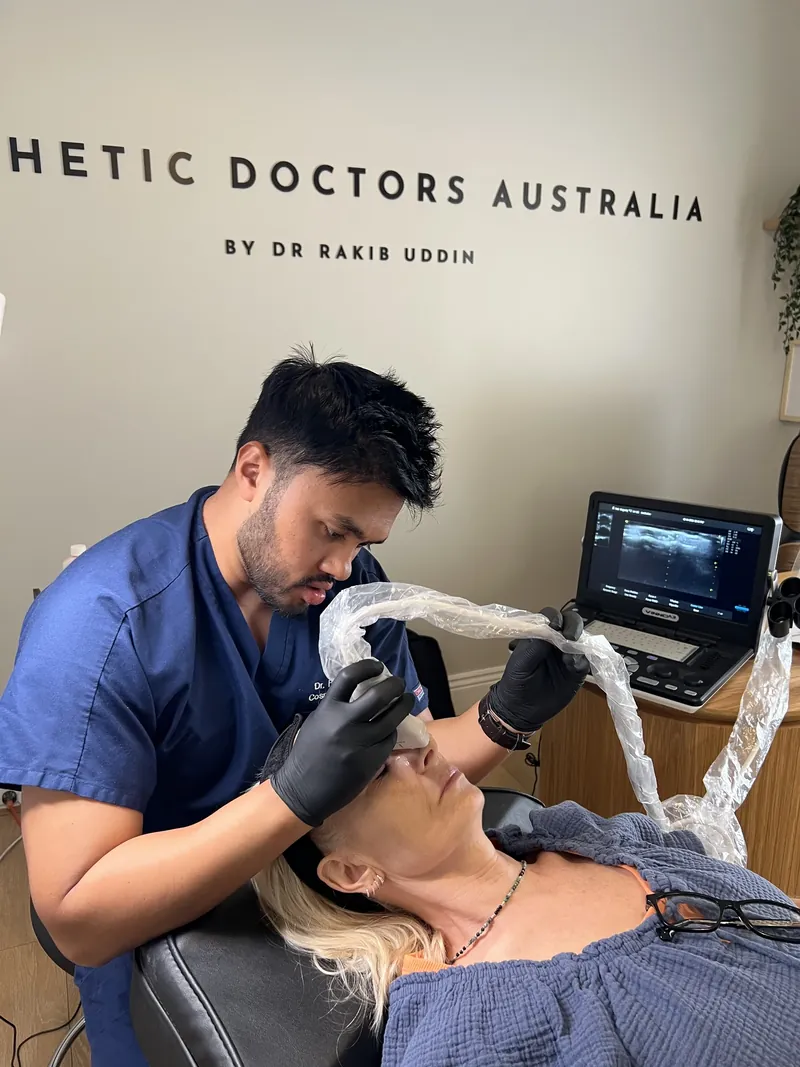
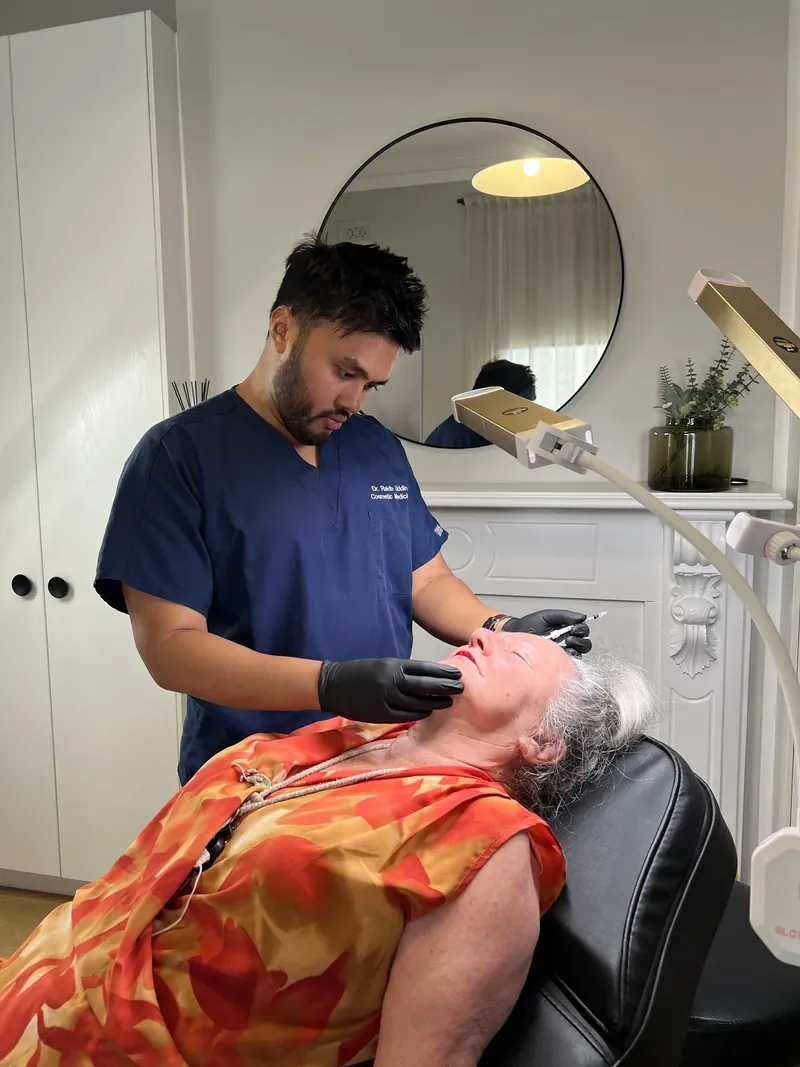
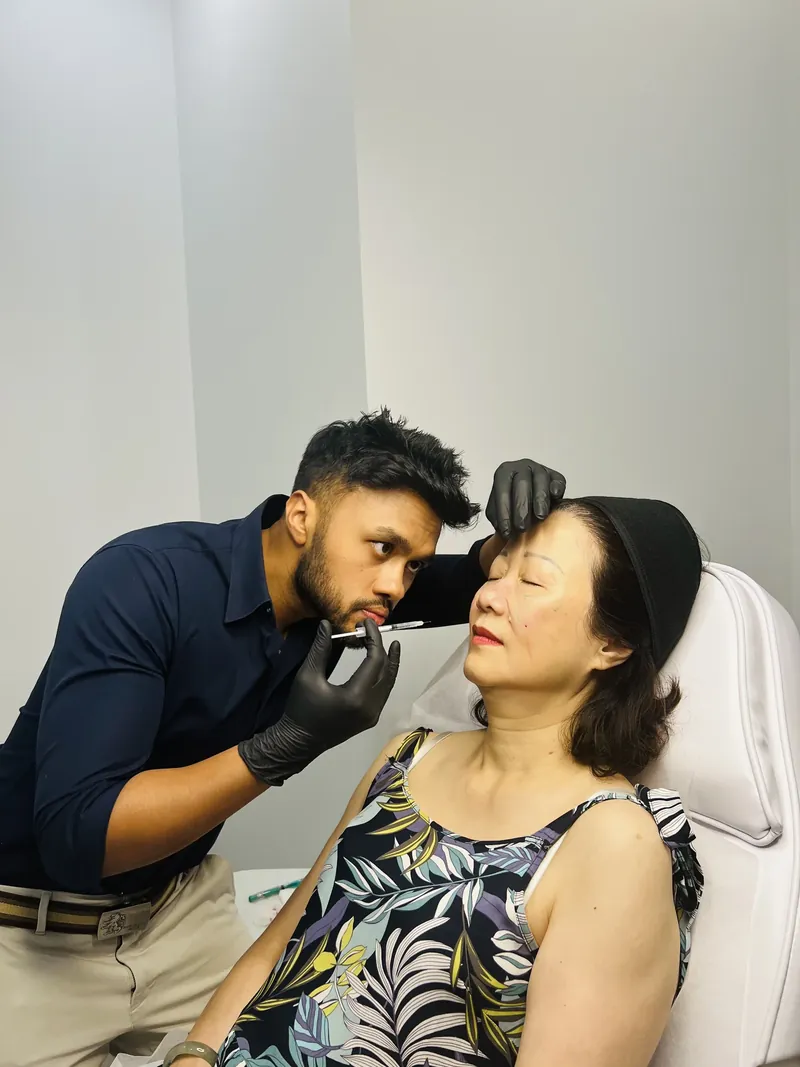
Cause before treatment: how Dr Rakib Uddin approaches neck lines, crepey skin & laxity.

Dr Rakib Uddin, cosmetic doctor and founder of Aesthetic Doctors Australia

Your doctor

Dr Rakib Uddin

Cosmetic Doctor & Founder

  • MBBS (Qld)
  • BMedSci (Hons)
  • Dip. Surgical Anatomy
  • Fellow ACCSM

AHPRA MED0001936872

Every consultation for neck lines, crepey skin & laxity is performed by Dr Rakib and his team: never delegated to a non-medical injector.

Dr Rakib Uddin is a Melbourne-based cosmetic doctor with formal surgical-anatomy training and over a decade in medicine. He performs every consultation, treatment and review at Aesthetic Doctors Australia personally, and trains other doctors in advanced injectable technique at Derma Medical Academy.

“If a treatment isn't right for you, I'll tell you. Every plan is built around your anatomy, not a template, and the goal is always a refreshed version of you, not a new face.”
  • Listen to your concern in full
  • Comprehensive medical and aesthetic assessment
  • Step-by-step treatment plan: single session or staged
  • Full discussion of risks, limitations and alternatives
  • Decline to treat when a procedure would do more harm than good
About the practice

Expert questions

The questions worth asking about neck lines, crepey skin & laxity.

The questions that come up in the room, answered the way Dr Rakib answers them.

Why does my neck look older than my face?

Because it is working with less: thinner skin, fewer oil glands, near-daily sun and almost none of the skincare attention the face gets. From the mid-thirties that gap starts to show as texture and lines, which is why neck treatment is planned as its own programme rather than an afterthought to facial work.

Which treatment does what on the neck?

Broadly: skin boosters and microneedling treat the surface, crepiness and texture; XERF tightens the support layer where laxity leads; a dilute biostimulator thickens thinned dermal structure; and the neck rejuvenation programme combines muscle-targeted and skin work for lines and bands. Most plans pair one surface tool with one support tool.

How many sessions would a neck plan involve?

Skin booster programmes typically run 3–4 sessions with review at 12 weeks. XERF programmes are typically 3–6 sessions with remodelling over 3–6 months. Structural biostimulator work builds over 8–12 weeks and lasts 12–18+ months. Exact numbers come from assessment, not a menu.

Can deep horizontal lines be removed completely?

Softened convincingly, yes; erased, no. A line that has creased thin skin for years leaves a mark treatment can shallow but rarely delete, which is why the plan pairs line treatment with skin-quality work and why realistic framing is part of the consultation.

Is the décolletage treated too?

It can be, and often should be: the same sun exposure and thin skin extend to the chest, and a treated neck above an untreated décolletage recreates the original mismatch lower down. Skin boosters and microneedling both extend there; assessment decides whether it is worth including.

Consultation first

Understand the cause. Then choose the pathway.

A consultation with Dr Rakib Uddin works out what's driving neck lines, crepey skin & laxity in your case, then matches the right treatment, an alternative, or no treatment at all.

1167 Burke Road, Kew VIC 3101

Important treatment information

All information on this page is general in nature and is not a substitute for a medical consultation. Any before-and-after images shown are for illustrative purposes only and do not guarantee individual outcomes. Treatments performed by Dr Rakib Uddin (AHPRA MED0001936872) vary based on each patient's unique anatomy, medical history and needs. All cosmetic injectable treatments carry risks; a consultation is required prior to any treatment to assess suitability, discuss risks and alternatives, and establish realistic expectations.

Consultation Neck lines, crepey skin & laxity
Book