Aesthetic Doctors Australia

Menu

Where would you like to begin?

Jowl, jawline and lower-face assessment in Kew, Melbourne

Jowls & a softening jawline, explained.

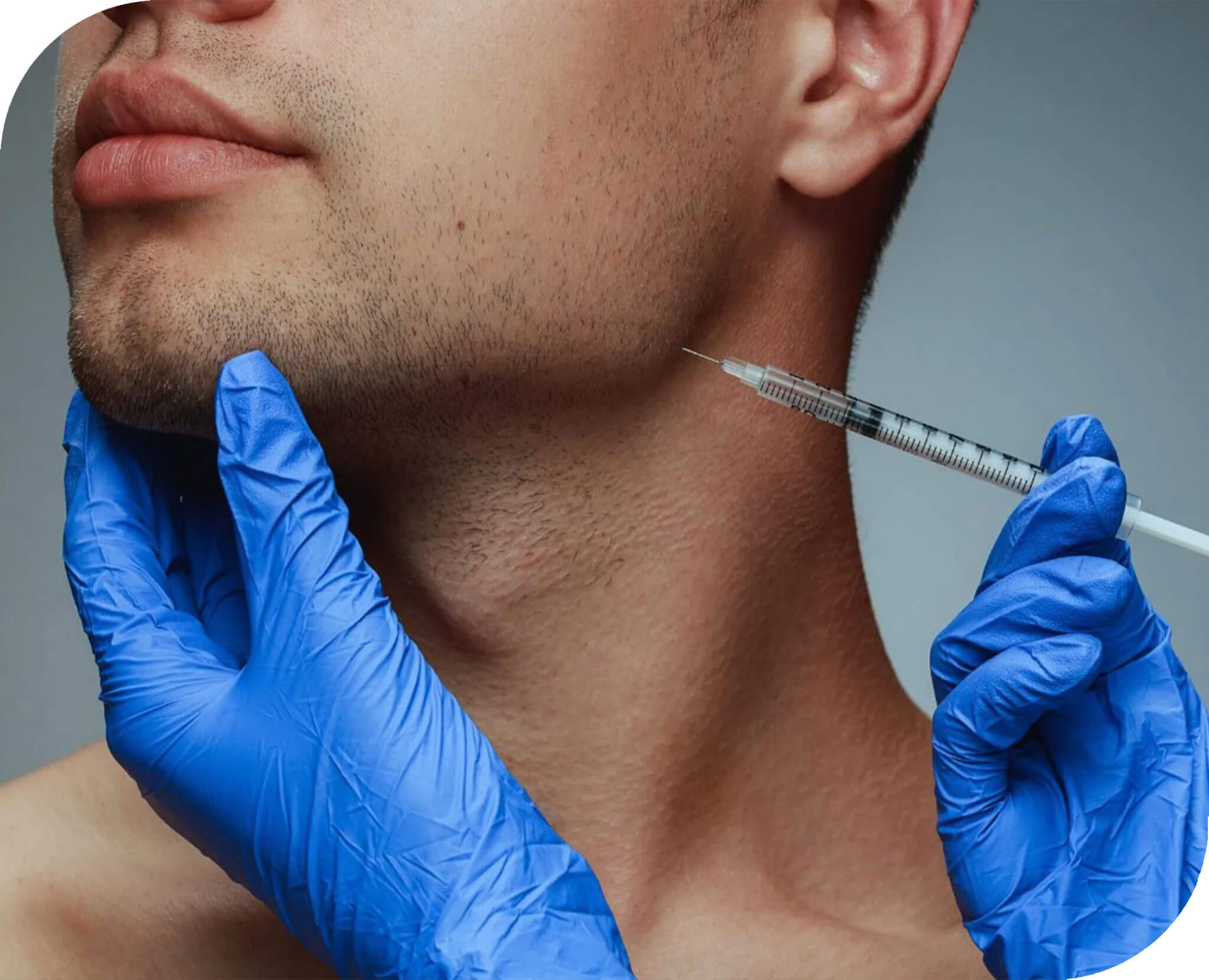
Jowls and a softening jawline happen for different reasons in different patients: tissue descent, lost bony structure, masseter bulk or skin laxity. Each cause needs a different treatment. The assessment is what makes the plan work.

Reviewed by Dr Rakib Uddin AHPRA MED0001936872

  • The cause identified before any treatment
  • Assessed by Dr Rakib and his team
  • Alternatives explained, including not treating
  • A clear pathway to the right option
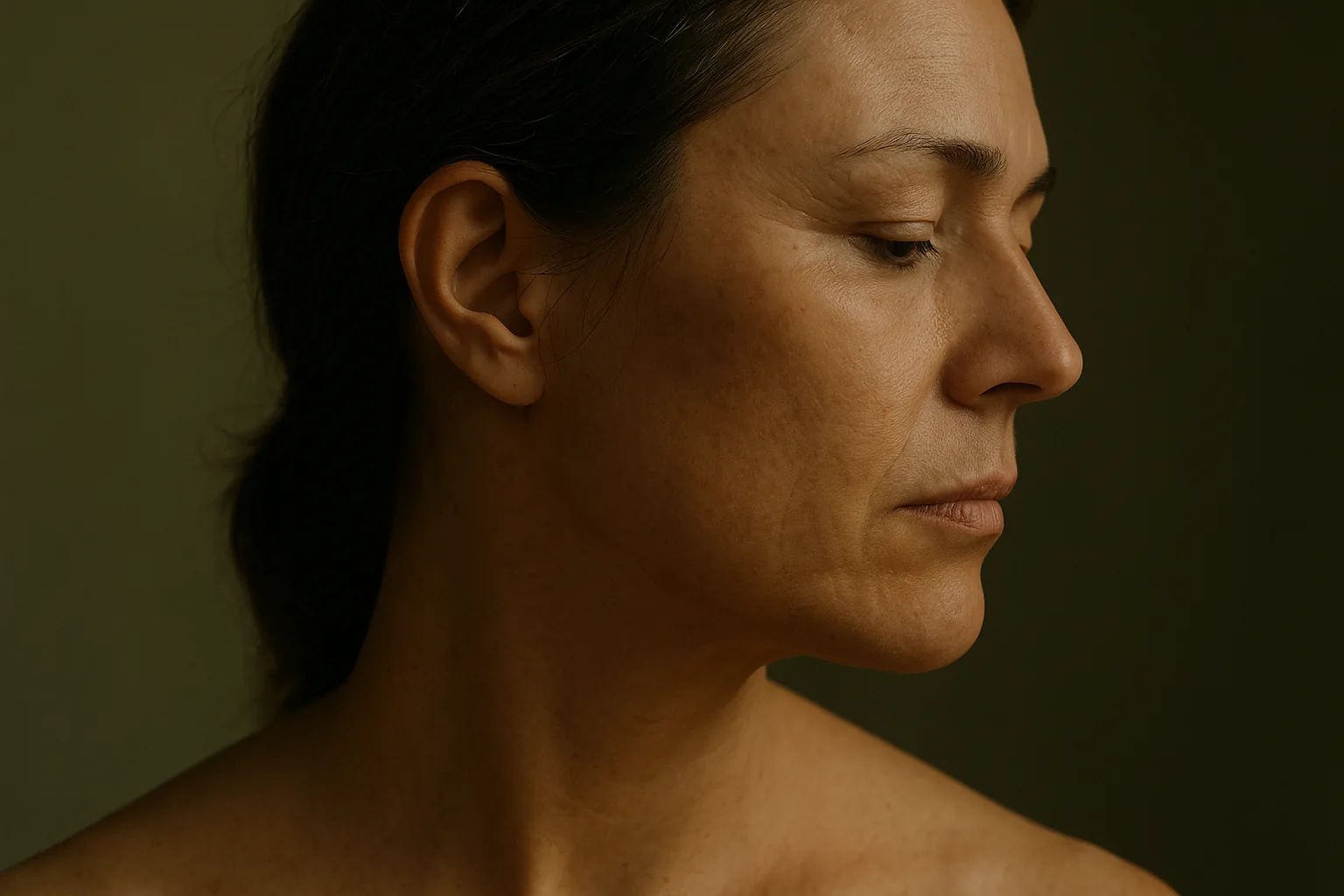
Commissioned editorial study for this concern
Assessment with Dr Rakib

What's happening

Jowls & a softening jawline: what is actually happening?

The 'jowl' is the visible softening at the lower face where the jawline used to be sharply defined. Loss of jaw definition rarely has one cause: bone resorption changes the structural platform, fat compartments shift downward, skin loosens over the top, and masseter muscle activity can add bulk where slimness was once natural.

The right treatment depends entirely on which combination of factors is driving your specific concern. A clinic that offers the same procedure to every patient with this complaint is treating the symptom, not the cause.

  • Possible causes

    4 drivers

    Descent, deflation, muscle bulk, skin laxity, often combined.

  • Common onset

    Late 30s+

    Bony resorption begins; ligaments loosen; soft tissue descends.

  • Best outcomes

    Combination

    Single-treatment plans rarely fix multi-factor ageing.

The causes

Why does it happen?

Most cases come down to bone resorption at the mandible, fat-pad descent, ligament loosening, skin laxity, masseter hypertrophy. More than one is usually contributing at once, which is why the cause gets named before any treatment is suggested.

  1. Bone resorption at the mandible

    Bone loss at the jaw angle and body reduces the structural platform supporting soft tissue. Filler at depth rebuilds the platform itself rather than padding the soft tissue above it.

  2. Fat-pad descent

    The deep fat compartments of the face deflate and slide downward. What used to support a high cheek and a sharp jaw now pools at the jowl.

  3. Skin laxity

    Skin loses collagen and elastin over time. Loose skin envelope over changing structure makes definition look softer even when bone and fat are intact.

  4. Masseter hypertrophy

    Chronic clenching enlarges the chewing muscle, widening the jaw at the angle. Some patients' 'wide jaw' is muscle, not bone.

The types

What are the different types?

There are 4 patterns worth telling apart, and the right plan depends on which one is yours.

  1. Descent-dominant

    Tissue has dropped from its previous position; bone and fat may still be present but in the wrong location.

    Thread lift
  2. Structure-dominant

    Bony platform has resorbed and there's nothing for soft tissue to rest on.

    Jawline contour
  3. Laxity-dominant

    Skin is the main issue; underlying structure is largely intact.

    XERF skin tightening
  4. Masseter-dominant

    Wide jaw is being created by chronically active chewing muscles.

    Masseter treatment

Which one is yours

Which one are you seeing?

Match what you notice in the mirror to a likely cause and the pathway worth discussing. It is a starting point, not a diagnosis: the assessment confirms it.

  1. If you notice

    “When I push the jowl up toward my cheek, my younger face appears”

    Possible cause

    Descent-dominant

    Pathway

    Lifting treatment to reposition descended tissue

    Thread lift
  2. If you notice

    “My jawline is softer because my jaw bone seems less defined than I remember”

    Possible cause

    Structure-dominant

    Pathway

    Volume enhancement at depth to rebuild the platform

    Jawline contour
  3. If you notice

    “My skin feels loose even though my facial shape hasn't changed much”

    Possible cause

    Laxity-dominant

    Pathway

    Energy-based or biostimulator skin treatment

    XERF
  4. If you notice

    “My jaw looks wide, especially at the angle”

    Possible cause

    Masseter-dominant

    Pathway

    Muscle relaxation to slim over months

    Masseter treatment

What treats it

Which treatment actually addresses it?

The one that matches your cause. Each pathway below pairs a driver with the plan Dr Rakib Uddin would discuss for it: same concern, different cause, different treatment.

  1. When descent without significant deflation

    Thread vectors lift soft tissue back into position; filler in this scenario would create heaviness, not lift.

  2. When lost bony structure

    Deep filler against bone rebuilds the platform the soft tissue lost.

  3. When skin quality alone

    Skin-layer treatments directly when bone and tissue underneath are intact.

  4. When mostly muscle (masseter)

    Muscle slimming over months gives a softer lower face from the outside.

Prevention

What slows it down?

The habits below protect the result of any treatment, and slow the concern when it is still early. None of them replace assessment; all of them help.

  • Sun protection

    Cumulative UV damage accelerates collagen loss across the face. Daily SPF protects the whole platform.

  • Address clenching and grinding

    Chronic masseter activation builds muscle bulk and widens the jaw. Mouth guards, stress management and (where indicated) masseter treatment all help.

  • Treat early, treat lightly

    Maintenance-level treatment starting in the late 30s is more effective than catch-up at 50. Less is more, started earlier.

  • Combination thinking

    Address all relevant ageing layers in your plan, not just the one that bothers you most. Treating only one usually plateaus.

Common beliefs

What do people get wrong about it?

The beliefs patients most often arrive with, next to what is actually true.

  • Commonly believed

    “Filler can fix sagging”

    In practice

    Filler can add structure but can't lift descended tissue. Trying to compensate for descent with volume produces overfilled faces. Lifting is its own treatment category.

  • Commonly believed

    “Surgery is the only solution”

    In practice

    For early-to-moderate changes, non-surgical plans produce real results. Surgery enters the conversation when skin excess or severe laxity is dominant, and we refer when that's the right recommendation.

  • Commonly believed

    “Skin tightening alone is enough”

    In practice

    If bone and tissue underneath have changed, treating skin in isolation gives modest results. Skin treatment is part of the plan, rarely the whole plan.

In consultation

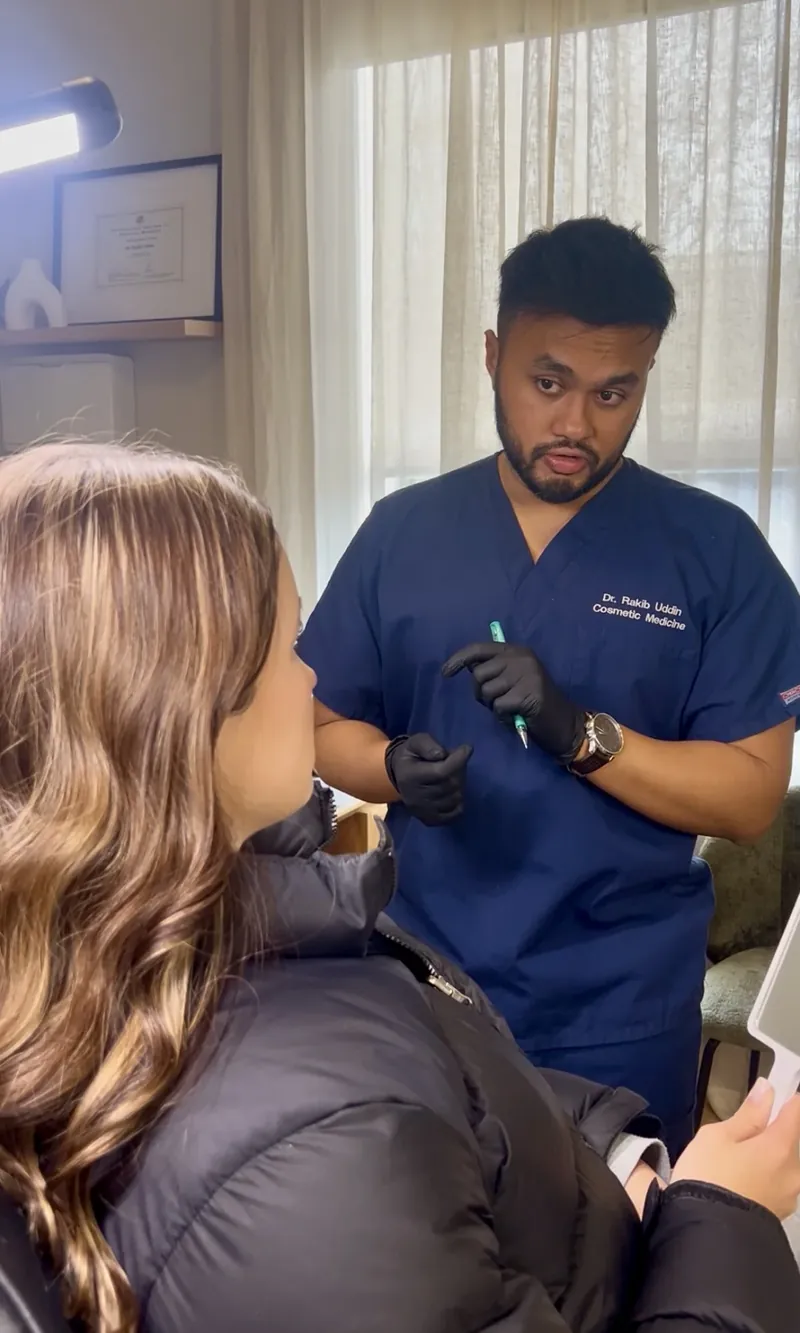
A defined jaw is structural: built where the bone needs support, not chased with surface treatments.

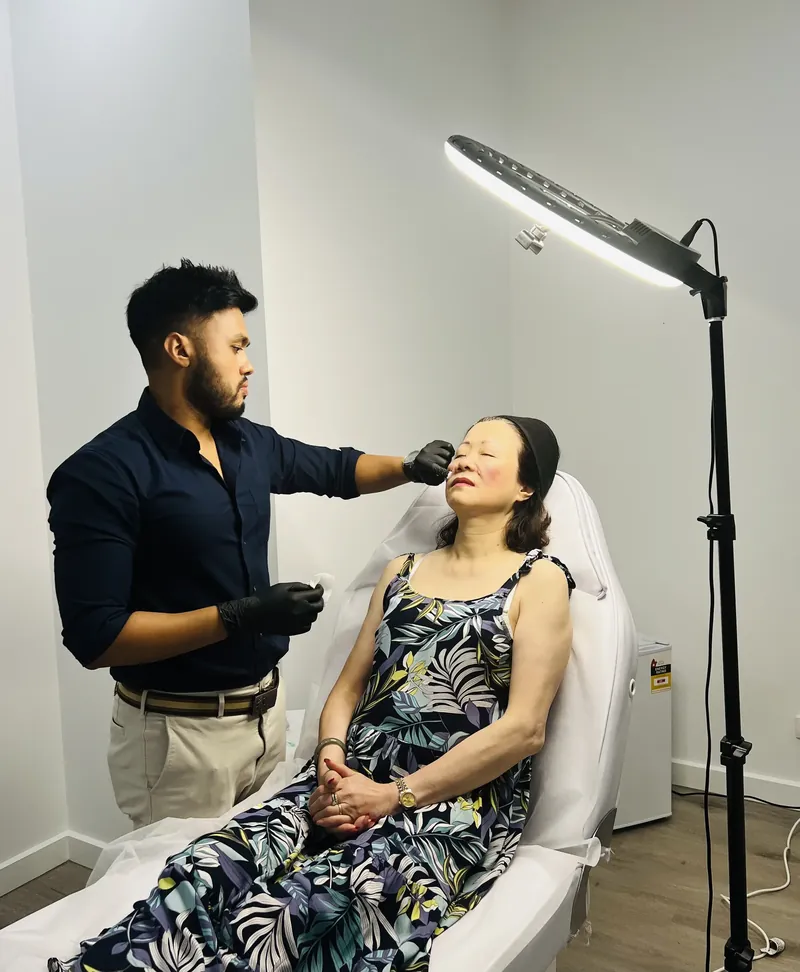
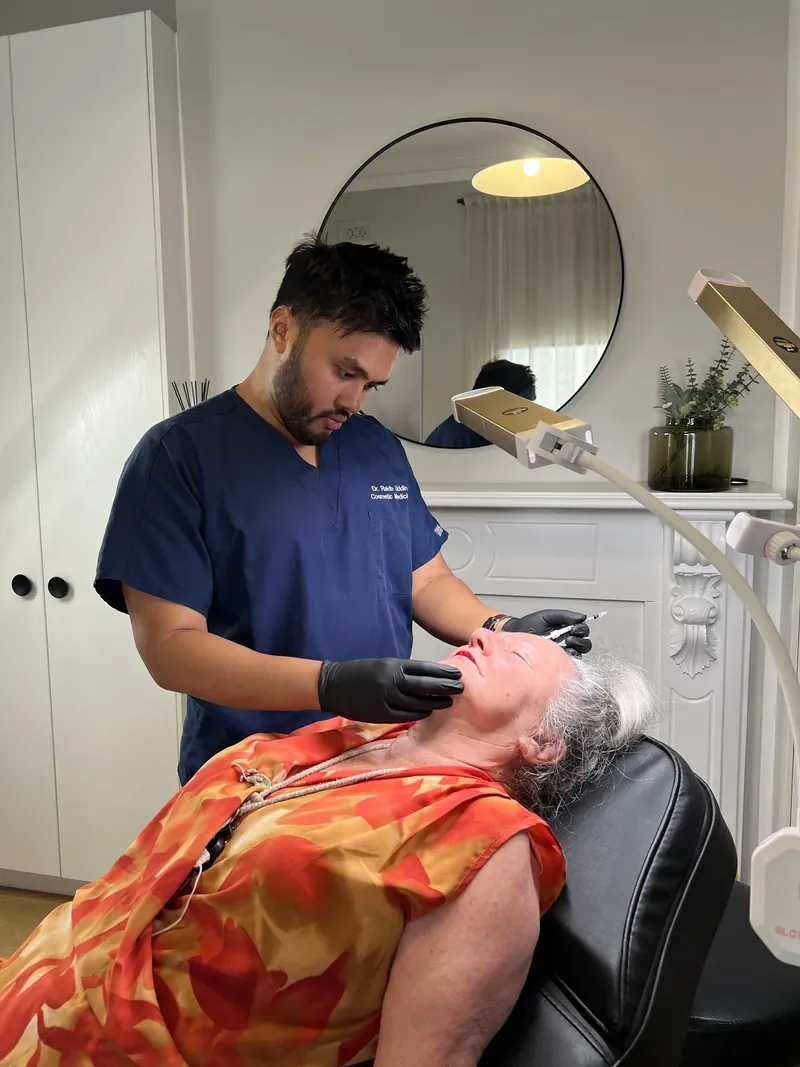
Cause before treatment: how Dr Rakib Uddin approaches jowls & a softening jawline.

Dr Rakib Uddin, cosmetic doctor and founder of Aesthetic Doctors Australia

Your doctor

Dr Rakib Uddin

Cosmetic Doctor & Founder

  • MBBS (Qld)
  • BMedSci (Hons)
  • Dip. Surgical Anatomy
  • Fellow ACCSM

AHPRA MED0001936872

Every consultation for jowls & a softening jawline is performed by Dr Rakib and his team: never delegated to a non-medical injector.

Dr Rakib Uddin is a Melbourne-based cosmetic doctor with formal surgical-anatomy training and over a decade in medicine. He performs every consultation, treatment and review at Aesthetic Doctors Australia personally, and trains other doctors in advanced injectable technique at Derma Medical Academy.

“If a treatment isn't right for you, I'll tell you. Every plan is built around your anatomy, not a template, and the goal is always a refreshed version of you, not a new face.”
  • Listen to your concern in full
  • Comprehensive medical and aesthetic assessment
  • Step-by-step treatment plan: single session or staged
  • Full discussion of risks, limitations and alternatives
  • Decline to treat when a procedure would do more harm than good
About the practice

Expert questions

The questions worth asking about jowls & a softening jawline.

The questions that come up in the room, answered the way Dr Rakib answers them.

Can I avoid surgery entirely?

Often, especially if you start non-surgical maintenance early. Severe laxity past a certain point benefits more from surgery: we'll tell you plainly which group you're in.

How do I know if I need filler or threads?

Gently push your cheek tissue up and back. If your jawline reappears, descent is the issue and threads address it. If your face looks deflated rather than dropped, structure is the issue and filler addresses it. Most patients past mid-40s have some of both.

Will my jaw look 'overdone'?

Not with restraint. The overdone look comes from chasing extreme definition or over-treating a soft face. Plans aim for proportionate definition consistent with your face, not a generic ideal.

How long do results last?

Filler: typically 12–18 months. Threads: 12–18 months. Masseter: 6–9 months. Skin treatments: ongoing maintenance. Your plan combines these on different schedules.

Is doing nothing an option?

Yes, and sometimes the right one. Patients whose concerns are mild, or whose anatomy doesn't suit injection-based plans, are sometimes better served by maintenance skincare and watchful waiting. Clear advice includes 'wait'.

Consultation first

Understand the cause. Then choose the pathway.

A consultation with Dr Rakib Uddin works out what's driving jowls & a softening jawline in your case, then matches the right treatment, an alternative, or no treatment at all.

1167 Burke Road, Kew VIC 3101

Important treatment information

All information on this page is general in nature and is not a substitute for a medical consultation. Any before-and-after images shown are for illustrative purposes only and do not guarantee individual outcomes. Treatments performed by Dr Rakib Uddin (AHPRA MED0001936872) vary based on each patient's unique anatomy, medical history and needs. All cosmetic injectable treatments carry risks; a consultation is required prior to any treatment to assess suitability, discuss risks and alternatives, and establish realistic expectations.

Consultation Jowls & a softening jawline
Book