Aesthetic Doctors Australia

Menu

Where would you like to begin?

Hair-loss assessment in Kew, Melbourne

Hair thinning & hair loss, explained.

Hair thinning often responds to treatment if we catch it in the active phase, while follicles are miniaturising rather than gone. The window matters. Careful assessment tells you which group you're in.

Reviewed by Dr Rakib Uddin AHPRA MED0001936872

  • The cause identified before any treatment
  • Assessed by Dr Rakib and his team
  • Alternatives explained, including not treating
  • A clear pathway to the right option
Commissioned editorial study for this concern
Assessment with Dr Rakib

What's happening

Hair thinning & hair loss: what is actually happening?

Hair thinning is usually shrinking hair: follicles persist but produce progressively finer, shorter strands. Once follicles disappear entirely, they don't regrow: the treatment window is during the miniaturisation phase, sometimes years before patients seek help.

A good consultation distinguishes follicles that can still respond from areas where intervention won't help, screens for medical drivers (thyroid, iron, hormonal), and discusses combination strategies. Single-modality plans often plateau.

  • Active phase

    Closing window

    Treat while follicles still cycle. They can't be regrown later.

  • Often

    Multi-factor

    Pattern, hormonal, nutritional drivers frequently combined.

  • Not single visits

    Programmes work

    Hair biology runs in months, not days.

The causes

Why does it happen?

Most cases come down to pattern hair loss (genetic), hormonal changes, nutritional deficiency, stress, medical causes. More than one is usually contributing at once, which is why the cause gets named before any treatment is suggested.

  1. Pattern hair loss (androgenetic)

    Genetic sensitivity to androgens. Most common cause in both men and women. Progressive without intervention.

  2. Hormonal change

    Post-pregnancy, perimenopausal and PCOS-related shifts affect hair-cycle timing and density. Often partly reversible.

  3. Nutritional deficiency

    Iron, vitamin D, B12, thyroid abnormalities all affect hair. The first thing a good assessment screens for.

  4. Stress, illness or medication

    Telogen effluvium (synchronised shedding) after major stress, illness or medication change. Usually self-limiting; may need supportive treatment.

  5. Scarring alopecias

    Inflammatory conditions destroy follicles. Different category: needs dermatology specialist; PRF generally not appropriate.

The types

What are the different types?

There are 4 patterns worth telling apart, and the right plan depends on which one is yours.

  1. Pattern thinning (active phase)

    Visible thinning but follicles still cycling: fine hairs present.

    PRF hair treatment
  2. Diffuse / telogen effluvium

    Excess shedding after stress, illness or hormonal change.

    Medical screening + supportive PRF
  3. Hormonal pattern (female)

    PCOS, perimenopause or post-pregnancy patterns.

    Combined medical + PRF
  4. Scarring or established baldness

    Follicles already gone: PRF cannot regrow.

    Surgical referral

Which one is yours

Which one are you seeing?

Match what you notice in the mirror to a likely cause and the pathway worth discussing. It is a starting point, not a diagnosis: the assessment confirms it.

  1. If you notice

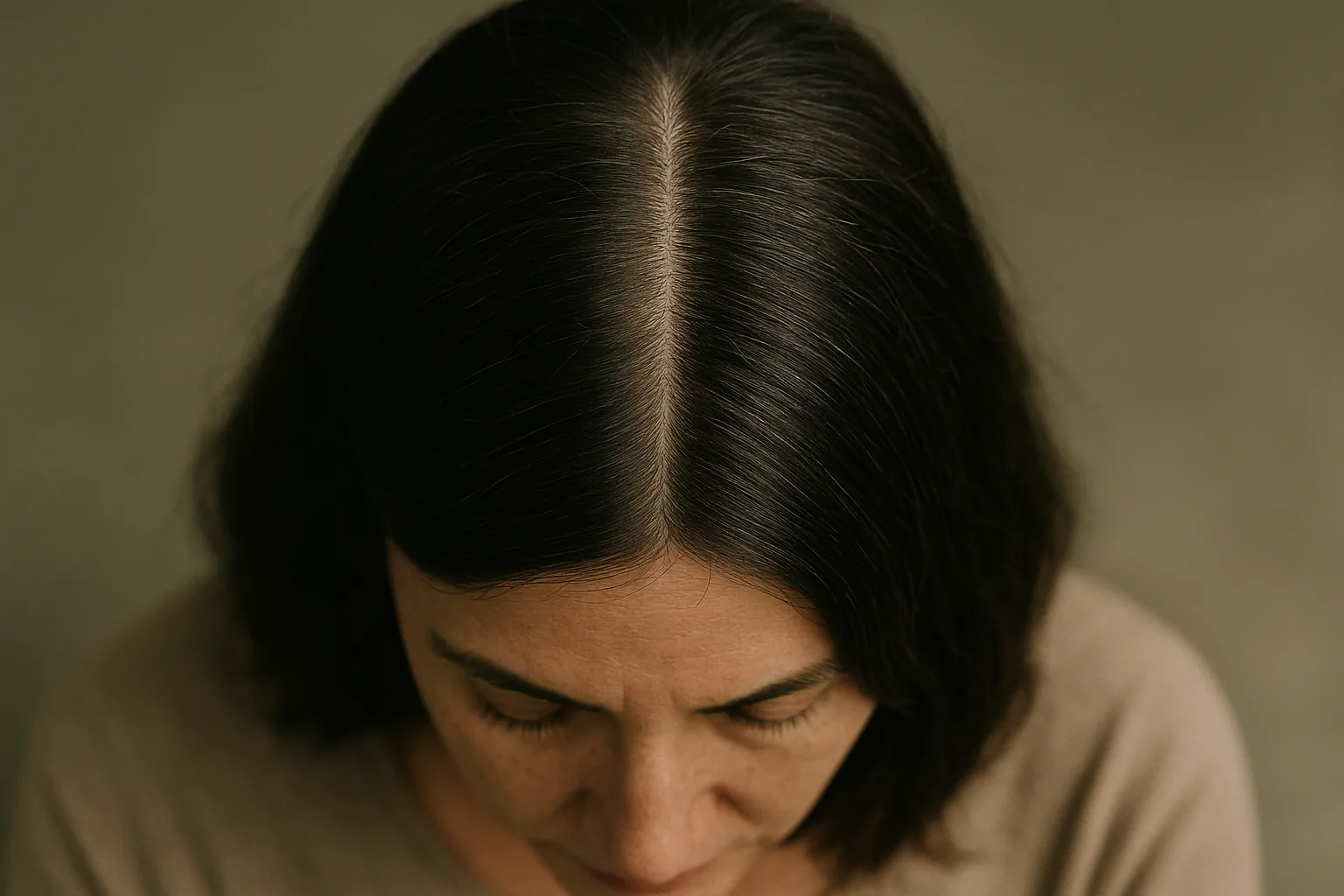
    “My part line is getting wider but I can still see fine hairs”

    Possible cause

    Pattern thinning, active phase

    Pathway

    PRF programme + medical drivers screened

    PRF hair treatment
  2. If you notice

    “I'm shedding way more than usual after a major life event”

    Possible cause

    Telogen effluvium

    Pathway

    Medical screening; supportive treatment

    Discuss assessment
  3. If you notice

    “My hair is thinning around my hormonal cycle / postpartum”

    Possible cause

    Hormonal-pattern thinning

    Pathway

    Combined medical and PRF approach

    PRF + medical pathway
  4. If you notice

    “My scalp is shiny and smooth where my hair used to be”

    Possible cause

    Established baldness: follicles gone

    Pathway

    Surgical hair transplant referral

    Discuss surgical options

What treats it

Which treatment actually addresses it?

The one that matches your cause. Each pathway below pairs a driver with the plan Dr Rakib Uddin would discuss for it: same concern, different cause, different treatment.

  1. When active pattern thinning with cycling follicles

    Growth factors support cycling follicles back toward thicker, longer growth phases, and microneedling is often paired with PRF to reinforce the stimulus.

  2. When underlying hormonal or nutritional driver

    Treating PRF without addressing iron, thyroid or hormonal drivers produces a plateau result. Address those first.

  3. When established baldness with absent follicles

    PRF cannot regrow absent follicles. Transplant may be appropriate.

Where to go next

The treatment guides worth reading.

Each guide explains how the treatment works, who it suits, recovery and cost. The right one for your case is confirmed at assessment, not assumed online.

Prevention

What slows it down?

The habits below protect the result of any treatment, and slow the concern when it is still early. None of them replace assessment; all of them help.

  • Address medical drivers early

    Annual screening for iron, thyroid and (where relevant) hormonal levels catches reversible causes before they become irreversible.

  • Scalp health

    Scalp inflammation, dandruff and harsh treatments affect follicle health. Gentle scalp care matters more than fashionable hair products.

  • Manage controllable factors

    Smoking, severe dieting, tight hairstyles all damage hair follicles. The most controllable factors first.

  • Don't wait until late

    PRF works best while follicles are still cycling. Treating earlier produces better long-term outcomes than waiting until baldness is established.

Common beliefs

What do people get wrong about it?

The beliefs patients most often arrive with, next to what is actually true.

  • Commonly believed

    “PRF works for everyone”

    In practice

    Only patients with cycling follicles respond. Established baldness (bare, shiny scalp) won't respond regardless of how many sessions.

  • Commonly believed

    “One PRF session is enough”

    In practice

    Hair biology runs in months-long cycles. A programme of 3–4 sessions produces meaningful change; single sessions rarely do. Anyone offering one-session 'hair regrowth' is selling, not treating.

  • Commonly believed

    “Hair-growth shampoos work”

    In practice

    Most shampoos can't reach the follicle level. They can improve scalp condition but won't regrow hair. Medical and procedural treatments work where shampoos can't.

In consultation

Support the follicles still cycling. They are the window that closes.

Cause before treatment: how Dr Rakib Uddin approaches hair thinning & loss.

Dr Rakib Uddin, cosmetic doctor and founder of Aesthetic Doctors Australia

Your doctor

Dr Rakib Uddin

Cosmetic Doctor & Founder

  • MBBS (Qld)
  • BMedSci (Hons)
  • Dip. Surgical Anatomy
  • Fellow ACCSM

AHPRA MED0001936872

Every consultation for hair thinning & loss is performed by Dr Rakib and his team: never delegated to a non-medical injector.

Dr Rakib Uddin is a Melbourne-based cosmetic doctor with formal surgical-anatomy training and over a decade in medicine. He performs every consultation, treatment and review at Aesthetic Doctors Australia personally, and trains other doctors in advanced injectable technique at Derma Medical Academy.

“If a treatment isn't right for you, I'll tell you. Every plan is built around your anatomy, not a template, and the goal is always a refreshed version of you, not a new face.”
  • Listen to your concern in full
  • Comprehensive medical and aesthetic assessment
  • Step-by-step treatment plan: single session or staged
  • Full discussion of risks, limitations and alternatives
  • Decline to treat when a procedure would do more harm than good
About the practice

Expert questions

The questions worth asking about hair thinning & loss.

The questions that come up in the room, answered the way Dr Rakib answers them.

How do I know if my follicles are still active?

Visible fine, wispy hairs in the thinning area mean follicles are still cycling. These can respond. Shiny smooth scalp without visible hairs means follicles are gone. We examine under magnification at consultation.

Do I need medications as well as PRF?

Often yes, particularly for pattern hair loss. PRF supports follicle environment; medical therapy addresses the hormonal driver. Combined approaches typically outperform either alone.

When will I see results?

Reduced shedding often within 4–8 weeks; visible regrowth from month 3; photographic density change around month 6. Anyone promising visible regrowth in weeks is selling, not treating.

Do I need to keep doing this forever?

Maintenance every 4–6 months is required to hold the gain: pattern hair loss is chronic. Stopping treatment lets the underlying process resume. We discuss this openly before starting.

What about a hair transplant?

An option when significant baldness is established. We refer to colleagues whose work we trust. PRF often supports transplant results and maintains surrounding hair.

Consultation first

Understand the cause. Then choose the pathway.

A consultation with Dr Rakib Uddin works out what's driving hair thinning & loss in your case, then matches the right treatment, an alternative, or no treatment at all.

1167 Burke Road, Kew VIC 3101

Important treatment information

All information on this page is general in nature and is not a substitute for a medical consultation. Any before-and-after images shown are for illustrative purposes only and do not guarantee individual outcomes. Treatments performed by Dr Rakib Uddin (AHPRA MED0001936872) vary based on each patient's unique anatomy, medical history and needs. All cosmetic injectable treatments carry risks; a consultation is required prior to any treatment to assess suitability, discuss risks and alternatives, and establish realistic expectations.

Consultation Hair thinning & loss
Book