Aesthetic Doctors Australia

Menu

Where would you like to begin?

Non-surgical nose assessment in Kew, Melbourne

Nose shape, bumps & profile, explained.

Many nose-shape concerns (dorsal humps, drooping tips, mild asymmetry) can be improved with filler, often dramatically. Surgical rhinoplasty is the answer when size or breathing is the issue. Careful assessment tells you which group you're in.

Reviewed by Dr Rakib Uddin AHPRA MED0001936872

  • The cause identified before any treatment
  • Assessed by Dr Rakib and his team
  • Alternatives explained, including not treating
  • A clear pathway to the right option
Commissioned editorial study for this concern
Assessment with Dr Rakib

What's happening

Nose shape, bumps & profile: what is actually happening?

Nose-shape concerns range from small refinements (a slight dorsal hump, a tip that drops with smiling) to larger structural concerns. Non-surgical treatment with filler can address many of these without surgery, downtime or permanence.

The limit is simple: filler adds volume. It cannot reduce a large nose. When the goal is genuine size reduction or breathing improvement, surgery is the answer, and we refer when that's the truthful recommendation.

  • Vascular zone

    Highest-stakes

    Doctor-level work; never non-medical.

  • Non-surgical option

    Reversible

    Filler can be dissolved; surgery cannot be undone.

  • Pathway

    Try before you buy

    Non-surgical preview before considering surgical commitment.

The causes

Why does it happen?

Most cases come down to genetic shape, post-traumatic asymmetry, tip droop with age, post-surgical irregularities. More than one is usually contributing at once, which is why the cause gets named before any treatment is suggested.

  1. Genetic shape

    Most non-surgical patients are addressing inherited shape they've wanted to change since adolescence. Common; valid; addressable in many cases.

  2. Dorsal hump

    A bump on the bridge, usually genetic, occasionally post-traumatic. Filler above and below straightens the profile line.

  3. Tip droop with age

    Tip-supporting cartilage weakens with age; the tip drops. Filler at the columella lifts it.

  4. Asymmetry post-trauma

    Old injuries that healed crooked. Non-surgical correction works for moderate asymmetry; severe needs surgery.

  5. Post-surgical irregularities

    Small contour issues after previous rhinoplasty. Often well-suited to small-volume filler camouflage.

The types

What are the different types?

There are 4 patterns worth telling apart, and the right plan depends on which one is yours.

  1. Profile-line dorsal hump

    Visible hump straightenable by filling above and below.

    Non-surgical rhinoplasty
  2. Tip projection / rotation

    Drooping tip wanting subtle lift.

    Non-surgical rhinoplasty
  3. Mild-to-moderate asymmetry

    Crookedness within filler-correctable range.

    Non-surgical rhinoplasty
  4. Large or breathing-related

    Outside non-surgical scope.

    Surgical referral

Which one is yours

Which one are you seeing?

Match what you notice in the mirror to a likely cause and the pathway worth discussing. It is a starting point, not a diagnosis: the assessment confirms it.

  1. If you notice

    “I have a small bump on my bridge that bothers me in profile”

    Possible cause

    Profile-line hump

    Pathway

    Non-surgical rhinoplasty to straighten the profile line

    Non-surgical rhinoplasty
  2. If you notice

    “My nose tip droops when I smile”

    Possible cause

    Tip droop

    Pathway

    Columellar volume enhancement to project and lift the tip

    Non-surgical rhinoplasty
  3. If you notice

    “My nose is genuinely too big and I want it smaller”

    Possible cause

    Size-driven concern

    Pathway

    Surgical rhinoplasty: volume enhancement can't reduce

    Surgical referral
  4. If you notice

    “I have trouble breathing through my nose”

    Possible cause

    Functional concern

    Pathway

    ENT referral: not a cosmetic problem first

    Discuss ENT referral

What treats it

Which treatment actually addresses it?

The one that matches your cause. Each pathway below pairs a driver with the plan Dr Rakib Uddin would discuss for it: same concern, different cause, different treatment.

  1. When small dorsal humps and mild asymmetry

    Filler camouflages the irregularity by straightening the profile line. Reversible.

  2. When tip support and rotation

    Most patients respond to filler at the columella. Threads occasionally appropriate.

  3. When significant size or breathing concerns

    Filler can't reduce; we refer to surgical colleagues for surgical concerns.

Prevention

What slows it down?

The habits below protect the result of any treatment, and slow the concern when it is still early. None of them replace assessment; all of them help.

  • Don't go to non-medical practitioners

    Nose is the highest-vascular-risk injectable region. Vision-affecting complications occur. Doctor-level work with immediate dissolving access is the safety net.

  • Manage expectations early

    Non-surgical can refine, not transform. Patients who go in clear about this are happy; patients expecting surgical results are usually not.

  • Treat once, well

    Repeat over-treatment in this zone leads to cumulative filler accumulation and silhouette distortion. Restraint matters.

Common beliefs

What do people get wrong about it?

The beliefs patients most often arrive with, next to what is actually true.

  • Commonly believed

    “Non-surgical rhinoplasty makes your nose smaller”

    In practice

    It makes the silhouette look smoother and often photographs smaller, but it adds volume. If you want genuine size reduction, that's surgery.

  • Commonly believed

    “It's safer than surgery”

    In practice

    It's less invasive, but it has a vascular risk profile that surgery doesn't share. Whether it's 'safer' depends on practitioner skill, not the procedure category.

  • Commonly believed

    “You can do filler nose work cheap”

    In practice

    Lower-priced 'nose filler' usually means cutting either the product or the safety preparation. Don't be the experiment in this zone.

In consultation

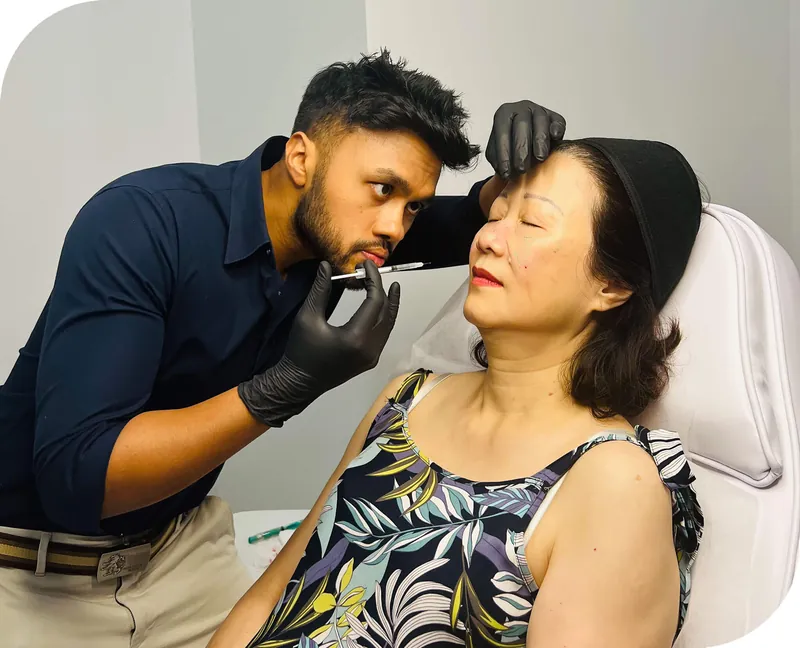
Reshape the silhouette without crossing the bridge to surgery.

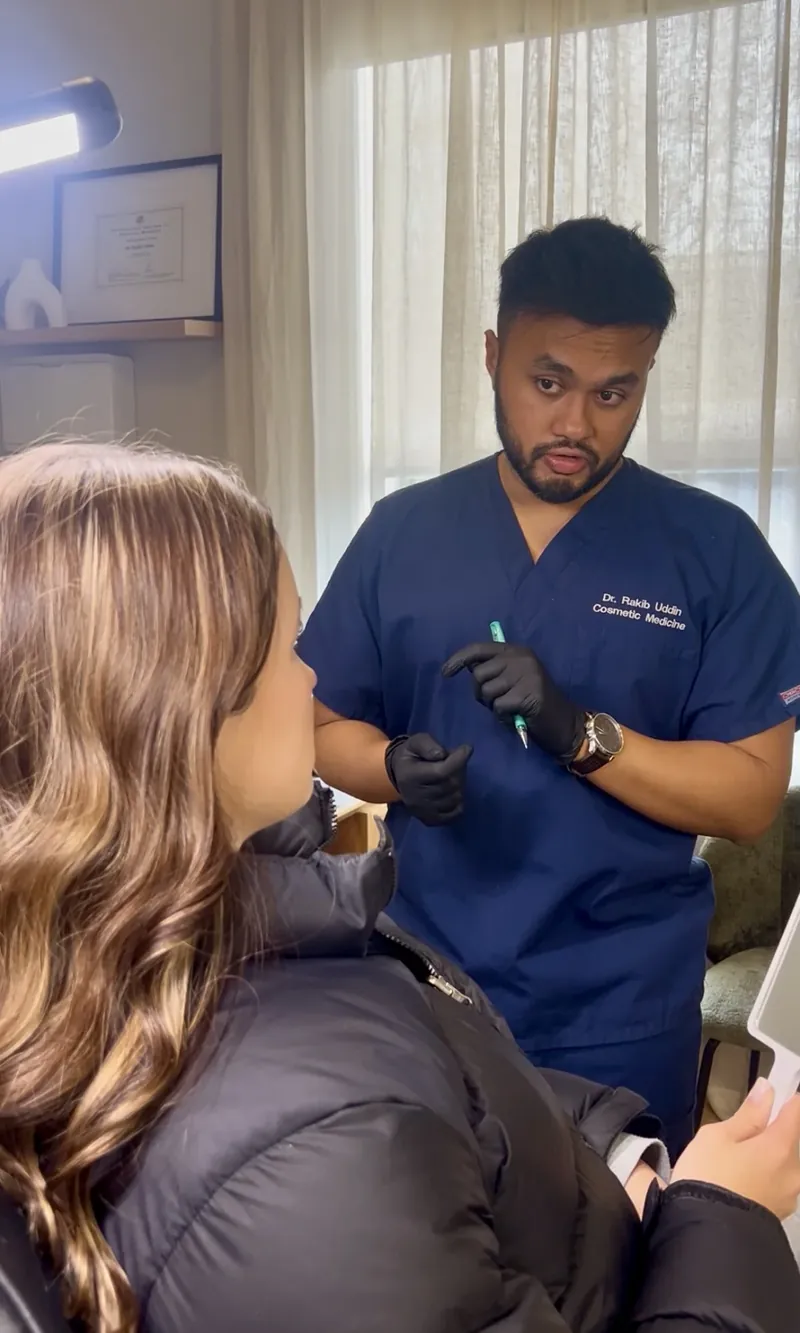
Cause before treatment: how Dr Rakib Uddin approaches nose shape & profile.

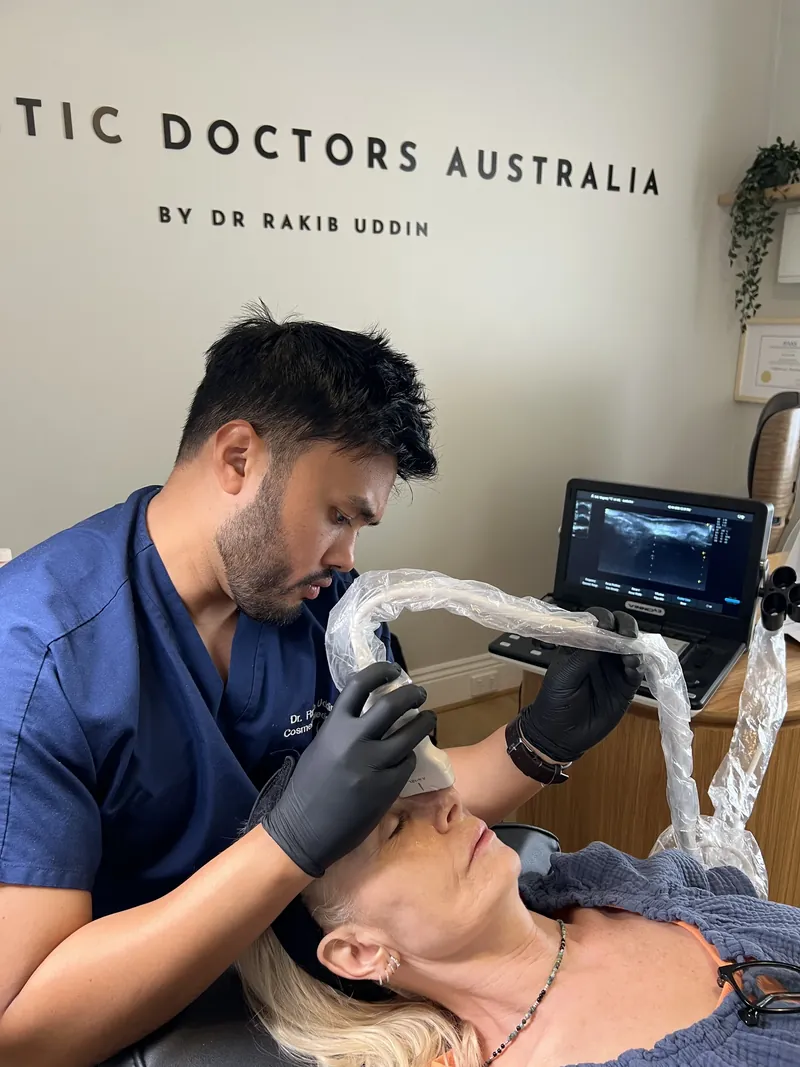
Dr Rakib Uddin, cosmetic doctor and founder of Aesthetic Doctors Australia

Your doctor

Dr Rakib Uddin

Cosmetic Doctor & Founder

  • MBBS (Qld)
  • BMedSci (Hons)
  • Dip. Surgical Anatomy
  • Fellow ACCSM

AHPRA MED0001936872

Every consultation for nose shape & profile is performed by Dr Rakib and his team: never delegated to a non-medical injector.

Dr Rakib Uddin is a Melbourne-based cosmetic doctor with formal surgical-anatomy training and over a decade in medicine. He performs every consultation, treatment and review at Aesthetic Doctors Australia personally, and trains other doctors in advanced injectable technique at Derma Medical Academy.

“If a treatment isn't right for you, I'll tell you. Every plan is built around your anatomy, not a template, and the goal is always a refreshed version of you, not a new face.”
  • Listen to your concern in full
  • Comprehensive medical and aesthetic assessment
  • Step-by-step treatment plan: single session or staged
  • Full discussion of risks, limitations and alternatives
  • Decline to treat when a procedure would do more harm than good
About the practice

Expert questions

The questions worth asking about nose shape & profile.

The questions that come up in the room, answered the way Dr Rakib answers them.

Will my nose look smaller from the front?

Usually no: slightly larger, in fact. The improvement is in profile, where most dorsal hump concerns live. Front-on, the nose is the same size or fractionally larger.

What if I don't like it?

Hyaluronic acid filler can be dissolved, usually returning the nose to baseline within days. This reversibility is the chief advantage over surgery.

How long does it last?

12–18 months typically. The nose moves less than most facial regions, which extends longevity. Repeat treatments tend to use less product.

Can it correct a crooked nose?

Mild-to-moderate asymmetry, yes, by adding volume to the under-projected side. Severe crookedness needs surgical correction.

Will this delay or prevent surgery?

Many patients use non-surgical as a 'try before you buy': see if the change addresses their concern. Some are happy and stay non-surgical; others realise they want more change and proceed surgically. Both paths are valid.

Consultation first

Understand the cause. Then choose the pathway.

A consultation with Dr Rakib Uddin works out what's driving nose shape & profile in your case, then matches the right treatment, an alternative, or no treatment at all.

1167 Burke Road, Kew VIC 3101

Important treatment information

All information on this page is general in nature and is not a substitute for a medical consultation. Any before-and-after images shown are for illustrative purposes only and do not guarantee individual outcomes. Treatments performed by Dr Rakib Uddin (AHPRA MED0001936872) vary based on each patient's unique anatomy, medical history and needs. All cosmetic injectable treatments carry risks; a consultation is required prior to any treatment to assess suitability, discuss risks and alternatives, and establish realistic expectations.

Consultation Nose shape & profile
Book