Aesthetic Doctors Australia

Menu

Where would you like to begin?

Facial laxity assessment in Kew, Melbourne

A sagging face & facial laxity, explained.

Facial laxity is the sum of three changes: skin that has loosened, ligaments that hold less firmly, and volume that has quietly left the upper face. Which of the three leads in your face decides whether tightening, lifting or structural support comes first.

Reviewed by Dr Rakib Uddin AHPRA MED0001936872

  • The cause identified before any treatment
  • Assessed by Dr Rakib and his team
  • Alternatives explained, including not treating
  • A clear pathway to the right option
Commissioned editorial study for this concern
Assessment with Dr Rakib

What's happening

A sagging face & facial laxity: what is actually happening?

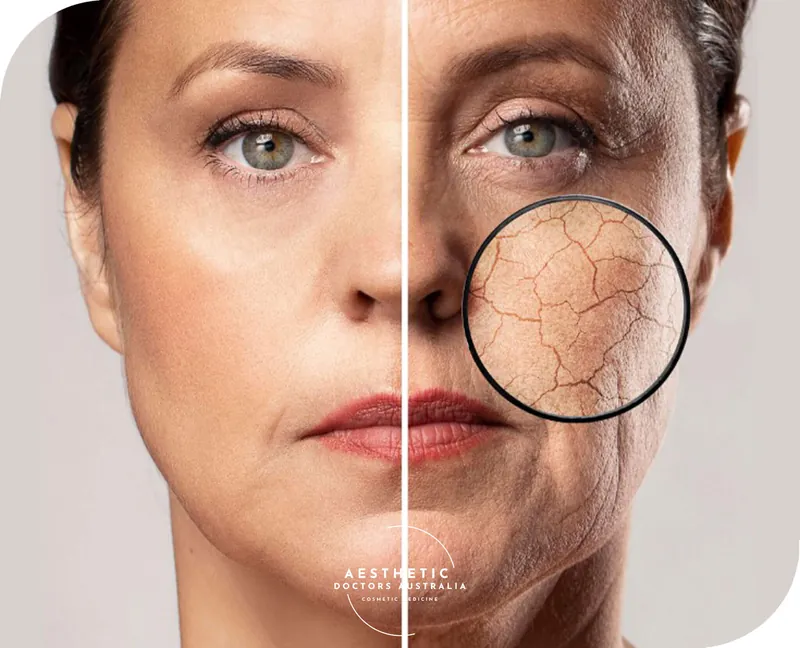
Sagging face and facial laxity are the clinical headings for a change patients describe in simpler words: the face has softened its hold. Skin recoils less, the retaining ligaments that pin the face's soft tissue to bone loosen, and the deep fat of the upper face thins and drifts downward. The result is heaviness at the jawline and mouth corners, a less defined mid-face and the feeling that the face sits lower than it used to.

Laxity is a spectrum, and where you sit on it decides what is worth doing. Early and moderate laxity responds well to non-surgical tightening, lifting and structural support. Advanced laxity with significant skin excess is surgical territory, and the assessment will tell you so rather than sell a plan that cannot reach the goal.

  • Skin, ligament, volume

    3 layers

    Laxity is rarely one layer's problem alone.

  • Down and inward

    Direction matters

    Facial tissue descends along predictable vectors.

  • Non-surgical first

    Ladder of options

    Tighten, lift, support; surgery referred when it is the answer.

The causes

Why does it happen?

Most cases come down to collagen and elastin decline, ligament loosening, deep fat descent, upper-face volume loss, sun damage, genetics. More than one is usually contributing at once, which is why the cause gets named before any treatment is suggested.

  1. Collagen and elastin decline

    From the mid-twenties the skin's structural proteins decline steadily. Skin stretches more and recovers less, which is laxity at the surface layer.

  2. Ligament loosening

    The retaining ligaments that anchor facial soft tissue to the skeleton lengthen with age. Tissue they once held high begins to sit lower along predictable paths.

  3. Deep fat descent and thinning

    Upper and mid-face fat compartments deflate and descend. Fullness leaves the cheek, reappears near the jaw, and the face's proportions shift downward.

  4. Sun damage

    Photoageing degrades elastin faster than time alone. Australian sun exposure is a major reason two faces of the same age can differ by a decade in laxity.

  5. Genetics and bone structure

    Strong skeletal support delays visible laxity; lighter bone structure shows it earlier. Family patterns are usually a fair preview.

The types

What are the different types?

There are 4 patterns worth telling apart, and the right plan depends on which one is yours.

  1. Skin-led laxity

    Fine crepiness and looseness with structure still intact beneath.

    XERF skin tightening
  2. Descent-led laxity

    Tissue has moved downward: jowling, heaviness, folds deepening below the cheek.

    Thread lift
  3. Deflation-led laxity

    The upper face has emptied and everything below drapes differently.

    Collagen biostimulator
  4. Advanced laxity

    Significant skin excess and deep descent; non-surgical tools refine but cannot correct.

    Discuss referral

Which one is yours

Which one are you seeing?

Match what you notice in the mirror to a likely cause and the pathway worth discussing. It is a starting point, not a diagnosis: the assessment confirms it.

  1. If you notice

    “My skin feels looser but my face shape is basically unchanged”

    Possible cause

    Skin-led laxity

    Pathway

    Radiofrequency tightening programme across face and jawline

    XERF skin tightening
  2. If you notice

    “When I lift my cheeks gently in the mirror, I look like myself again”

    Possible cause

    Descent-led laxity

    Pathway

    Repositioning with threads, then reassessing what remains

    Thread lift
  3. If you notice

    “My face looks emptier up high and heavier down low”

    Possible cause

    Deflation-led laxity

    Pathway

    Structural support first, often full-face biostimulation

    Collagen biostimulator
  4. If you notice

    “I can gather loose skin at my jaw between two fingers”

    Possible cause

    Advanced laxity with skin excess

    Pathway

    Candid conversation about surgical options, with referral if wanted

    Book a consultation

What treats it

Which treatment actually addresses it?

The one that matches your cause. Each pathway below pairs a driver with the plan Dr Rakib Uddin would discuss for it: same concern, different cause, different treatment.

  1. When skin quality is the dominant layer

    Radiofrequency tightening works on the layer that is actually failing: contraction is immediate, collagen remodelling builds over 3–6 months, and programmes are typically 3–6 sessions across face and jawline.

  2. When descent is the dominant change

    Threads reposition descended tissue along the vectors it travelled, holding typically 12–18 months. Tightening afterwards helps the skin sit well over the repositioned base.

  3. When deflation is letting everything drape

    Full-face biostimulation rebuilds the support layer gradually, over 8–12 weeks, so drape becomes structure again. Where lines and skin quality contribute too, a staged full-face plan sequences the work.

  4. When laxity is advanced with real skin excess

    Past a certain point, removing and redraping skin is the only treatment that matches the problem. We say so at assessment and refer well, because a non-surgical plan that cannot reach the goal serves nobody.

Prevention

What slows it down?

The habits below protect the result of any treatment, and slow the concern when it is still early. None of them replace assessment; all of them help.

  • Sun protection above everything

    Elastin does not regenerate meaningfully once destroyed, and Australian UV destroys it early. Daily SPF 50+ is the single best anti-laxity habit available.

  • Do not smoke, and mind the sugar

    Smoking and persistently high sugar intake both degrade collagen through separate mechanisms. Both show in skin recoil years later.

  • Maintain rather than rescue

    Small tightening and support treatments started when laxity is early hold the line better than a large correction attempted late.

  • Weight stability

    Each large gain-and-loss cycle stretches the skin envelope and spends elastic reserve. The face pays for the yo-yo more visibly than the body.

Common beliefs

What do people get wrong about it?

The beliefs patients most often arrive with, next to what is actually true.

  • Commonly believed

    “Only a facelift can help a sagging face”

    In practice

    Surgery is the right answer for advanced laxity with skin excess, and we refer when it is. Before that point, tightening, lifting and structural support produce real, visible change in the majority of patients who present.

  • Commonly believed

    “Facial exercises firm the face”

    In practice

    The muscles of the face are not its problem layer: laxity lives in skin, ligament and fat. Training facial muscles can even enlarge some of them, changing shape in ways patients did not want.

  • Commonly believed

    “Skin tightening devices all do the same thing”

    In practice

    Devices differ enormously in energy, depth and evidence. What matters is matching a proven modality to the layer that is actually lax in your face, which is an assessment question, not a brochure one.

In consultation

Lift what has descended, tighten what has loosened, support what has thinned: in that order, and only where true.

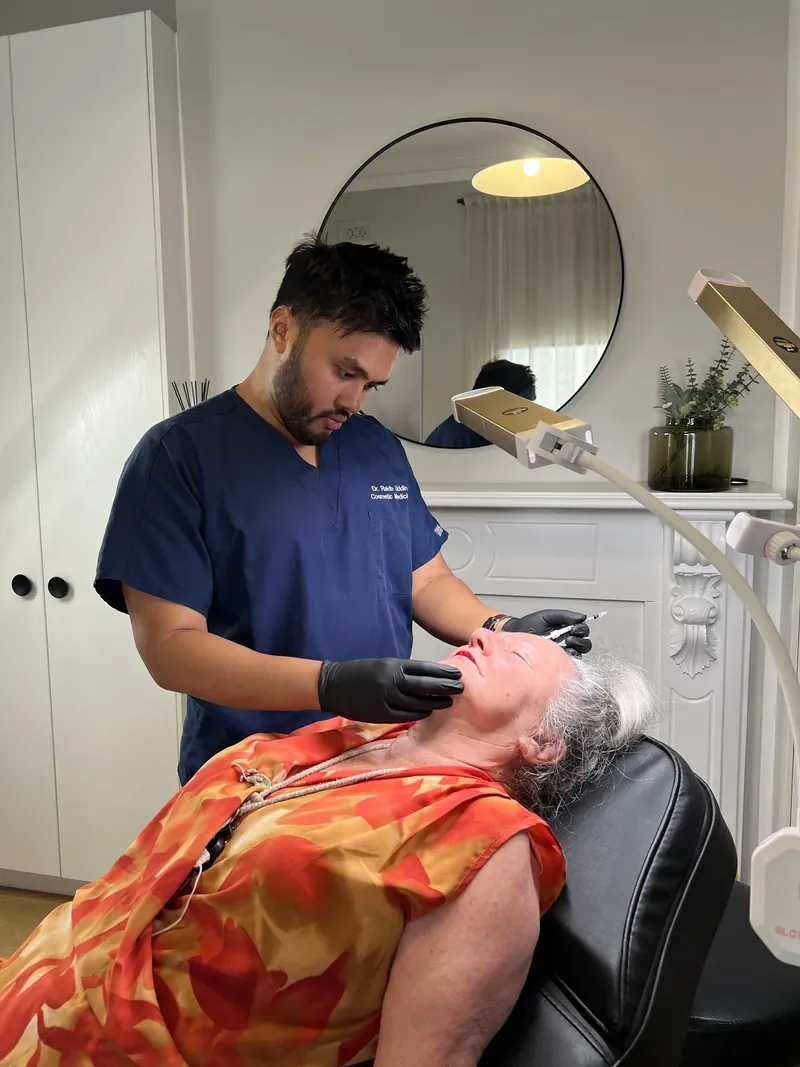
Cause before treatment: how Dr Rakib Uddin approaches sagging face & facial laxity.

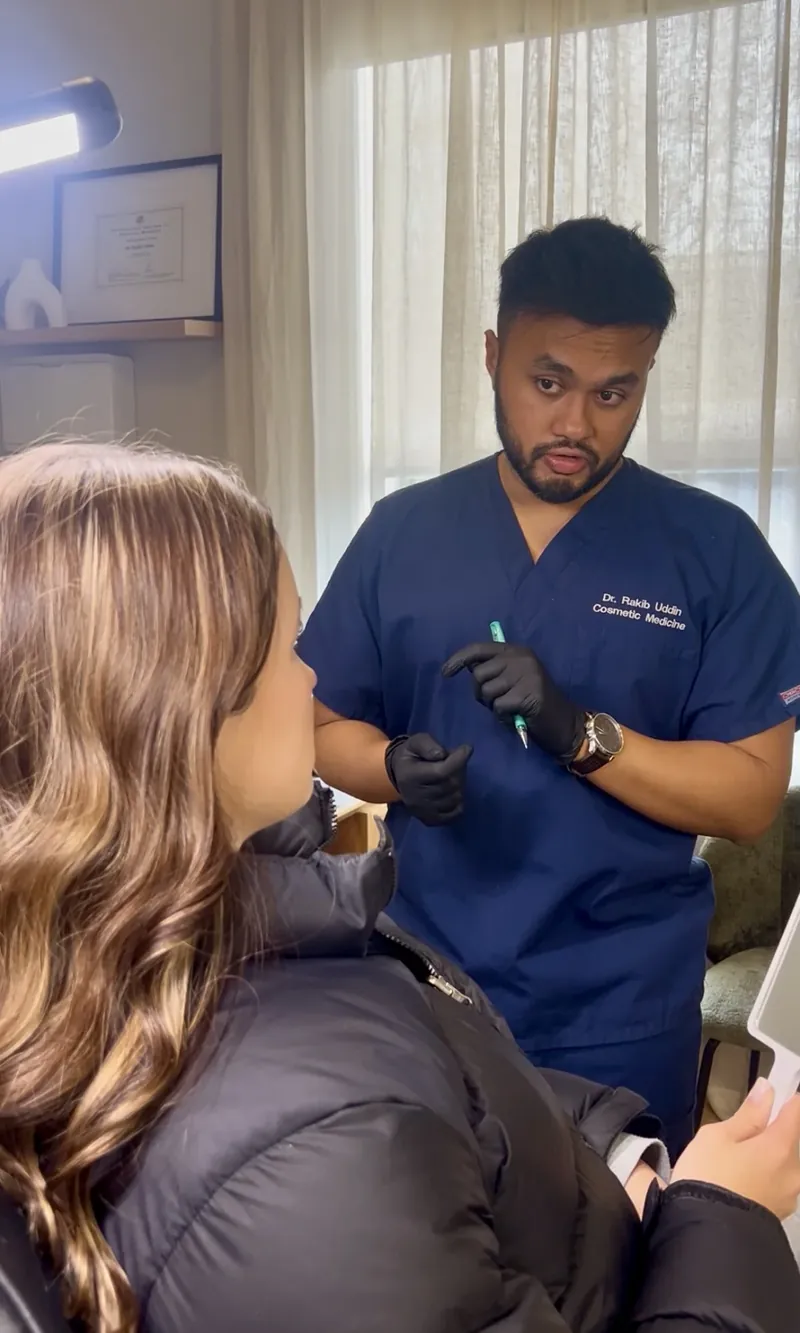
Dr Rakib Uddin, cosmetic doctor and founder of Aesthetic Doctors Australia

Your doctor

Dr Rakib Uddin

Cosmetic Doctor & Founder

  • MBBS (Qld)
  • BMedSci (Hons)
  • Dip. Surgical Anatomy
  • Fellow ACCSM

AHPRA MED0001936872

Every consultation for sagging face & facial laxity is performed by Dr Rakib and his team: never delegated to a non-medical injector.

Dr Rakib Uddin is a Melbourne-based cosmetic doctor with formal surgical-anatomy training and over a decade in medicine. He performs every consultation, treatment and review at Aesthetic Doctors Australia personally, and trains other doctors in advanced injectable technique at Derma Medical Academy.

“If a treatment isn't right for you, I'll tell you. Every plan is built around your anatomy, not a template, and the goal is always a refreshed version of you, not a new face.”
  • Listen to your concern in full
  • Comprehensive medical and aesthetic assessment
  • Step-by-step treatment plan: single session or staged
  • Full discussion of risks, limitations and alternatives
  • Decline to treat when a procedure would do more harm than good
About the practice

Expert questions

The questions worth asking about sagging face & facial laxity.

The questions that come up in the room, answered the way Dr Rakib answers them.

How do I know if I am past the point where non-surgical treatment helps?

The pinch-and-gather test is a fair guide: if a good centimetre of loose skin gathers easily at the jaw, skin excess is significant and surgery deserves the conversation. Short of that, most laxity responds meaningfully to sequenced non-surgical work. The assessment is where this is answered properly, with photographs and a direct recommendation.

What is full-face biostimulation?

Collagen biostimulator treatment applied across the face's support areas rather than one zone, prompting your own collagen over 8–12 weeks. Dr Rakib uses it for facial laxity precisely because it treats the support layer everywhere the face has thinned, not one fold at a time.

Would I need one treatment or several?

Laxity is usually a two-layer problem, so plans often pair one tightening or lifting step with one support step, staged months apart. Single-tool plans are the ones that plateau. Your sequence, and whether one tool is enough, comes out of the assessment.

How long do results last?

XERF programmes mature over 3–6 months and are maintained with occasional sessions. Threads hold typically 12–18 months. Biostimulator support lasts 12–18+ months. None of them stop time; all of them move the starting point.

Is it worth doing anything if I might want surgery one day?

Usually yes. Non-surgical work does not burn bridges: skin quality and structural support both improve the canvas a surgeon would work with later. The one thing worth avoiding is repeated heavy filling to chase descent, which is exactly what a good plan here does not do.

Consultation first

Understand the cause. Then choose the pathway.

A consultation with Dr Rakib Uddin works out what's driving sagging face & facial laxity in your case, then matches the right treatment, an alternative, or no treatment at all.

1167 Burke Road, Kew VIC 3101

Important treatment information

All information on this page is general in nature and is not a substitute for a medical consultation. Any before-and-after images shown are for illustrative purposes only and do not guarantee individual outcomes. Treatments performed by Dr Rakib Uddin (AHPRA MED0001936872) vary based on each patient's unique anatomy, medical history and needs. All cosmetic injectable treatments carry risks; a consultation is required prior to any treatment to assess suitability, discuss risks and alternatives, and establish realistic expectations.

Consultation Sagging face & facial laxity
Book