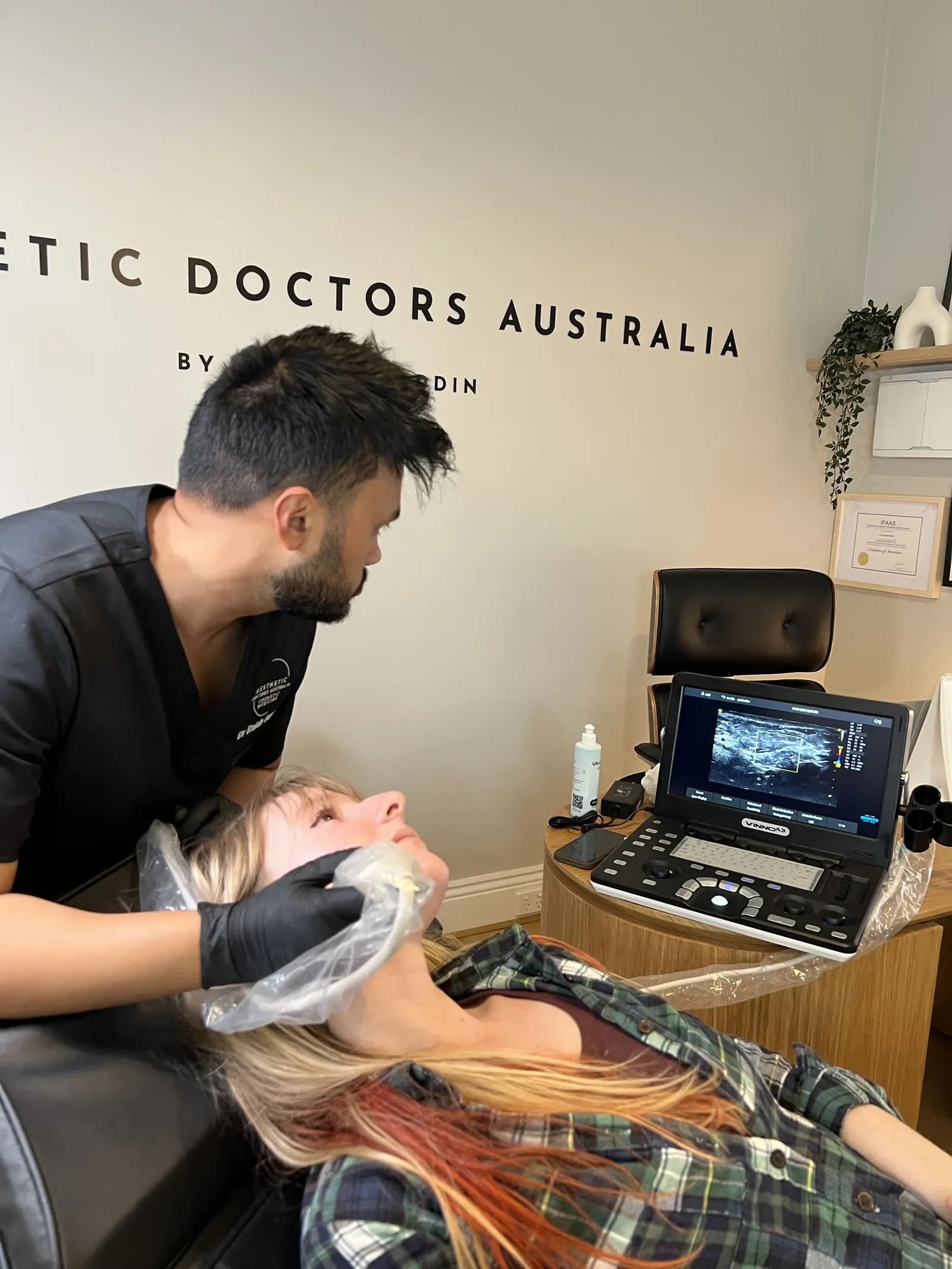
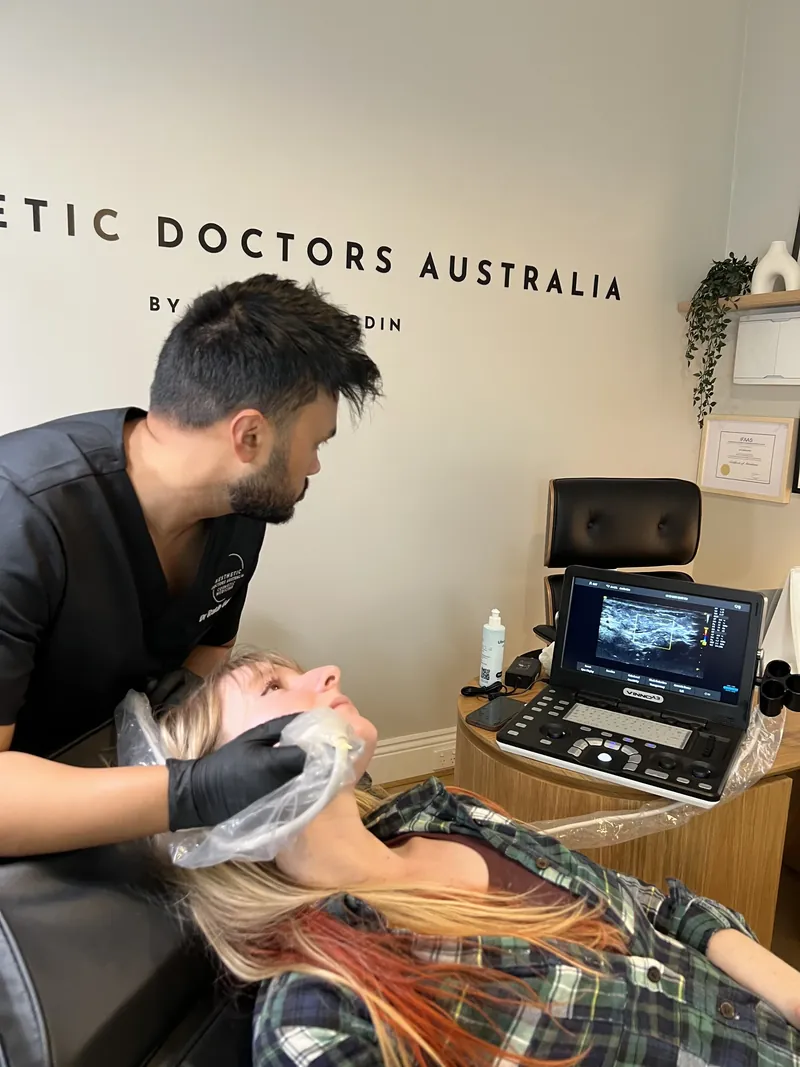
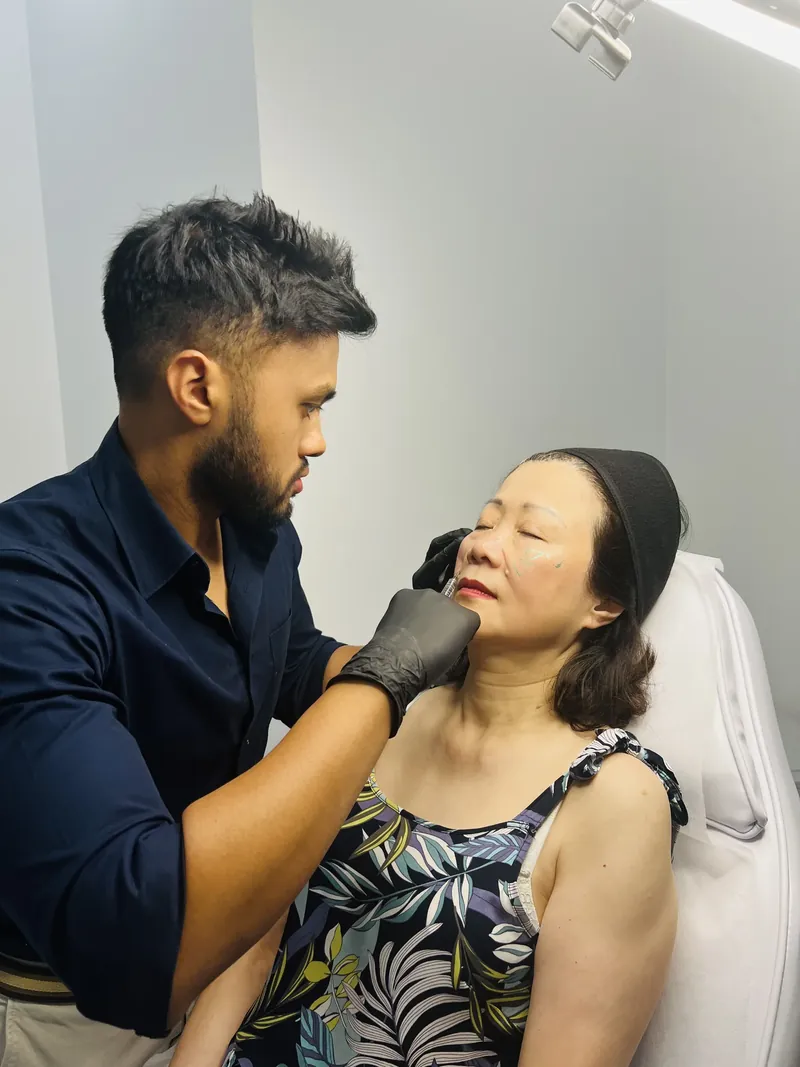
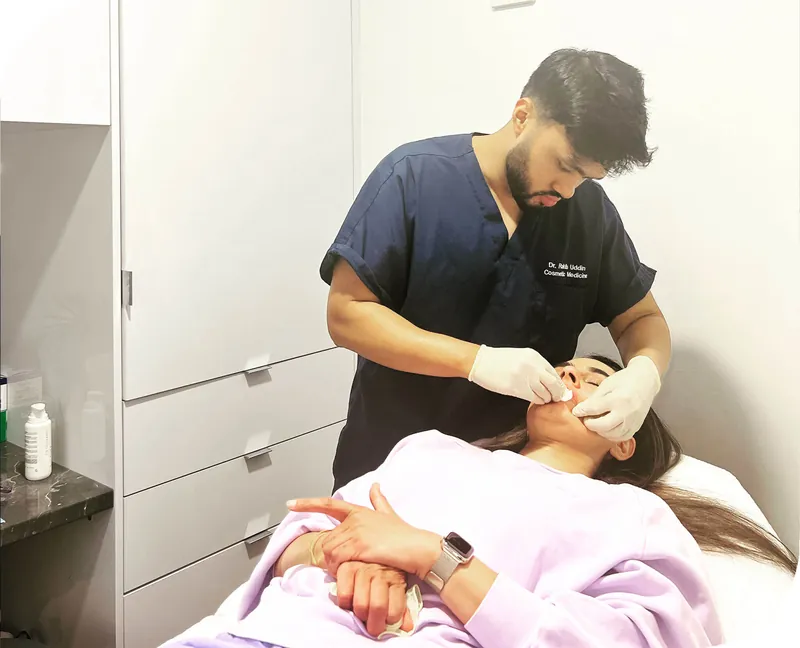
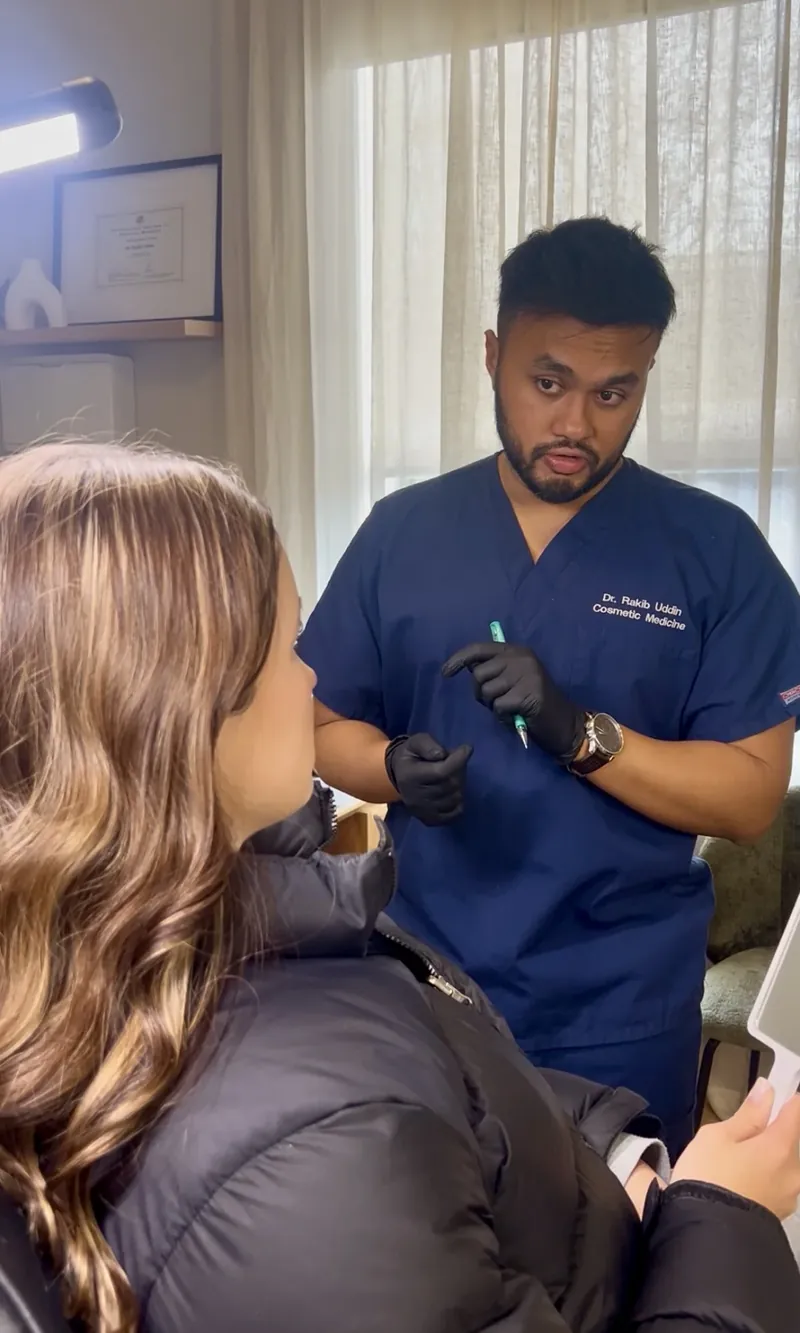
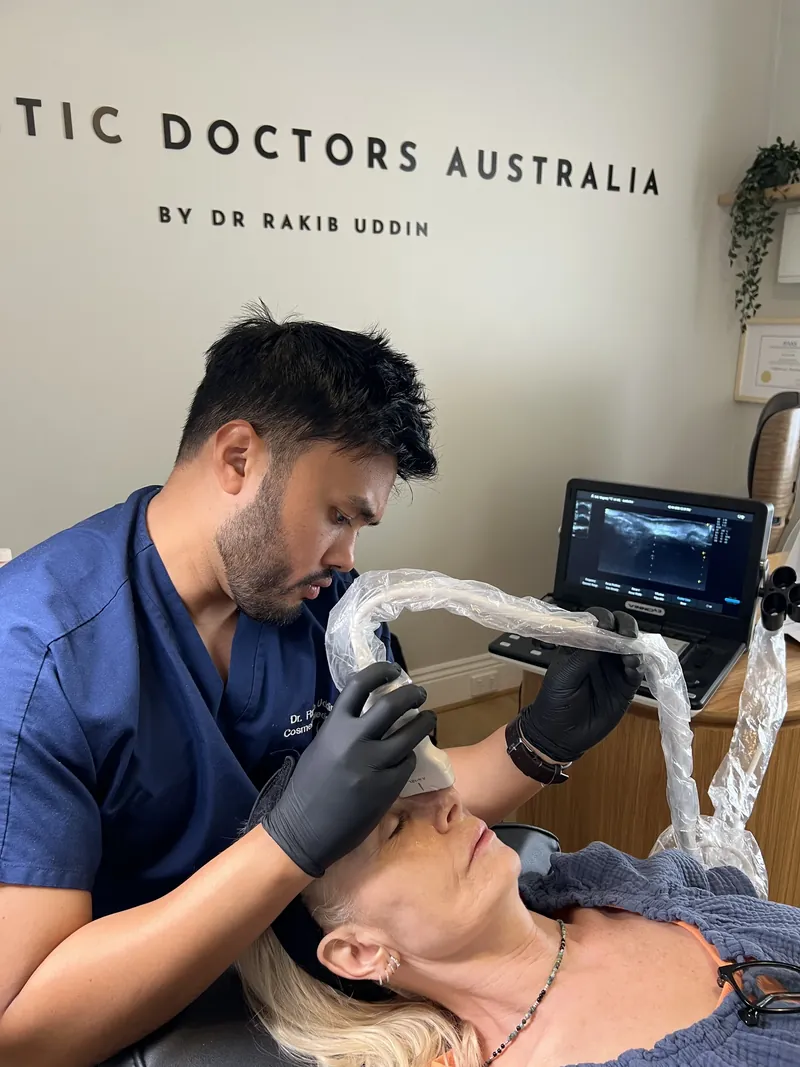
Jawline filler and contouring in Melbourne use clinician-planned volume enhancement to assess and define the lower-face outline in proportion to your features. Dr Rakib Uddin provides consultations for this treatment at the Kew clinic.
Jawline contouring uses volume enhancement (usually a firm, high-G-prime hyaluronic acid) placed deep against the bone of the mandible to restore or create structural definition. It is engineering as much as aesthetics: the filler acts as scaffolding, holding the soft tissue in a position that sharpens the visible jaw edge.
The treatment is fully reversible (filler can be dissolved) and is performed at deep planes against bone rather than into the dermis. This depth means longevity is good, lump risk is low when technique is correct, and because the corridor contains major vessels, it is doctor-level work, not technician work.
Appointment
45 to 60 min
Mapping, numbing and careful placement at multiple anchor points.
Typical duration
12 to 18+ months
Longevity varies with product choice, area and metabolism.
Risk zone
Doctor-only
Vascular anatomy here demands medical training: not technician treatment.
What it treats
What does jawline contour treat?
Jawline contour is most often planned for soft jawline, jowls, weak chin support, blurred mandibular angle. The treatment only makes sense when it matches the cause of your concern; here is where it fits.
Bone resorption, fat-pad descent and loosening retaining ligaments together blur the mandibular line. The jowl forms above the soft sulcus that develops in front of it.
Treatment role
Filler restores the bony platform soft tissue has lost, sharpening the jaw edge and refilling the pre-jowl sulcus so the jowl no longer pools.
Weak chin projection and a poorly-defined jawline make the lower face look fuller than it is: submental fullness reads as a double chin even when there is little excess fat.
Treatment role
Combined chin projection and jaw-angle definition can transform the lower-face profile without touching the submental area at all.
Bone loss is a much-overlooked driver of facial ageing: the platform shrinks while the soft tissue envelope stays the same size.
Treatment role
Rebuilding the platform with filler is more anatomically sound than chasing each soft-tissue change individually.
Results
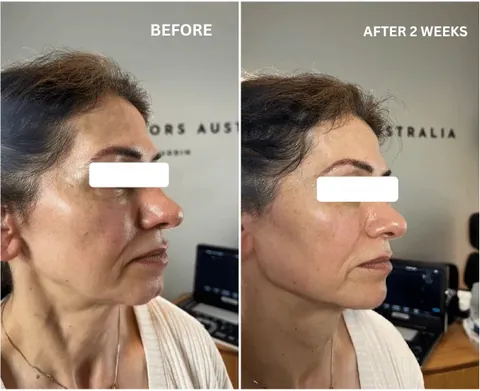
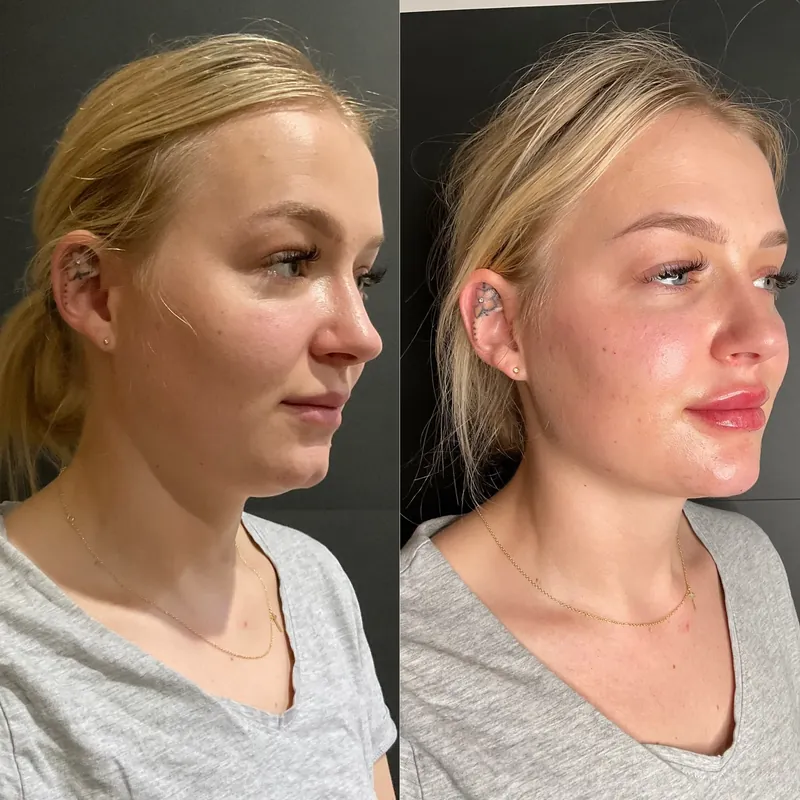
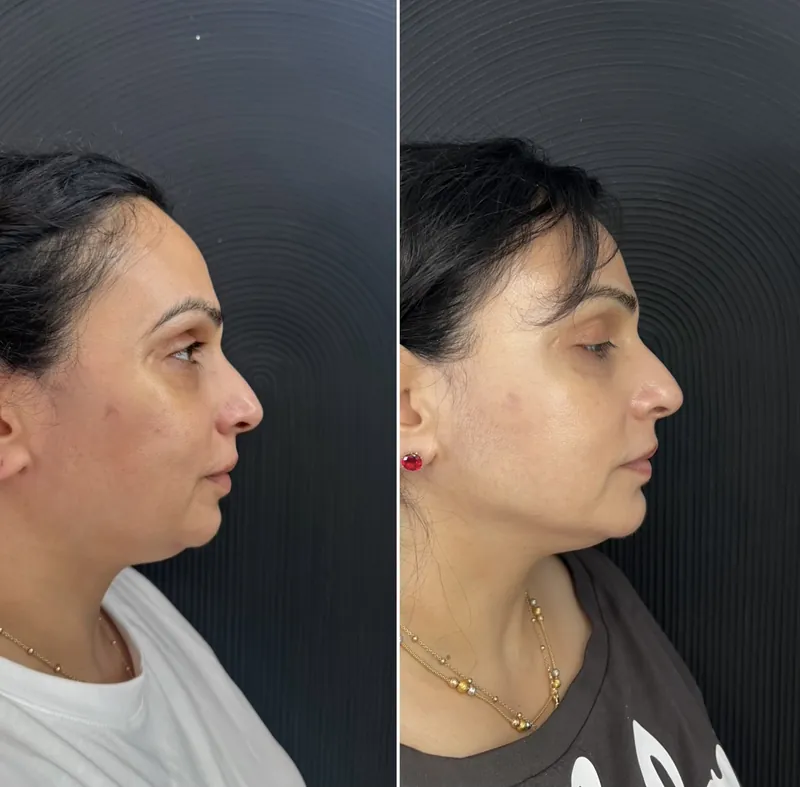
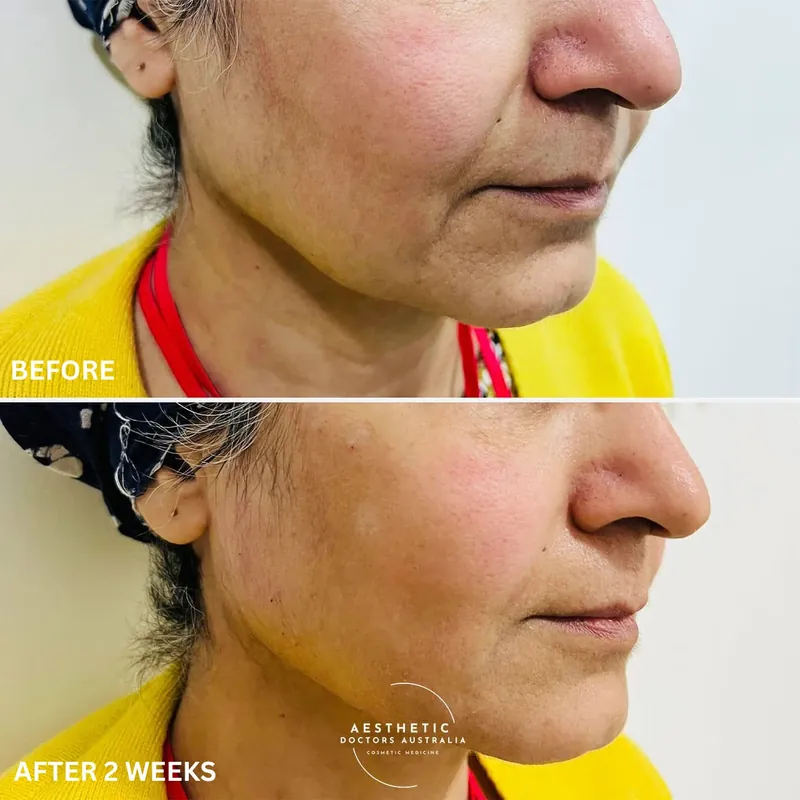
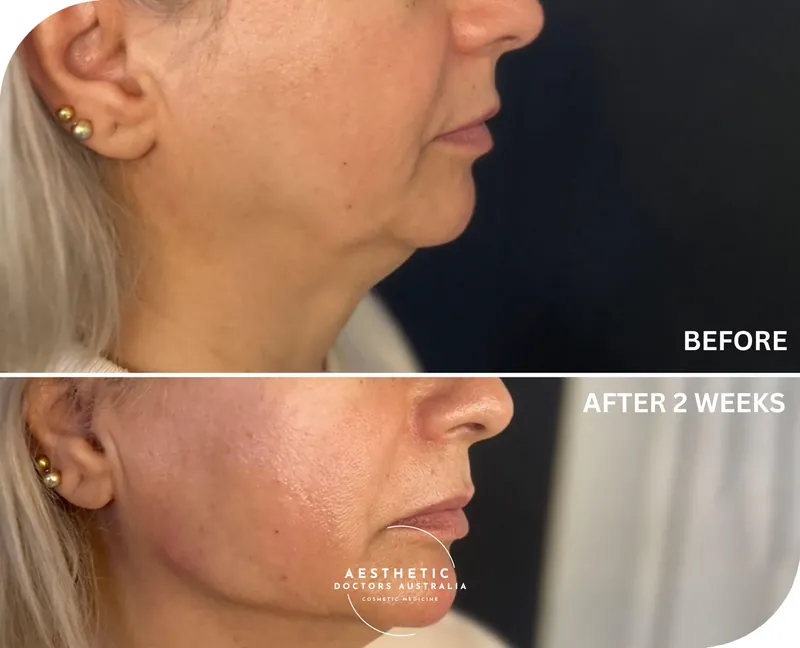
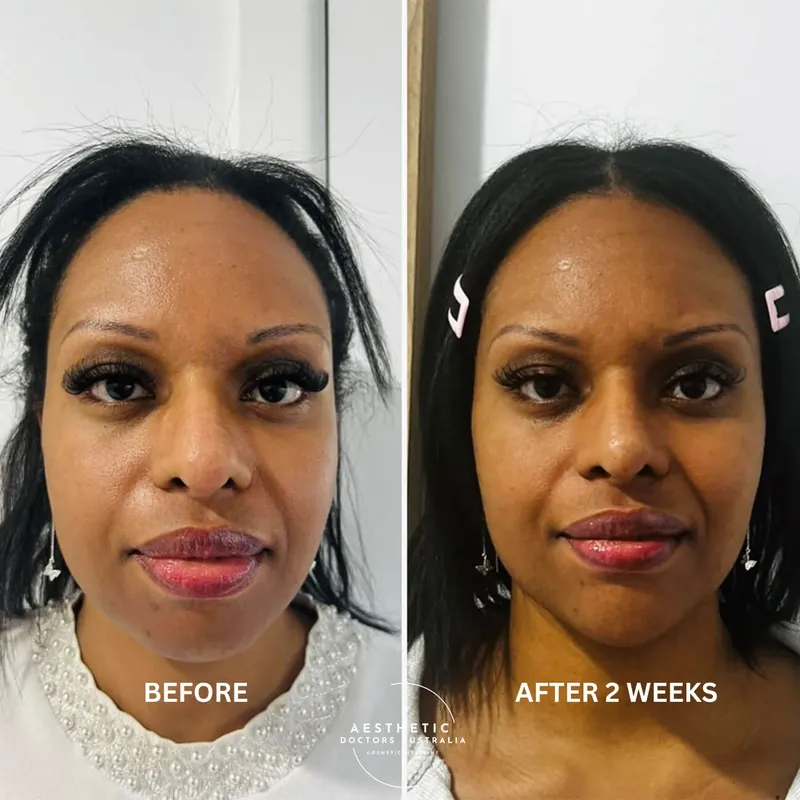
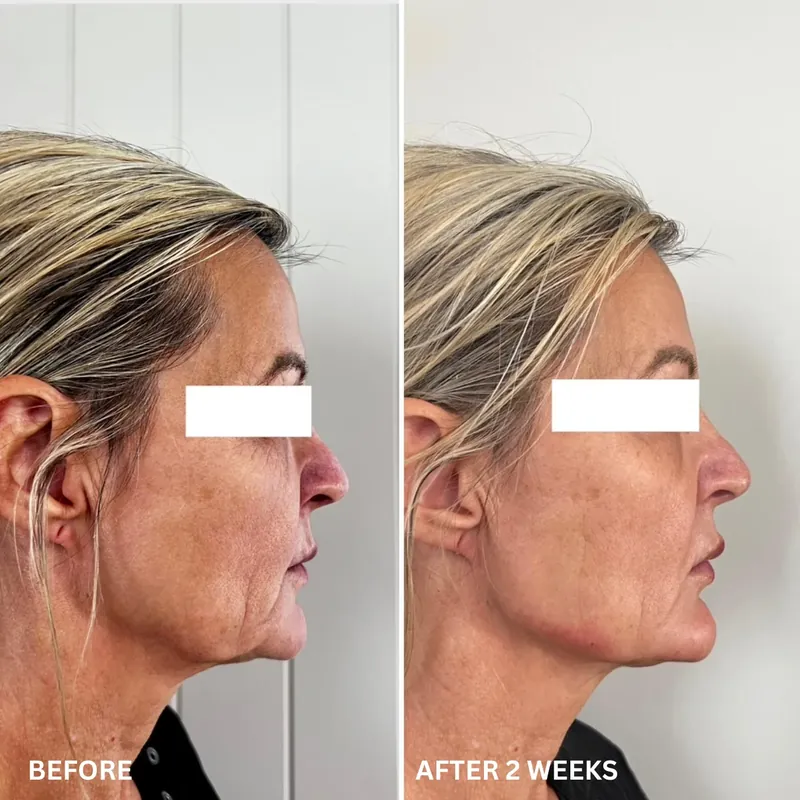
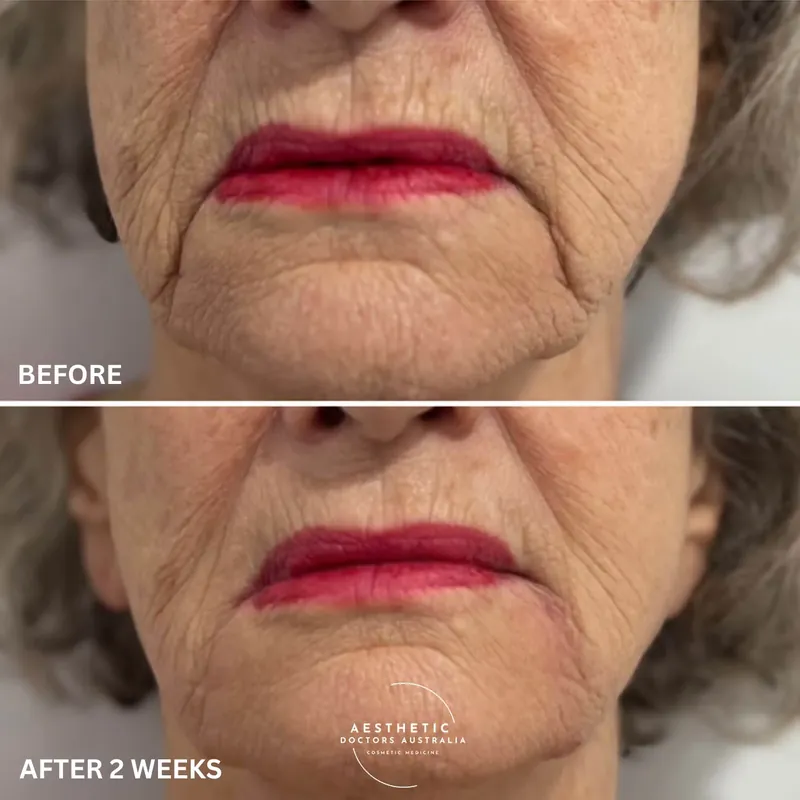
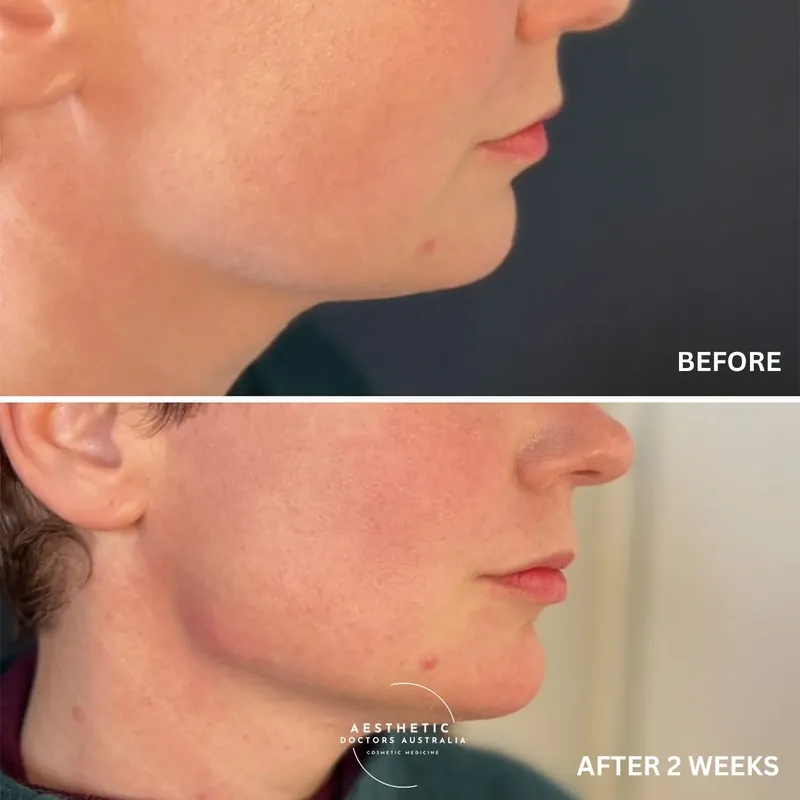
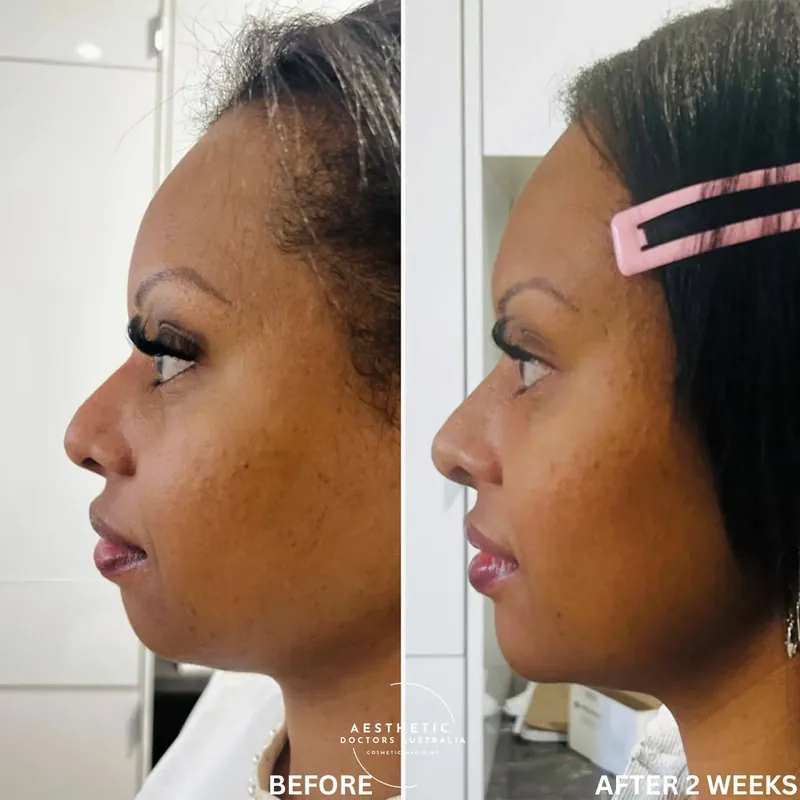
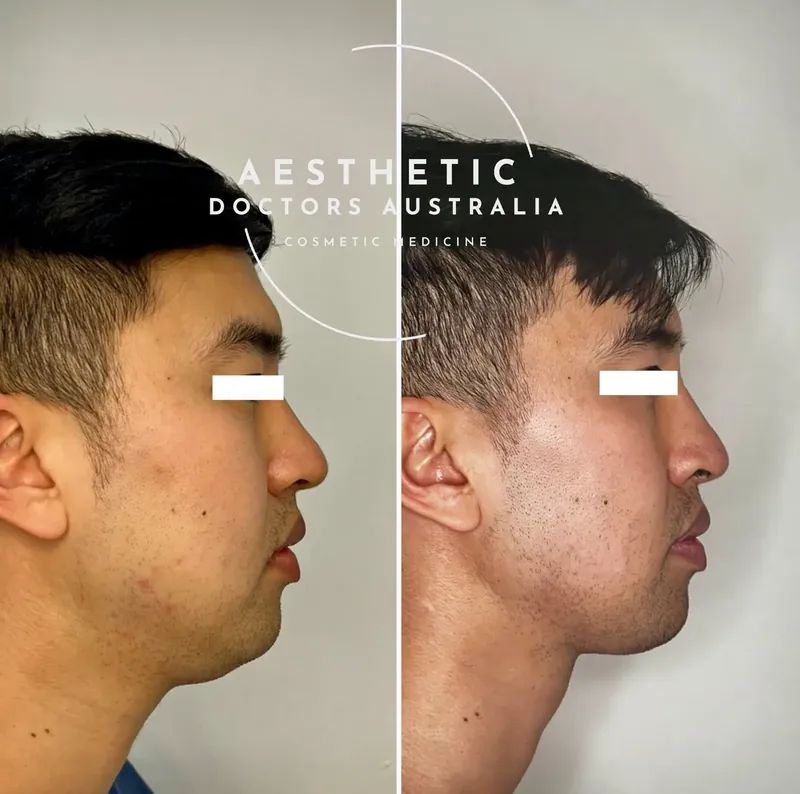
Jawline contour: results from the clinic.
Each case is a single composite photographed at the practice: the concern that brought the patient in, the treatment performed, and the point at which the result was reviewed. Outcomes vary from person to person. This is clinical context, not a promise.
This result is specific to this patient and will not necessarily reflect another person's outcome.
Volume loss and laxity through the mid and lower face
Lower face contour with volume enhancement
This result is specific to this patient and will not necessarily reflect another person's outcome.
Softening through the mid-face, jawline and lips assessed as a whole
Full face rejuvenation
This result is specific to this patient and will not necessarily reflect another person's outcome.
Loss of definition along the jawline
Jawline contour with volume enhancement
This result is specific to this patient and will not necessarily reflect another person's outcome.
Softening along the jawline with early jowling
Smile line and marionette line with volume enhancement
This result is specific to this patient and will not necessarily reflect another person's outcome.
Loss of definition along the lower jaw
Jawline contour
This result is specific to this patient and will not necessarily reflect another person's outcome.
Lower-face balance viewed front-on
Jawline contour
This result is specific to this patient and will not necessarily reflect another person's outcome.
Loss of jawline definition with age
Combination of biostimulator and volume enhancement
This result is specific to this patient and will not necessarily reflect another person's outcome.
Creasing and loss of support around the mouth and chin
Marionette line and corner of mouth
This result is specific to this patient and will not necessarily reflect another person's outcome.
An undefined chin-to-neck transition in profile
Jawline contour
This result is specific to this patient and will not necessarily reflect another person's outcome.
Flattened chin projection in profile
Side profile balance, nose and chin correction
This result is specific to this patient and will not necessarily reflect another person's outcome.
Fullness under the chin blurring the jaw-to-neck line
Fat dissolving for the double chin, four sessions
Images are real patients treated by Dr Rakib Uddin and are used with consent. Individual outcomes vary depending on anatomy, medical history, technique and aftercare; results shown are not a guarantee of yours.
How it works
How does jawline contour work?
01 / 04
Bone, not skin, is the foundation
The shape of your jaw is set by the mandible: its angle, length, and projection. Loss of bone in the angle and ramus is one of the earliest changes from the late thirties onward; soft-tissue ageing follows the lost platform. Treating the soft tissue without addressing the platform is why volume work alone can look incomplete.
02 / 04
How filler creates definition
Firm filler is placed deep against the periosteum at the angle of the mandible, along the ramus and into the body, and often at the chin. From these structural points it projects the soft tissue outward, creating the sharp shadow line you see as 'a jawline'. The contouring is light-and-shadow as much as volume.
Step 03
03 / 04
Why technique determines safety
The jawline corridor contains the facial artery, facial vein and important nerves. Knowing the planes (staying deep against bone where it is safe, retreating before injecting in higher-risk zones) is the difference between an aesthetic treatment and a cosmetic procedure. This is why we don't delegate jawline work.
Step 04
04 / 04
Proportion, not just sharpness
A defined jaw is only effective in proportion to the chin, the cheek and the neck. We almost always assess the chin alongside the jaw, and frequently treat both together. A 'sharp jaw' on a recessed chin looks unbalanced; balance is what makes the result invisible-yet-obvious.
Where it's treated
Where on the face and body can jawline contour be used?
Mandibular angle
Lost angle definition
Wide-looking face
The 'L-shape' anchor: defines the back of the jaw and the angle the eye reads as 'a jawline'.
Ramus
Soft side profile
Vertical support up to the angle, lengthening the lower face when it has shortened with age.
Body of jaw
Pre-jowl sulcus
Blurred jaw edge
Restores the straight line from angle to chin, eliminating the sulcus that hosts the jowl.
Chin projection and profile balance
Weak chin
Disproportion
The chin may be assessed with the jawline because projection and the lower-face outline need to read as one balanced profile. Where the main concern is chin projection or a recessed profile, the dedicated chin page carries the treatment detail.
No effective treatment is risk-free, and no treatment does everything. Knowing both sides is part of informed consent.
Possible side effects
Tenderness, swelling and bruising: common and expected
Asymmetry during swelling phase, usually self-resolving
Temporary palpable firmness as the product integrates
Rarely, vascular complications: the most serious risk, mitigated by anatomical training, careful technique and immediate access to dissolving
Limitations to understand
Filler can build structure but cannot remove excess skin
Results depend on your starting anatomy. There is a limit to what is safely supportable
Maintenance is part of the plan; this is a treatment, not a permanent change
Combined approaches (filler + threads + skin) often achieve more than filler alone
The alternatives
Jawline contour compared with the alternatives
Jawline contour vs thread lift
Jawline contour
Builds structural definition
Addresses bone-platform loss
12 to 18+ months duration
Thread lift
Repositions descended tissue upward
Addresses descent (sagging)
12 to 18 months duration
Which oneDifferent problems: filler rebuilds the platform; threads lift the soft tissue back onto it. Many patients in their mid-40s and beyond benefit from both, and assessment tells us in which order.
Jawline contour vs masseter (face slimming)
Jawline contour
Adds structural projection where bone has thinned
Sharpens an under-defined jaw
Masseter (wrinkle relaxer)
Reduces masseter muscle bulk over months
Softens a wide jaw caused by muscle
Which oneSame area, opposite jobs. If the jaw is wide from muscle, adding filler makes it wider. Assessment distinguishes structure from muscle: frequently both are at play, and a sequenced plan addresses each.
What it costs
What does jawline contour cost?
You receive an itemised written quote at consultation, before committing to anything. The consultation is $75 for 45 minutes with Dr Rakib Uddin, redeemed against your treatment if you go ahead.
Jawline work is quoted at consultation after mapping: totals vary substantially with how much rebuild your anatomy needs and whether the chin is included.
You commit to nothing in advance: the $75 consultation fee comes off your treatment if you go ahead, and the quote is written before anything is booked. If the recommendation is not to treat, that advice is the whole appointment.
Afterpay and Zip are available for treatment fees at the clinic, subject to each provider's own approval and terms.
Your doctor
Dr Rakib Uddin
Cosmetic Doctor & Founder
MBBS (Qld)
BMedSci (Hons)
Dip. Surgical Anatomy
Fellow ACCSM
AHPRA MED0001936872
Whatever is recommended at your consultation is planned by Dr Rakib and performed by him or a clinician on his team: never by a non-medical injector.
Dr Rakib Uddin is a Melbourne-based cosmetic doctor with formal surgical-anatomy training and over a decade in medicine. He leads every consultation, treatment and review at Aesthetic Doctors Australia, working with a clinical team he has trained and trusts, and trains other doctors in advanced injectable technique at Derma Medical Academy.
“If a treatment isn't right for you, I'll tell you. Every plan is built around your anatomy, not a template, and the goal is always a refreshed version of you, not a new face.”
✓Listen to your concern in full
✓Comprehensive medical and aesthetic assessment
✓Step-by-step treatment plan: single session or staged
✓Full discussion of risks, limitations and alternatives
✓Decline to treat when a procedure would do more harm than good
The questions that come up in the room, answered the way Dr Rakib answers them.
How do I know if I need jawline filler at all?+
Place a finger gently along the underside of your jaw and trace from your ear to your chin. If the line is smooth and continuous, your structure is intact. If you feel notches, blur, or the line disappears under soft tissue, the platform has changed, and treatment may be appropriate. Assessment confirms.
Why does the injector matter for jawline filler?+
The jaw corridor contains the facial artery, facial vein and several nerves. Knowing the planes, and what to do if something goes wrong, is what makes this safe. We don't delegate jawline work because the consequences of inexperience here are vascular, not cosmetic.
Will it look obvious or 'overdone'?+
Not with proportionate dosing. The mistake people see in over-defined jaws is treating the jaw without treating the chin, and using too much volume in the wrong plane. Conservative, staged placement at correct depth produces a jawline that reads as 'natural' to everyone except the patient.
Should I treat my chin at the same time?+
Frequently yes. A defined jaw on a weak chin looks disproportionate, and treating both together costs less than treating them separately. We'll show you the difference at consultation with photos and proportional mapping before any product is opened.
How long will it really last?+
Realistically: 12 to 18 months is typical, but high-movement areas (close to the chin) clear faster than lower-movement areas (the angle). Many patients top up the angle every 18 months and the chin every 12. We design for this rather than promising uniform longevity.
What if I don't like the result?+
Hyaluronic acid filler is fully reversible: an enzyme can dissolve it. Realistic review at the two-week mark catches most concerns and we adjust then; severe dissatisfaction can be reversed entirely. The protective factor is not committing to extreme volumes you can't unsee.
All information on this page is general in nature and is not a substitute for a medical consultation.
Any before-and-after images shown are for illustrative purposes only and do not guarantee individual
outcomes. Treatments performed by Dr Rakib Uddin (AHPRA MED0001936872) vary based on each
patient's unique anatomy, medical history and needs. All cosmetic injectable treatments carry risks;
a consultation is required prior to any treatment to assess suitability, discuss risks and
alternatives, and establish realistic expectations.